M. L. Stedman’s ‘The Light Between Oceans’

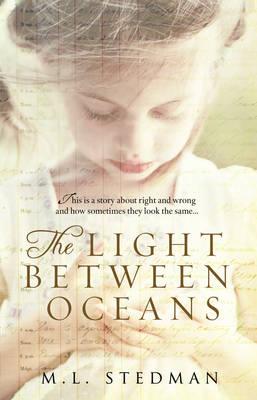
the-light-between-oceansIn the early half of the twentieth century, lighthouse keeper Tom and his young wife Isabel are living on an isolated life on an island far off the coast of the Australian mainland. The conditions are tough, contact with the outside world is few and far between and the job is demanding, but they make it their home.

It’s a life that seems perfect, but for one thing. Isabel is unable to carry a baby to term. After numerous heartbreaks, all seems lost. Then a boat washes ashore, carrying the body of a dead man and a very much alive baby girl. The decision they make that day, to not report the wreck and to keep the baby and raise it as their own, will set into motion a chain of events that will last for years to come.

The book questions our morality, and asks whether doing something you know is wrong can ever be right. It also questions what makes a parent – is it the person that’s raises a child or the person that gives birth to it? Continue reading

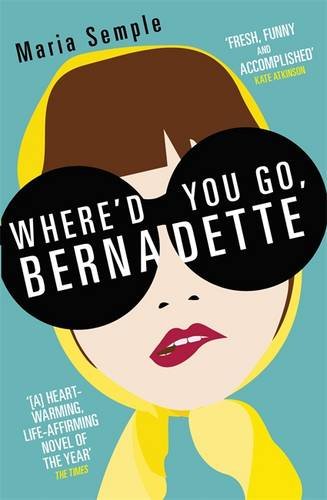
‘Where’d you go, Bernadette’ by Maria Semple

Bernadette Fox has disappeared. Everyone assumes she is dead, or gone for good. But her fifteen-year-old daughter, Bee, is determined to do everything she can to find her.

41qQVsFZtmLOver an eclectic collection of notes, letters, private emails, articles, blog posts and reports, we gradually gain a unique insight into all of the characters, their motivations and their emotions. These are interspersed with commentary from Bee, as she attempts to piece everything together. These all come together to form a bigger picture of the string of events that took place in the run-up to Bernadette’s disappearance, and to help us – and Bee – solve the mystery as to where she is now.

The format of the book is really interesting. It’s quite hard to describe the plot for this exact reason. It didn’t feel as if I was reading a story, instead, it felt like I was piecing together a case and a narrative from the raw material. Only in this case, the raw material is incredibly witty and expertly crafted to give away just the right information at any given point in time. Each character has their own voice, and this voice is real, rounded and completely convincing. I think one of the real skills on display here is the author’s ability is to flit from character to character, switching between different perspectives from page to page.

The overall narrator, Bee, is strong willed, independent and funny, and her mother is wonderfully eccentric and entertaining. I wanted to know them. The story does veer into the ridiculous at some points, but this only adds to the overall charm of the book and it somehow manages to also stay believable. It’s been a while since I enjoyed a book as much as I enjoyed this, and I wouldn’t hesitate to recommend it.

Graeme Simsion’s ‘The Rosie Project’

The-Rosie-Project

Don Tillman is lonely. He has just one real friend, he lives his days according to a precise routine and his life is firmly rooted in facts and evidence. Despite the fact that he works as a genetics professor, he also seems completely unaware of the fact that he displays all of the symptoms of Asperger’s.

Following some thorough research, he has decided that he needs to find himself a wife. An extensive paper survey seems the most efficient way to whittle out the undesirables – those being women who smoke, who are vegetarians etc – without the inconvenience of meeting people face to face.

When Rosie turns up at his office, searching for her biological father, Don initially mistakes her for a candidate in the Wife Project. What he doesn’t know is that Rosie will have the effect of a hurricane on his perfectly ordered life. She is everything that he’s not looking for, but in working with her to find her father, Don’s world starts to open up in ways that he could never imagine.

He comes to understand that in some ways, he has been holding himself back. He sets out to teach himself how to act in social situations, rather than shying away from them. He tries new hobbies, travels and stays up late. But most importantly, he teaches himself how to have real relationships with the people around him.

Throughout the book, Don experiences a real journey of change. He starts out by just going through the motions of how he thinks he should be acting in certain situations. Sometimes he ends up hilariously wide of the mark, sometimes he just can’t understand where he’s going wrong, and sometimes he manages to get it just right. But by going through the steps, somewhere along the way he learns how to love, how to break out of his comfort zone and how to really make the most of his life – albeit in a very unique and different way.

As a narrator, Don offers a unique and entertaining view on life and all of its many intricacies. His character is the star of this book, and really is incredibly well written.

This was a really sweet, entertaining and thoroughly readable book. It doesn’t set out to be particularly deep or profound, but at the same time it’s so much more than just a beach read. One thing I would say is that it was a very quick read. I wanted it to go on longer, but I enjoyed it while it lasted.

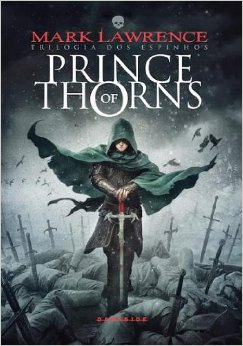
‘Prince of Thorns’ by Mark Lawrence

In an empire divided by constant wars, poverty and harsh rulers, a band of outlaws is burning a path through the countryside, destroying everything and everyone in its wake. Their leader is the ruthless and immoral Jorg Ancrath, a royal prince by birth. Far from home, he has amassed his own followers and gained a thirst for power, driven only by anger and a desire for revenge against those that have done him wrong.

Prince of thornsDriven home to his father’s castle, his talents for destruction and violence soon become evident. His father offers nothing but rejection and steely contempt, his pregnant stepmother is threatened by his very presence at court, and the queen’s alluring sister, Katherine, cannot see past his brutal, underhand behaviour. The result is an inevitable family clash that leaves Jorg with two choices, to yield to his father’s iron will or to strike out on his own to conquer a new kingdom.

In Jorg, Lawrence has created a twisted anti-hero. He has no qualms about resorting to murder, rape and torture at the slightest provocation, although it must be said that a lot of his most brutal actions are reported to us second hand.

In spite of this, Jorg has a kind of arrogant charm and wit that gives him the likability factor that he so desperately needs to offset the darkness that often overpowers his character. Throughout the course of the novel, we find out more about his background, and come to understand how the murder of his mother and brother have shaped him into who we meet today. It doesn’t excuse his behaviour, but it does help to round out his character and give him a slightly more human element.

Game of Thrones fans will love this book. It has all the gore and action that you need to keep you gripped. There’s also a supernatural element, as the lines between the living and the dead become more and more blurred.

If there’s one thing I would say, I’d have liked to know a bit more about the world that the book is set in. We’re given no context, although the map at the beginning bears some resemblance to our modern Europe and there are references throughout the text to ancient philosophers. It’s frustrating that we don’t know more about this and it would have helped to really embrace the subtleties of the author’s creation.

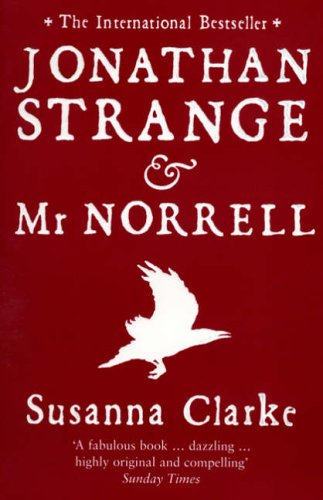
‘Jonathan Strange and Mr Norrell’ by Susanna Clarke

Touted as the Harry Potter for adults, Susanna Clarke’s ‘Jonathan Strange and Mr Norrell’ is set in an alternate version of 19th Century England rife where magic is very much present. From the theoretical magicians that gather across the country to the hundred of people across the northern counties still waiting for their Raven King to come back and claim his throne, magic has an undeniable impact on everyone in the kingdom, rich or poor.

StrangeBut while magical societies discuss the great feats of the past, in Yorkshire one man is determined to bring back practical magic. Surrounded by his precious books, the reclusive Mr Norrell heads to London to lend his help to the war effort and defeat Napoleon. Meanwhile, Jonathan Strange stumbles across magic as a profession almost by accident. Inventive, passionate and eccentric, his style and approach to the study and practice of magic is entirely different from Norrell’s – leading to an inevitable clash of opinions.

England is split into ‘Strangites’ and ‘Norrellites’. A war of words is played out through the magical journals. Increasingly great and ambitious magic is played out on the battlefields of Europe, the savage English coastline and the drawing rooms of the English aristocracy. People are raised from the dead, rain takes on solid forms, darkness falls for days on end and cities, roads and forests are moved to a magician’s whim. But beyond all of this lurks shadowy figure of the Raven King and the malevolent world of faerie looking to reek havoc on those that dare to lay a claim on English magic – bringing dark and unforeseen consequences.

It is undoubtedly an amazing feat of world building. There’s a whole bibliography of fictional titles mentioned throughout the book, each with a fictional author and subject matter, as well as a complete magical history stretching back for almost 1000 years. This history is recounted along with numerous stories, legends and folklore relevant in long explanatory footnotes that make the book seem almost like an academic work rather than a novel.

This does help to give a great sense of context, but at some points it did get a little frustrating, especially when I was nearing the end of the novel and more interested in the actual characters than an exhaustive story that seems in no way connected to the story. At these points, it was probably a good job that I was listening to this as an audiobook – as I would have been sorely tempted to skip thorough these whole sections.

One up-side of the impressive length, however, is that each and every single character is completely and utterly brought to life. Everyone is given his or her own backstory and individual characteristics, again helping to totally immerse the reader in Clarke’s world. The book is packed with black humour and subtle social commentary that continues to drive the story along even through the more intense sections dedicated to historical magical debates and incidents.

Another thing I loved was the ending, which worked really well and made me smile. I actually enjoyed it so much that I haven’t been able to get really interested in another book since – always the sign of a good read!

Also, for anyone interested and those that have already read the book, it’s recently been announced that the BBC are producing a TV adaptation starring Eddie Marsan and Bertie Carvel in the title roles.

Kate Atkinson’s ‘Life After Life’

On a snowy night in 1910, a baby is born. The doctor is unable to reach her due to the weather, and she dies. Or the doctor makes it in time, and she is saved. Or a mother’s instinct pulls her back from the edge, and she lives. This is how Ursula Todd’s life begins, again and again.

life-after-life-coverOver the course of her life, Ursula continues to die and be reborn, over and over again. Each life brings with it a different set of choices, different experiences and a different fate. Her family and certain key characters throughout the book feature in many different incarnations, their lives at some times entirely separate and at some times intrinsically linked with Ursula’s. Her decisions see her take a variety of paths – sometimes to the London war office and sometimes to Germany, sometimes as a mistress and sometimes as a wife, sometimes happy and sometimes utterly alone.

The main point of the novel seems to be to demonstrate how the smallest thing can impact on your entire life. Ursula is continually faced with deadly situations, but some lingering feelings and an uncanny sense of déjà vu from a past life continues to propel her forward. Some incidents are harder to avoid than others – a deadly outbreak of Spanish Influenza proves particularly hazardous. In other cases, a few offhand words spoken here or there can change the course of an entire life.

War is a major theme throughout the book, and in many strands it is a pervading influence on the central characters. Ursula’s role in events changes from life to life, but the reality of fighting and the hardship of living through World War II is constant. Ultimately, Atkinson uses Ursula’s individual story to ask if one person’s actions can influence events on a global scale, and change the course of history forever. It’s a really interesting concept, although I personally found the ending a little abrupt and there wasn’t a great deal of build up to her final actions in the same way as with some of her earlier turning points.

The structure of the novel, which flits around in time and place indiscriminately, is quite hard to get used to. Central characters appear and disappear, and live or die, depending on which particular narrative strand Ursula’s life has taken. Some of her lives are truly awful, seeing her a victim of extreme violence, loneliness, or emotional turmoil. I found myself hoping for the death that was sure to come just so she could escape whatever horrible reality she was in at the time. On the other hand, in some strands she is happy, successful and simply in the wrong place at the wrong time. In these cases, I was desperately hoping she could fight fate.

Kate Atkinson writes with immense skill. Despite the continually shifting time periods, all of the characters are really well rounded and developed. Ursula is portrayed especially well. Her circumstances, frame of mind and outlook can change completely from chapter to chapter but her core remains the same and I was really rooting for her to choose the right path and end up happily ever after.

There’s a certain inevitability about this book. Death comes no matter what choices Ursula makes, and all she can do is to try and overcome obstacles until she gets it right. In the end, there was an overwhelming sense that we can’t have everything. Every one of Ursula’s lives had a sense of compromise and its own share of tragedy. But at the end of the day, that’s just life.
‘Five Days’ by Douglas Kennedy

For twenty years, Laura has been in a marriage that’s not unhappy, but that doesn’t set her world alight. She has in a career that she enjoys and is good at, but she’s never been confident enough to take it to the next level. She’s always dreamed of travelling, but she’s built a life in a small town that she can’t leave behind. She dwells continually on the belief that she could have done more with her life.
Five Days
Given the rare opportunity to go to a conference in the city, she meets a man with whom she has an instant, undeniable connection. His situation is not dissimilar from her own, and both are harbouring a secret, selfish to break free from their old lives and to have a chance of being truly happy. Richard comes to represent everything she’s doesn’t have. Over the course, of the weekend, their relationship deepens and they have to make the decision of whether or not to make difficult changes and to strike out fresh, knowing that it will hurt everyone but themselves.

I usually really enjoy Kennedy’s work. I know that he usually tackles emotional subjects and his books often provoke quite strong emotions. In the case of Five Days, the themes still definitely got a reaction from me – and I can still vividly remember the story months after turning the last page. However, I can’t honestly say that I enjoyed this latest offering. It makes for quite uncomfortable reading and delivers a stark and uncompromising message.

Essentially, that message was this: Yes, the grass is greener on the other side. No, there’s no way you’re ever going to get over there to enjoy it so you may as well resign yourself to an average life. Ultimately, the chances are that you’ll live your life without ever fulfilling your true potential and without ever being as happy as you could have been if you’d made different choices along the way. But the worst thing of all is that the only one you have to blame for how things have turned out is yourself. This applies to love, friendship, families and career indiscriminately.

For me, the book represented a complete and total lack of hope. So although Douglas Kennedy writes beautifully, as usual, and I really could empathise and relate to the characters, this book was a little too depressing for me. Every book needs a little bit of escapism, and that’s what Five Days was lacking. It’s most definitely not light reading.

Peggy Riley’s ‘Amity and Sorrow’

On a remote farm, a car crash leaves Amaranth and her two teenage daughters, Amity and Sorrow stranded and at the mercy of strangers. Fleeing a polygamous religious cult, they are completely ill-equipped to deal with modern life. Over the course of the novel, the attempts of the three women to reconcile their past with their present throw their beliefs and their identities into question. Having lived their whole lives in the isolation of their community, Amity and Sorrow initially rail against their new situation. But while Amity begins to adapt, Sorrow fights to get back to the only place she’s ever called home, with devastating consequences.

A&SThis book tackles some interesting and hard-hitting themes. From the start, it’s obvious that Sorrow’s relationship with her father is more than it seems, and some of the scenes are quite disturbing. More disturbing though is the total and unrelenting religious zeal demonstrated by Sorrow. While her younger sister Amity is more open to change and to the outside world, Sorrow remains completely and utterly certain that her God is the only God, that the cult’s way of life is the only true way and that she alone is the Oracle that can act as God’s vessel on earth. She never sways from her convictions and often resorts to extreme and violent measures in order to get what she wants. In short, she’s completely unlikable and irredeemable.

The novel is set almost entirely in remote country locations, where there’s plenty of space, theoretically and literally, for the three main characters to work through their various issues away from the rest of the world. The farmer, his elderly father and their farm hand act as a strong reminder of the alternative to the women’s former lives and constantly force them question everything about themselves. For me, there was one main question that this novel posed. Is a child that’s been brought up in a certain way really responsible for their actions? Or does the fault lie with the parent?

The flashback scenes where we find out how Amaranth found herself as one of fifty wives, which are set in the city and in the modern world, are a stark contrast to the rest of the novel. It demonstrates how easy it is to slip it is for vulnerable women like Amaranth to find themselves in situations that they never expected to be in.

This is a great book with plenty of points to discuss in book groups and I definitely can see why it made the short list for prizes. But despite the strength of the characters and the skill with which Peggy Riley builds the layers of drama throughout the novel, I found that the characters were quite hard to relate to. Their alienation from familiar modern day life meant that they were completely unique, in some ways childlike but also completely capable of making decisions that have the potential to change their own lives and the lives of the people around them. It was fascinating, but in my opinion, it almost works better as a literary examination on the effects of religious cults than it does as a story on a basic level.

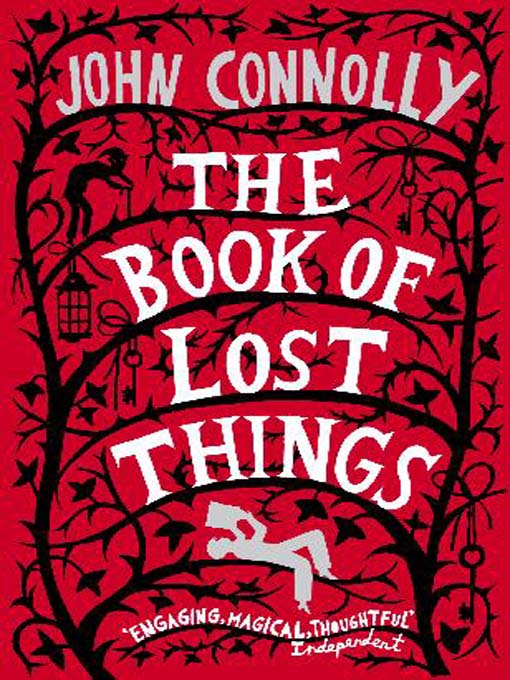
John Connolly’s ‘The Book of Lost Things’

It’s this middle of World War II, and confined to a country house with his new stepmother and even newer younger brother, David is full of hurt, anger and jealousy. In his attic room, he seeks comfort in a collection of old books. As he becomes consumed with the world between their pages, David starts to feel a strange affinity to the boy who lived in his room before.

the-book-of-lost-thingsWhen the events of one fateful day conspire, David finds himself in a place where nothing is as it seems, struggling to find a way to get home in a strange, threatening kingdom of twisted fairytales. His path is peppered with obstacles, and he is forced to face his innermost fears, overcome death and battle his nightmares before he can finally come face to face with an aging king who seems destined to lead the kingdom into ruin.

The Book of Lost Things is essentially a fairytale – but it’s certainly not a fairytale you’d want to read to small children at night. Bringing in elements of a whole host of different stories, Connolly twists and manipulates narratives for his own purposes, spinning motives and intentions and traditional plotlines into an intricate web of characters and incidents.

In fact, the author builds a whole new world with such rich detail and flair that I almost started to believe in its existence myself. The Crooked Man really was scary, a truly brilliant villain with wicked intentions. The truth, when it was finally revealed, was as terrifying as any nightmare come to life in the darkness. This is not a book where everyone has a happy ending. All of the characters we come across, from the Woodcutter to Snow White, have been given their own jaded and fractured back-stories that have been woven perfectly into the fabric of the narrative.

Ultimately, it’s the perfect book for anyone looking for a dose of escapism or pure fantasy with a twist. It’s spooky and mesmerising, and it takes a completely different direction to anything else out there.

Finding the perfect beach read…

With the hot weather still going strong, I thought I’d take a look at the summer beach read. A really good chick-lit book can be hard to find, so I’ve compared two of this summer’s hottest releases with the aim of hopefully giving an idea of what’s on the market at the moment.

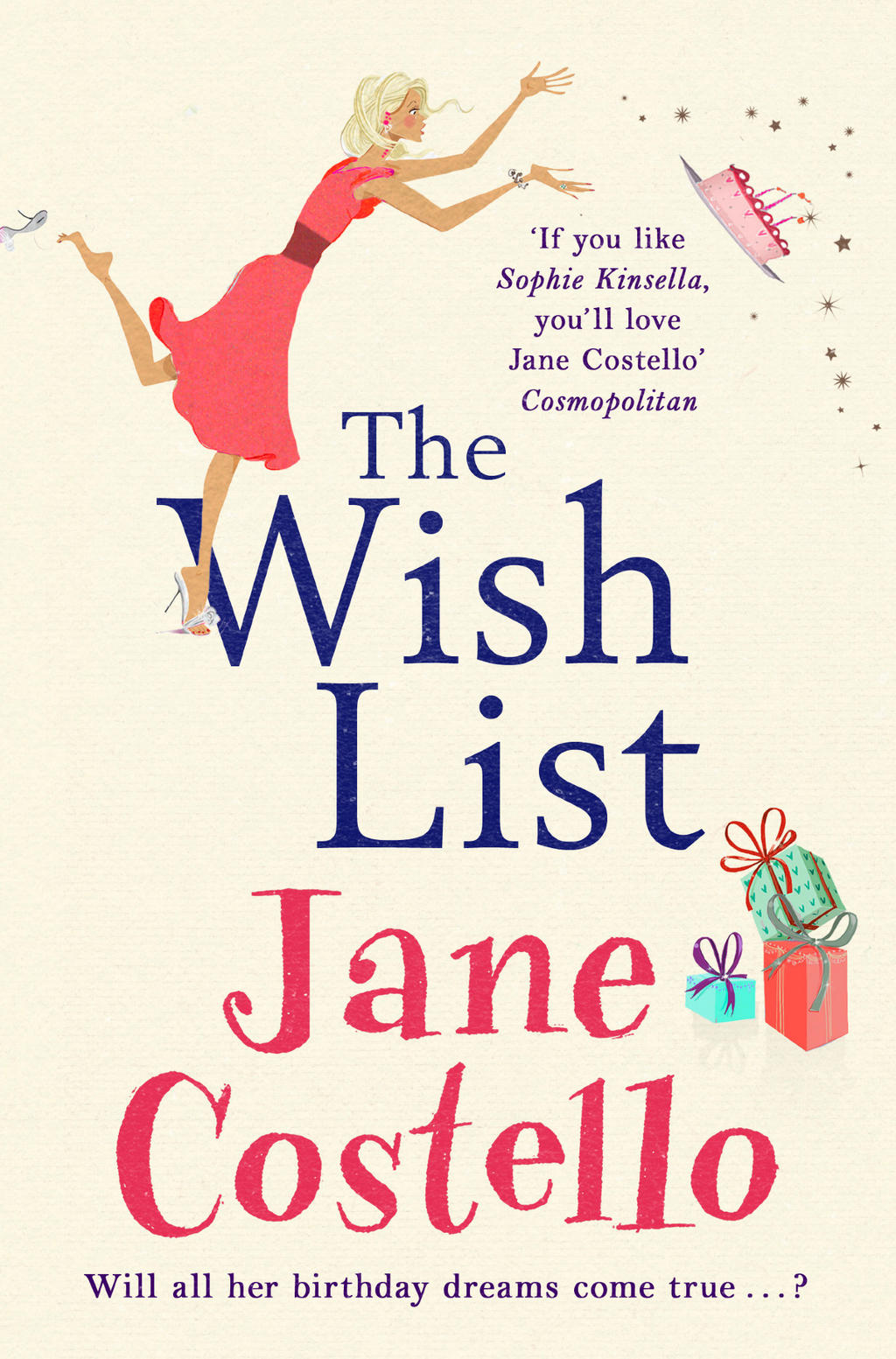
The-Wish-ListFirst up, it’s Jane Costello’s The Wishlist. With her thirtieth birthday fast approaching, Emma Reiss is determined to tick off all of the items on a list she complied fifteen years earlier before the big day arrives. Plans inevitably go awry when her attempt to cross ‘one-night-stand’ off the list ends in drunken disaster – made still worse when the object of her affection moves in next door! Over the next six months, Emma attempts to force herself out of her self-imposed comfort zone – with hilarious and unforeseen consequences.

From the start, it’s fairly obvious where The Wishlist is going. However, Jane Costello has a really fresh and funny way of writing that really makes this stand out from the pack. It made me smile all the way though – and even laugh out loud on several occasions – and despite the predictability I found myself really rooting for the characters. For the most part, all of the characters are genuine and believable – which for me is a vital component of any beach read.

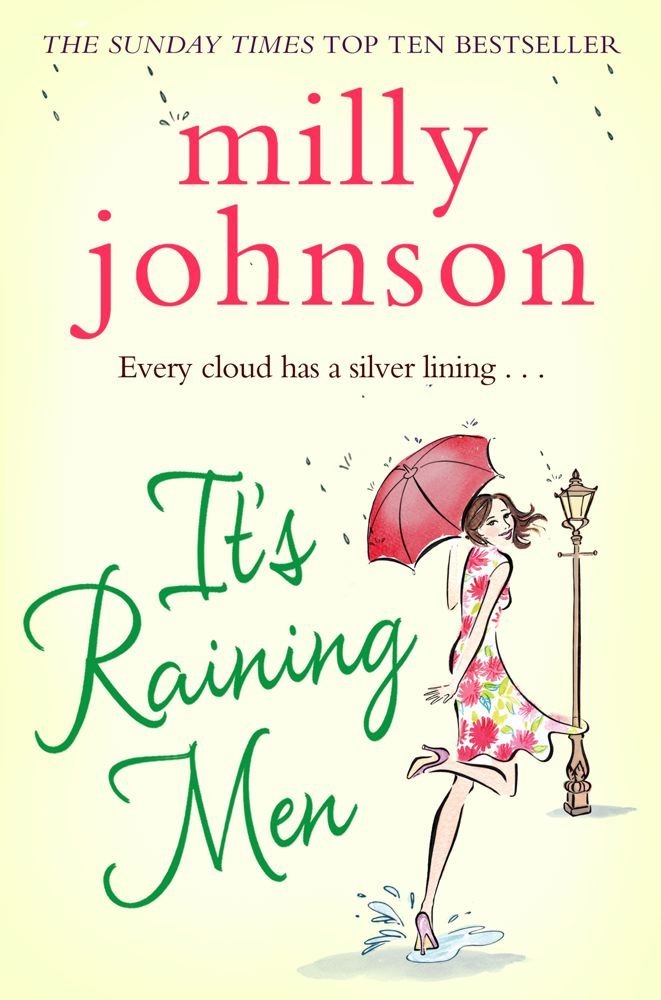
My second pick is Milly Johnson’s It’s Raining Men. Three hectic career women set off on a much-needed spa break, only for a mix-up in the holiday booking service to see them end up at an entirely different destination. Very soon, they realise that their home for the week has its secrets – like why there are no women around, why the villagers are so unfriendly, or why there are so many mysterious clouds overhead? Determined to get to the bottom of the mystery of Ren Dullem, the three friends set out to win over the residents – which just happen to include a dashing set of three handsome, single brothers.its raining men

Unlike The Wishlist, I thought Milly Johnson’s latest offering left a lot to be desired. The characters all felt a bit one-dimensional and their decisions just seemed unrealistic. It felt to me like the author had a happy, fairytale-esque ending in mind from the offset, and the rest of the book was contrived to make sure she could get there. Much of what happens in-between seemed entirely superfluous and quite tired, while the characters offer nothing new to the genre and are actually slightly annoying. I also thought that the writing itself was extremely stilted on occasion. For me, it was readable, but that’s about it.

I think that these two books really sum up the differences that can come out of some of a literary genre. Both of the above were relatively good summer beach reads that make for perfect stress free sunbathing, but moving forward I’d pick Jane Costello every time.

If anyone else has read any great ‘chick-lit’ books this summer, do let me know – I’d love to hear about them!