Going digital

The explosion of self-publishing platforms has, understandably, been a topic of great debate in the publishing world. Quite simply, these platforms have the potential to completely transform the structure of publishing as we know it – from who can publish a book in the public realm to the price that a book will be sold at. But what does this really mean for the industry?

In my opinion, ebooks and self-publishing present a range of new and exciting possibilities to traditional publishers to evolve. Take Penguin, for example. The publisher has recently invested into author services and self-publishing platform, Author Services, while in 2011, ebook sales made up 12% of its total revenue. It’s an impressive percentage that effectively demonstrates the direction that the market is moving in, and from a practical point of view, I can see the appeal. Embracing digital publishing has the potential to reduce overheads and unnecessary outgoings while still offering almost limitless opportunities for expansion.

The perceived threat comes from the vast array of authors who are now able to bypass traditional publishing houses and publish and market their work themselves. Examples of hugely successful self-published authors are not hard to find, and there are a few in particular that any discussion of the topic can’t fail to mention. E. L. James and her Fifty Shades trilogy is one. Hugh Howey and his widely acclaimed apocalyptic novel ‘Wool’ is another.

But I think it’s worth noting that although these authors began their journey in self-publishing, they also made agreements with traditional publishers to produce hard copies of their books. This undoubtedly is a major factor in their success. In fact, Fifty Shades accounted for almost one in ten of the 750 million books sold globally by publisher Random House across the year, resulting in record annual revenues and profits. And although I’d been reading rave reviews of Howey’s ‘Wool’ for a while, it wasn’t until it came out in paperback that I invested in a copy for myself.

This goes to show that the input and expertise of a traditional publishing house is still very much in demand. By positioning themselves as an expert in possession of all of the tools that self-published authors need to hit the big time, publishers can ensure that their knowledge and business model can go hand in hand with the digital revolution.

The real danger posed by self-publishing, as far as I can see, is in the already established, big name authors of the publishing world. There’s a real possibility that as self-publishing becomes more established, these authors could jump ship and take on the role of publisher and marketer for themselves, safe in the knowledge that a large percentage of their loyal readership will duly follow.

Whatever happens, the publishing industry almost certainly has more to gain from embracing digital publishing than it has to lose.
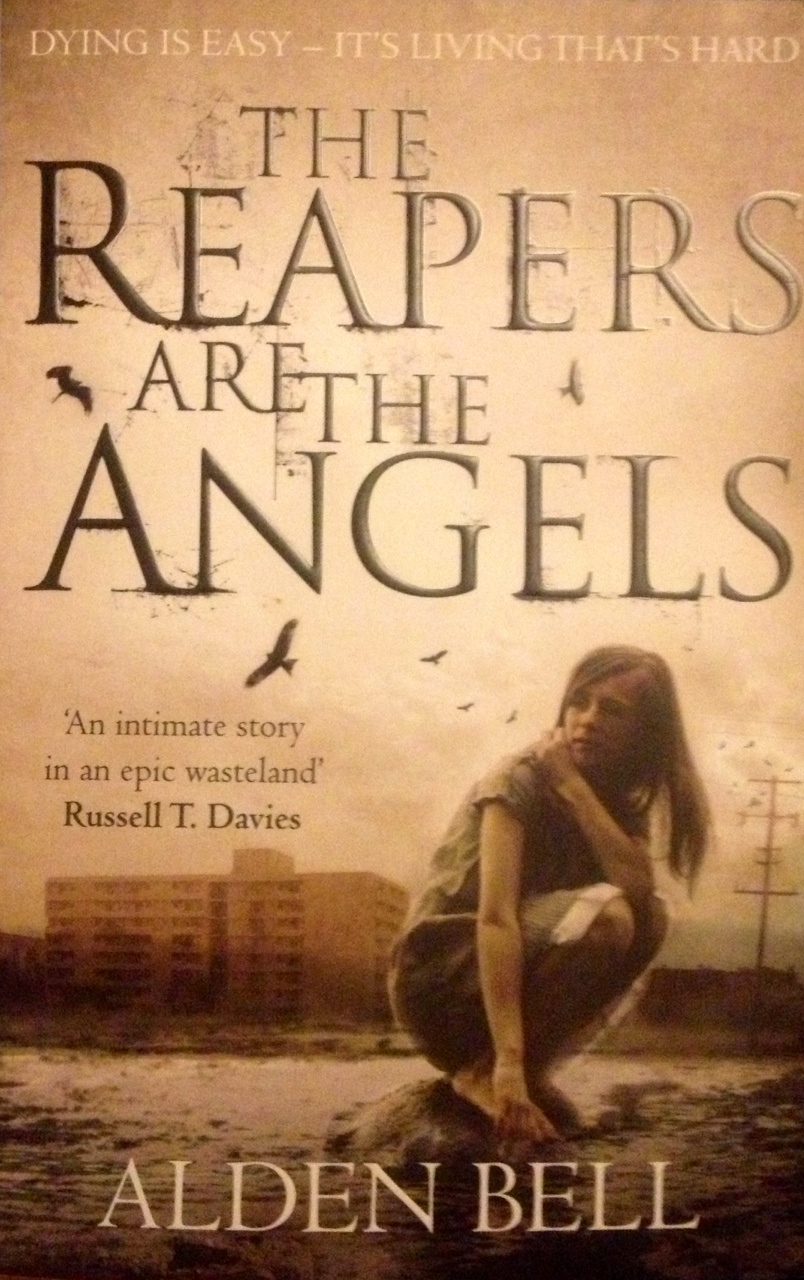
A review of Alden Bell’s The Reapers are the Angels

(Tor, September 2011)

When I started reading The Reapers are the Angels, it was hot off the back of the season finale of The Walking Dead and I was suffering from acute zombie drama withdrawal symptoms. I’d also read a quote that said this book was perfect for fans of Justin Cronin’s The Passage – which ranks as one of my all time favourite dystopian fiction novels – so I was expecting something equally mind-blowing and action packed.

ReapersFor those who haven’t heard about this book, it’s the story of Temple. Fifteen years old, a loner and a survivor, Temple wanders the country with no destination, only a will to live. Along the way, she runs into other survivors, one of whom becomes her sworn enemy. Driven by a conviction that killing her is the only thing that makes sense, he will stop at nothing to do so. In trying to evade her pursuer, Temple comes across a man named Maury. He’s helpless and vulnerable, and Temple makes a pact with herself to deliver him back to his family, whatever it takes.

As it turned out, this novel was actually quite different from what I was expecting. For a start, it was a lot slower in pace. The zombies, or ‘meatskins’ as they’re known, were used more as a device to set the scene for the action than as a central part of the story. That’s where my main problem lay with this novel. It is described as post-apocalyptic world, however none of the characters we meet seem to struggle for supplies or shelter, even when they’re out in the big bad open. And despite the fact that zombies have been roaming the earth for near on twenty years, there is still electricity, working GPS device and fully functional abandoned petrol stations stocked with food.

The writing style of The Reapers are the Angels was really different and I have to admit that it took me a little while to get used to it. There’s no real separation of dialogue from the rest of the text, which gives the impression that the reader is a passive witness to Temple’s stream of consciousness. By the end of the book, however, I thought it really worked and it really contributed to the whole isolated and estranged feel of the book.

The characters were well developed and well rounded, but there was a little too much of a focus on the theme of heavenly salvation and redemption for my personal liking. That said, I can see why the author has chosen to go down this route, and it was interesting to see his interpretation of how certain people would react under very difficult circumstances and in the absence of any real hope.

Overall, I didn’t love it, but I did think it was a good and enjoyable read. I know that others have said they weren’t keen on the ending, but I actually thought it worked really well – it’s refreshing to read a book in this genre that works as a standalone novel without spending too much time building up to a sequel.

The good and the bad of Y/A fantasy fiction

As some of you might know, a few weeks ago I wrote a post on Y/A fiction and how I was struggling to find a really good fantasy series to get my teeth into (see more here). Since then, having followed some suggestions and done a little research of my own, I’ve read the first few books of a couple of major young adult series. One of these I really enjoyed – despite the fact that on paper it may not have seemed like my kind of book – and the other I think could definitely have been done better. With this in mind, I thought I’d do a quick comparison of the two.

MI trilogyFirst off, I took on the first three books of the Mortal Instruments series by Cassandra Clare – City of Bones, City of Ashes and City of Glass. These books were originally intended as a trilogy, with a complete story that reaches a resolution at the end of the third novel, so this was a natural place to stop. Next, I moved on to the first two books of a planned trilogy by Rae Carson, The Girl of Fire and Thorns and The Crown of Embers.

In terms of storylines, the Mortal Instruments story was the one that appealed the most on paper. It follows sixteen-year-old Clary Fray, a normal girl living in New York. One night, her mother disappears and she’s plunged into a world of demons, Shadowhunters, vampires and warlocks. I won’t go into too much detail on the specifics to avoid spoilers, but there’s a brooding male lead, forbidden love, an arch nemesis and some complicated family dynamics.

While the author’s storylines are fairly imaginative, I felt that the characters were really underdeveloped. Jace, Clary’s complicated love interest, was incredibly stereotypical. He’s arrogant and good looking with some serious issues to be resolved but so inexplicably drawn to the main character that she’s the only one that can really ‘reach’ him. The other male in the love triangle, Simon, is a typical boy-who-is-just-a-friend that turns into more, and I didn’t think he was particularly likeable. Clary herself is supposed to be likeable but I just couldn’t connect with her as a character.City of Bones

One of my main criticisms of Y/A fiction is that I feel the writing can let them down. The Mortal Instruments is a case in point. I may not have been quite so overly critical of the character development if the writing had not also been stilted and slightly wooden. The dialogue didn’t flow, the descriptions were clichéd and the relationships unbelievable. Written with a bit more care, I think this series could have had some real potential, but as it is, I won’t be buying the next three books in the series.

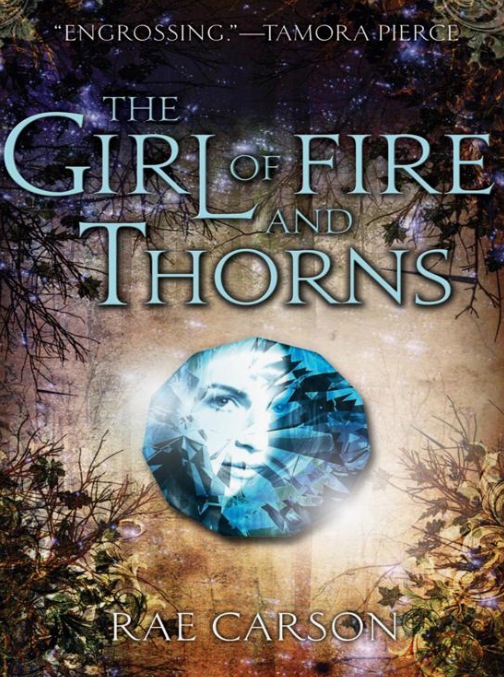
The Girl of Fire and Thorns, on the other hand was an example of a book I felt was written really well, so much so that even though I didn’t particularly enjoy the central premise of the novels, I went on to read the second book in the series. I read these on a recommendation, without researching them too heavily beforehand. However, fairly soon after starting the first book I realised that despite the fact it’s a fantasy novel set in a fantasy world, it’s heavily religious in its theme.

Fire and thornsIt’s not something I’d usually buy but I persevered – and I’m glad I did. On her sixteenth birthday, Elisa is married to a prince of a neighbouring kingdom. She is also named in an ancient prophecy that marks out one person a century for life of greatness. But this prophecy also makes her a target, and with the realm facing increasing tension and civil war, Elisa is unwillingly drawn into the heart of the action.

Like any good protagonist, Elisa undergoes a personal, and in this case a physical, transformation over the course of the book. However, this transformation was woven into the fabric of the book and it didn’t feel forced. There was also a great cast of supporting characters, and although I didn’t relate to some of them, this was purely because of the nature of their personalities rather than a lack of one.

Both books have a strong fantasy and magical element as well as an intricate central love story. The difference, however, was in how they engaged me as a reader. While I’ll definitely be reading the last in Rae Carson’s trilogy, I won’t be taking on the next books in the Mortal Instruments series any time soon.

Reading between the lines

Since their introduction, e-Readers have exploded in popularity. Their ability to allow avid readers to carry an entire library of books in one simple, lightweight device marked the beginning of a reading revolution and changed the shape of the publishing industry beyond recognition. But while sales of eBooks continue to go through the roof, sales of e-Readers themselves have waned over recent months as other electronic device compete for their own share of the market.

In particular, I’m talking about tablets. Figures from the Ipsos MediaCT Technology Tracker show that in the Christmas sales race, tablets won hands down. In the last quarter alone, tablet ownership doubled to 25%, meaning that statistically, one in four households owns one. By marked contract, e-Readers saw an increase of just 1% over the same period.

To me, this comes as no great surprise. Yes, e-Readers have their advantages for readers – a glare free screen makes reading easier on the eye, and even the most advanced Kindle is still distinctly cheaper than Apple’s cheapest iPad – but if you’re going to invest in something, it should be in something that can offer everything that we’ve come to expect from modern technology.

That’s where a tablet can really shine. It’s a camera, music player, browser, e-Reader, games console and even a SatNav all rolled into one. in a second, anyone with an iPad and access to the internet can download app’s from all of the major players in the reader market, from Kindle to Kobo to Nook, while any apple device also offers access to the iBookstore. Put simply, a tablet, or even a smartphone, means that you’re not just limited to just one platform. The amount of choice on offer is limitless.

You could argue that the latest Kindle model is actually more of a tablet than a traditional e-reader. It’s no longer an e-ink reader, having abandoned this in favour of a LCD screen, and it’s clearly trying to re-position itself in the market and compete with the likes of tablet giants such as Apple or Samsung. That said, I’m sure there are plenty of users out there who choose a Kindle specifically because it’s better to read on. And is Amazon’s attempt to revolutionise the traditional e-Reader reaching a new audience, or alienating the old one?

Review of ‘The Sisters Brothers’ by Patrick DeWitt

(Granta Books, January 2012)

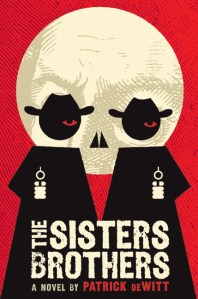
An homage to a classic Western, Patrick DeWitt’s ‘The Sisters Brothers’ is a tale of two notorious gunmen for hire, Eli and Charlie Sisters. Their latest mark – a one Hermann Kermit Warm.

The-Sisters-Brothers

Under the orders of the greedy and ruthless Commodore, the brothers travel across America to California, where their target is embroiled in the frenzy of the gold rush of the early 1850’s. Along the way they suffer numerous setbacks and come across a cast of extraordinary characters, from a crying man to a murderous child to a gypsy witch. Their fortunes change, from good to bad and back and forth again, and when they finally track down their quarry they have a life-changing choice to make.

While Charlie seems to thrive under their murderous choice of profession, Eli struggles with their nomadic and lonely lifestyle. The journey to California acts as a foil for his own personal search for something more. Ruled by his temper and prone to violent outbursts, he’s aware that he’s often manipulated by his brother but is keen to settle down to a more respectable way of life.

It’s narrated by Eli in an almost deadpan, slightly unhinged fashion that shapes the character of the entire book. When I was reading it I actually found myself imagining the dialogue said in an accent, something I don’t usually tend to do but in this case I just couldn’t help myself. It made the characters feel wonderfully real and gave them a real sense of personality.

Eli’s relationships – with his brother, his horses and with his feelings about what he does for a living – form the beating heart of this book. The classic younger brother, he looks up to Charlie with an almost hero worship and gladly follows in his lead. The dialogue between the two is incredibly realistic – it’s sometimes tense, sometimes cruel, sometimes brutally honest and sometimes the most natural thing in the world.

The way that this book was written was really interesting, and it’s easy to see how it made the long list for the Man Booker prize. It’s almost like it’s a selection of separate stories or anecdotes tied together by the strength of the central characters and the flair of DeWitt’s unique writing style. It was full of wit and dark humour and conjured up a vivid and colourful image of the life on the frontiers.

But while I can appreciate the incredibly talented writing and the construction, I’m not sure if I felt completely satisfied by the time I turned the last page. The story takes a while to kick in and I found the first quarter of the novel quite slow going. Even then, I reached the end and I felt like it was missing something story-wise. It felt as if so much time was used describing the details that the wider picture was lost to some extent. I know that other people have loved it, and if anyone else has read it I’d be really interested to know what you think!

Jonas Jonasson’s ‘The Hundred-Year-Old Man Who Climbed Out of the Window and Disappeared’

(Hesperus Press, July 2012)

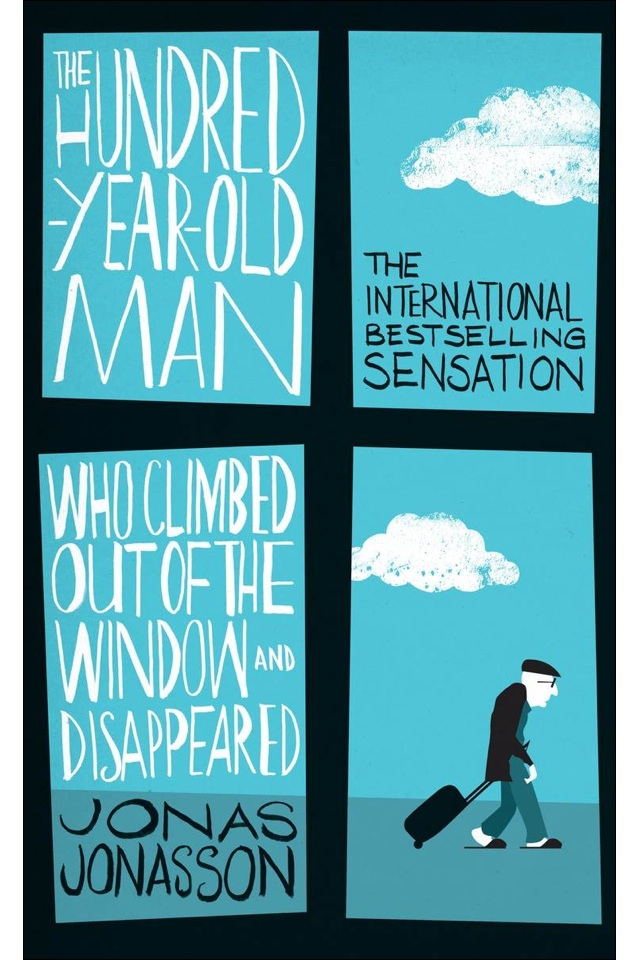
I’m the first one to admit that lots of books make me cry. I’m a softie. When it comes to the really sad ones, I’m a mess. John Green’s ‘The Fault in Our Stars‘ left me sniffling for a good half an hour after I’d finished the last page and I had to abandon ‘Marley and Me’ for an emotional break until I’d recovered enough to continue. But very few books make me actually laugh out loud. However, Jonas Jonasson’s ‘The Hundred-Year-Old Man Who Climbed Out of the Window and Disappeared’ was a delightful exception to the rule.

100It’s a tale of two halves. In 2005, Allen (the aforementioned centenarian) climbs out of the window of his nursing home to escape his 100th birthday party. The unprompted theft of a suitcase full of money sparks a series of progressively unlikely events that sees Allen being pursued by a criminal gang on one side and an increasingly bemused police department on the other. Along the way, his band of unusual companions expands to include a petty thief, a hot dog vendor, a flame haired beauty, an Alsatian and an elephant.

In a separate thread, we learn about exactly what Allen has done with his 100 years on this planet. We follow his journey as he travels around the globe, going wherever the wind takes him, exploiting ludicrously fortuitous circumstances for all they’re worth and doing precisely whatever comes into his head. By his late 60’s, he’s been on first name terms with some of the world’s most famous leaders – Franco, Stalin, Truman, Churchill and Kim Il Sung to name but a few – and has sat down for dinner with at least half of them.

We discover that Allen’s actions have played a crucial role in some of the most momentous events of the twentieth century, from the Atom bomb to the Cold War, despite the fact that he is unswervingly uninterested in politics. He also shows an almost unparalleled aptitude for languages, an astonishing lack of tact and what by all accounts should be an incredibly unhealthy ability to drink large quantities of vodka.

Some people have commented that by the end, this book gets a little bit too far-fetched, but you just have to take it with a (small) pinch of salt. Reading it was like watching a comedy TV sitcom. You know the jokes are coming and you’re waiting for the next one, ready to laugh along in time to the pre-recorded studio laughs. It makes you feel good.

One of my favourite parts was how the group gets around the problems involved in transporting an elephant throughout the book, whether that’s by getting an almost-qualified carpenter to transform a second hand bright yellow bus or by bribing officials in Bali. I also laughed out loud when I reached a section where Allen, pondering his next holiday destination, has a casual chat over drinks with some of the world’s most infamous communist leaders to discuss where they think will be the last place on earth their ideology would reach.

I read this as an e-book and as such, I can’t physically lend it to anyone. All I can do is stress, again, that you’ll enjoy it! Trust me. And when you’ve read it, let me know so I can talk about it some more!

Book release countdown…

After an intense hour browsing the internet for books to buy – and having read countless reviews and bloggers top read’s lists – I’ve come to the conclusion that most the books that I desperately want to read haven’t been released yet. With this in mind, I thought I’d put together a list of my own top five books to look out for this year. Make a note of the dates!

1. And the mountains echoed – Khaled Hosseini (Bloomsbury, 21st May 2013)

From the bestselling author of The Kite Runner and A Thousand Splendid Suns, And the Mountains Echoed is set in Afghanistan in the latter half of the twentieth century and focuses on the devastating effects of war on a country and on the families that live there. The author has a history of exploring powerful, evocative issues and it’s had rave reviews from everyone that’s read a preview copy.

2. Prisoner of Heaven – Carlos Ruiz Zafon (Phoenix, 11th April 2013)

Admittedly, this isn’t technically a new release, but I’ve been waiting for months for the paperback version to come out and it’s finally (almost) here! Previous books in the series – The Shadow of the Wind and The Angels Game – created an intricate world and a fascinating cast of characters. The Prisoner of Heaven completes this gothic, literary themed trilogy. Hopefully this lives up to the expectations I’ve got from the first two!

3. The Golem and the Djinni – Helene Wrecker (Blue Door, 15th August 2013)

This debut novel from Helene Wrecker has been compared to The Night Circus and A Discovery of Witches – both of which are amazing books that would probably make it onto my all time favourites list. Set in 19th century New York, it’s described as a tale of two fabled creatures, one made of fire and one make of clay, struggling to live, love and to overcome a powerful, villainous adversary.

4. MaddAddam – Margaret Atwood (Bloomsbury, 29th August 2013)

Margaret Atwood is one of those rare authors that, in my opinion, can write amazing fiction about any subject under the sun. This hugely anticipated finale to her dystopian trilogy (which also includes Oryx and Crake and The Year of the Flood) is being released at the end of the summer and I’m practically counting down the days.

5. The Winds of Winter – George R. R. Martin (Voyager Books, TBC)

I’ve put this one on the list because I want it to come out soon, but I’m not holding my breath. The author hasn’t given many clues as to when the manuscript will be finished, but sample chapters keep being released to keep everyone on tenterhooks. With a pretty dramatic cliffhanger at the end of the last instalment, I’m still hooked. If anyone has any news on this one, let me know!

Searching for Y/A gold

Over the past few years, Y/A fantasy fiction has exploded. The massive and unprecedented success of authors such as J. K. Rowling, Stephanie Meyer and Suzanne Collins has meant that the genre has become increasingly mainstream, appealing to both adults and teenagers alike.

Walk into any bookshop and you’ll find shelf upon shelf of books filled with vampires, werewolves, witches and the like, usually with a plucky human heroine thrown in there for good measure. But this begs the question, how far can you capitalise on the success of a genre before it becomes saturated?

For me, this is an issue that’s becoming more and more frustrating. Recently, I’ve been looking for a new series to read, but on several occasions I’ve picked up novels only to find them poorly written and full of stilted dialogue, underdeveloped, implausible characters and unconvincing love stories. I’ve been thinking about why this might be the case, and maybe it’s being caused precisely because of the success of books like the Twilight series. Massively popular even before they were adapted for our cinema screens, the films catapulted its actors into stardom and inspired a whole generation of devoted fans (myself included I might add!).

But now, people continue to search relentlessly for the new Twilight, or the new Harry Potter. And where there’s a demand, there will always be a supply. And although there are some really great books out there, there are equally a whole plethora of books that just don’t make the grade. In my opinion, the Y/A fantasy genre as a whole needs a refresh. I don’t know what the next big thing will be, but I do think that we need to see some new ideas that haven’t been done before. And most importantly, the readers need to want this too.

In the meantime, if anyone can recommend a really great series, please let me know!

A review of ‘Midnight in St Petersburg’ by Vanora Bennett

*Advance review*
(Century, April 2013)

In a city brimming with unrest and on the brink of revolution, one young woman steps off a train in possession of stolen papers and in search of a refuge from the violent pogroms of Kiev. Welcomed into the Leman family, Inna becomes an apprentice in their violin-making workshop and as she carves out her place in St Petersburg, she also gains a newfound confidence in herself.

midnight-st-petersburg-220x338As political tensions escalate, Inna finds herself torn between two men who represent very different paths. Wild and quick-tempered, Yasha throws himself into revolutionary politics with abandon. Their relationship, while built on passion and desire, also has the potential to destroy the safety of the life that Inna has created. On the other hand, respectable Englishman Horace, with a position at the prestigious Fabergé jewelry house, represents security and steady, unerring loyalty.

As the situation in St Petersburg becomes increasingly dangerous, Inna is forced to choose between following her head or her heart.

I loved this book. Set in one of the most tumultuous periods of Russian history, the reader experiences some of the most important events of the period through the eyes of an ordinary family who are just trying to live and to stay afloat. From a historical point of view, we’re introduced to some of the key figures of the time, from Rasputin to Lenin, and it really shone a light on the cultural and religious differences of the people living in St Petersburg at the time and the how events impacted on these different groups.

As someone who’s trying to learn Russian (albeit extremely slowly!) I really enjoyed how the author added little details explaining the nuances of Russian language and customs. I can only imagine how tough it would have been – and probably still is – to live in Russia as a foreigner. I also loved that the character of Horace was based on the real life story of the author’s great-uncle, it gave the novel a really personal touch.

One thing that I would say is that it took me a while to get really into the story. I didn’t immediately relate to Inna as a character, I found she came across as quite dispassionate and almost calculating. That said, as a young Jewish woman fighting for her survival, that’s probably exactly who she needed to be, and the tone contributed to the overall feeling of distrust and of tension revolutionary Russia. Still, it would have been great to have a bit more information about the central characters earlier on in the novel, as it might have helped me to become emotionally invested in them a bit earlier on.

By the end though, I was completely hooked. It was fast paced, packed full of tension and led up to a really satisfying conclusion. A definite must read for anyone interested in historical fiction!

(Massive thanks to the publishers for the review copy – much appreciated and enjoyed!)

A review of Julia Gregson’s Jasmine Nights

As I’ve no doubt mentioned before, I have a soft spot for historical novels. I especially like it if these historical novels happen to focus on a subject that I know relatively little about. As any reader will know, World War II has – quite rightly – inspired a whole plethora of books over the years, and in my experience it’s quite rare to come across one that has a completely fresh take on the genre. However, Julia Gregson’s Jasmine Nights managed to do just that.

Jasmine nightsFar away from the trenches of central Europe or the grey, rationed world of 1940’s London, Jasmine Nights presents a completely different aspect of war experienced in the exotic cities of Cairo, Alexandria and Istanbul and the open skies over the Egyptian desert.

Against the wishes of her family and in a move may alienate her from her father forever, ENSA singer Saba has risked everything to pursue her passion and to serve her country. Egypt offers her a chance to grow in ways that she could never have imagined, but as the war progresses she finds herself increasingly embroiled in the shady world of espionage, with devastating consequences.

Pilot Officer Dominic Benson, serving with the Desert Air Force, has recovered physically from a traumatic injury but is struggling with the guilt of losing his best friend. When he hears Saba singing in a hospital concert, he dares to hope again. But taking to the skies again comes with it’s own dangers, and when disaster strikes, can they find their way back to one another?

The switching narratives give an insight into two very different sides of war, from Saba, fighting for her independence from the constraints of home, to Dom, who has experienced the all the horrors of war first hand but can’t bring himself to talk about it. At it’s heart, it’s essentially a romance novel, and yes, it does have some clichés and yes, the characters could have been developed a little further, but that didn’t stop me from thoroughly enjoying it.

Prior to Jasmine Nights, I hadn’t read much about WWII in Africa, and this book was packed full of vivid visual imagery and a wealth of detail and description that spoke to all the senses. I listened to this as an audiobook, mostly on my way to and from work, and on several occasions found myself loitering in the snow because I couldn’t bring myself to turn it off! The protagonists are interesting and appealing and there’s enough tension and intrigue to keep you hooked all the way to the end. Above all it’s entertaining, what more do you need?