Book bribery or just clever marketing?

Over recent months, the decline of the British high street has showed no sign of slowing. And although fashion retail has suffered some major hits, it’s arguably electronic, book and video game stores that have the most to fear from online retailers and supermarket chain contenders, with major names such as Jessops, HMV and Blockbuster falling into administration in 2013 alone.

WaterstonesWhen it comes to bookshops, the collapse of Borders in 2011 is a stark reminder that it’s not just independent stores that are at risk – but that seemingly well established, international brands are also just as vulnerable. In fact, despite their strong corporate support system, I’d argue that larger chains have their own difficulties in that they may struggle to build a personal connection to their customer base.

One retailer that’s trying to buck the trend is Waterstones. In a bid to boost sales and to challenge the rise of e-readers, this high street heavyweight has recently announced a new initiative that will see it team up with popular authors to offer exclusive bonus content. The business has signed a deal with Chocolat author Joanne Harris for an additional, non-plot essential chapter for her latest novel – Peaches For Monsieur Le Curé – which will be only available in copies purchased from Waterstones.

But as readers, what do we think of this new initiative? On the one hand, I can’t help but feel that authors should want their book to be the best that they possibly can be, regardless of who’s reading it or where they’ve purchased it from. Their reasons for signing up to the scheme may have stemmed from the best of intentions, but at the end of the day some fans are going to miss out, whether that’s through ignorance of the existence of Waterstone’s extra material or for financial reasons.

That said, is the Waterstones scheme really that different to others that have preceded it? The Richard and Judy Book Club for example, which is available exclusively at WH Smith, has long since offered readers additional reading material and discussion points, while many publishers choose to offer a sample chapter of the authors next novel as a teaser. And moving away from books for a second, DVD’s often provide viewers that chance to access deleted scenes or interviews with the cast.

At the end of a day, a business is a business and in these challenging economic times everyone has to think of new and innovative ways to make money and increase their profit margins. With online retailers and larger supermarket chains now able to offer significantly reduced prices, leaving traditional high street stores struggling to compete, the promise of additional material is just one way of helping stores like Waterstones to stand out from the crowd and to offer customers more for their money.

As for me – I’m torn. I can see the advantages of these initiatives from a marketing perspective and in theory I’d love to buy all my books from Waterstones. But in reality I just can’t afford to, especially not with my reading habits! If anyone has any thoughts on this, let me know!

Happy Mother’s Day!

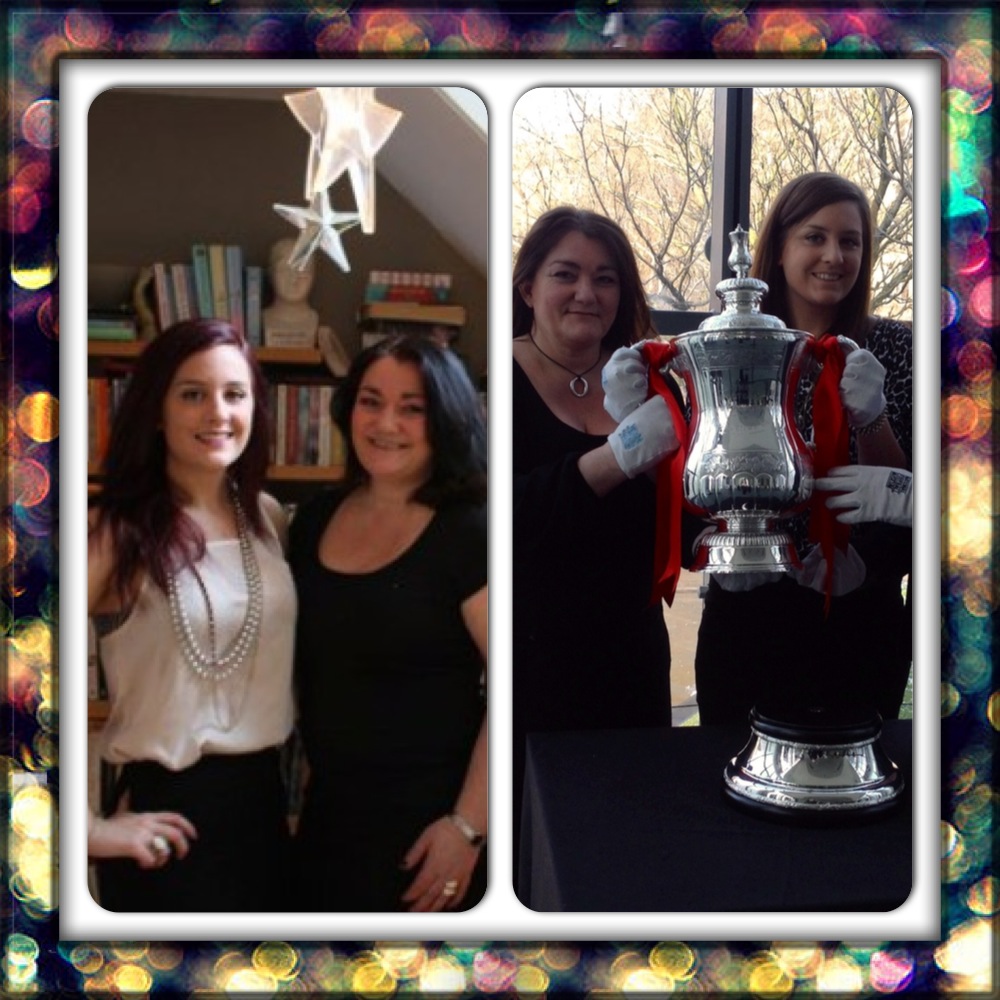
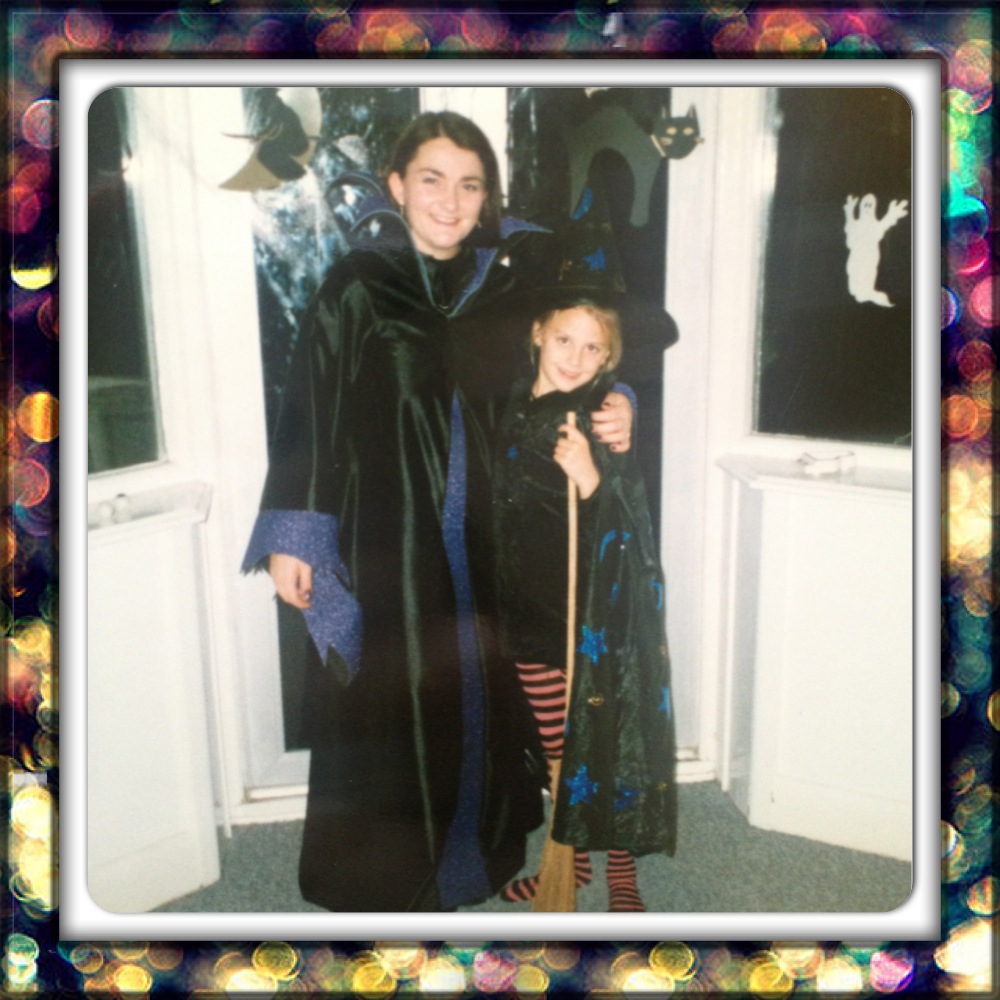
On a good day, I live a four hour drive away from my mum, and today she’s actually on holiday in Germany so she’s even further away than ever. And as I won’t be seeing her to say Happy Mother’s Day in person, I thought I’d write a post dedicated to her instead.

She’s always there for me, keeping me company on the phone, answering obscure cooking questions on demand and letting me vent if I’ve had a particularly crap day. She always goes after what she wants, whether that’s learning something new or finding the new dream home (hopefully she’ll find one soon!), and she’s got a whole host of (slightly mental!) hobbies and talents, from shooting, art or acupuncture to chocolate making or belly dancing!

So for my Mum, I miss you and I love you and I can’t wait to see you soon.
Mum 3Mum 2Mum 1


Campaigning for women worldwide

iwd_squareToday, March 8th, is International Women’s Day. In honour of the event, I’m taking a slight detour from my usual literary topics to try and raise awareness of some of the issues facing women across the world, and in particular, in South Africa.

Last month, while reading Cosmopolitan magazine’s special feature on International Women’s Day, I came across a shocking statistic, so shocking in fact that I felt compelled to write about it. A massive 37% of South African men admit to rape, although only a tiny percentage of these crimes are reported. What makes this worse is that South Africa has a 24.8% HIV & AIDS infection rate, affecting an estimated 5 million adults and children. The high rape count could be considered a driving factor behind that fact that the majority of new cases of HIV infection are women or girls (unfortunately, some men in the country still believe that sex with a virgin can cure AIDS, resulting in a high number of increasingly young victims).

One organisation that’s committed to helping address this issue is VSO (http://www.vso.org.uk/), an international development charity that works with communities across the globe. In particular, it’s doing a lot of work in South Africa to achieve equality for women. With one in four women fleeing their homes as a result of domestic violence, the work of charities in this area is vitally important. Many women are also financially dependant on men and face the additional challenge of caring for family members living with, or orphaned by, AIDS related illnesses.

International Women’s Day is a great opportunity to raise awareness of the issues – like this one – that women worldwide face on a daily basis, so this is just a quick shout out to encourage everyone to take the opportunity to help spread the word and to do something to support the efforts of these charities, not just today but all year round.

* all facts are sourced from the VSO website (here) and Cosmopolitan March 2013 issue, p73

Review of Gillian Flynn’s Gone Girl

With over 2 million copies sold worldwide, Gillian Flynn’s Gone Girl was one of the most talked about books of the last year- and rightly so.

Gone GirlA dark and disturbing thriller, Gone Girl is the story of the disappearance of a seemingly perfect wife on her fifth wedding anniversary. For Nick, left behind in smalltown Carthage, Missouri, Amy’s disappearance plunges him into a waking nightmare. As the police and the American public begin to turn against him, it’s clear that something about his take on recent events doesn’t quite add up.

The first part of the novel switches between Nick’s first hand experiences of the days immediately after the disappearance and Amy’s diary entry’s, dating back to the day that they first met. But as the book progresses, we begin to realise that the two narratives we’re hearing are telling very different stories, and that at least one of the two of them is not telling the whole truth. In fact, they’re telling anything but the truth.

Then – and there are spoilers coming up so if you don’t want to know, don’t read ahead – the second half of the book hits and we realise that we have two very unreliable and wholly unlikeable characters on our hands. Both Nick and Amy are lying, concealing and misleading both themselves and the reader. It’s a bold move from Gillian Flynn, as she runs the risk of alienating her audience. Not everyone wants to read a whole novel with central characters they can’t relate to.

But in this case, it’s a risk that really paid off. Nick and Amy are human and throughout the novel they display very human weaknesses. Whether they have any redeeming qualities is a very different matter.

Gillian Flynn really ramps up the tension and holds her readers in suspense the whole way through. I was hooked and couldn’t put it down until I turned last pages in the (very) early hours of the morning! Ultimately, in Gone Girl Gillian Flynn has created a master psychological thriller that thoroughly deserves the praise that has been heaped upon it.

Review of The Secret Keeper by Kate Morton

On a scorching summer’s day in 1961, 16-year-old Laurel is the only witness to a shocking crime that will shake the foundations of her beliefs forever. Fast forward 40 years and Laurel, sitting at her dying mother’s bedside, struggles to reconcile the events of that fateful day with the loving family she has always known – before the truth is lost forever.

The Secret KeeperThe story stretches from 1940’s London, when England is caught up in the midst of The Blitz, to a rural family home in 2011. To say goodbye to her mother, Laurel must try to piece together a mystery seventy years old and in doing so, will find herself immersed in the lives of Dorothy, Jimmy and Vivian, whose paths will collide with devastating and far reaching effects.

I’ve read all of Kate Morton’s previous novels and really enjoyed them, but I’m also well aware that this type of novel – which combines multiple threads set in different periods of history working their way towards a dramatic revelation and family resolution at the end of the novel – is in danger of becoming a generic fallback format for authors writing in this genre. However, in The Secret Keeper, Kate Morton has managed to take this type of novel and somehow make it seem fresh, new and exciting.

I actually listened to this as an audiobook and thought it really worked in this format. The narrator, Caroline Lee did a really good job of maintaining a sense of urgency and interest despite the fact that the recording was nearly 20 hours long.

The big twist at the end of this novel was one that I really didn’t see coming, and I couldn’t stop thinking about it long after I’d finished the book. Also with this style of novel, I tend to have a ‘favourite’ thread, and can sometimes come to resent chunks of the novel set outside of that time or away from those characters. This didn’t happen this time. I enjoyed every strand of this book equally and I actually slowed down towards the end because I wanted to stay in the world that Morton had created for just that little bit longer.

A Review of ‘Tell The Wolves I’m Home’ by Carol Rifka Brunt

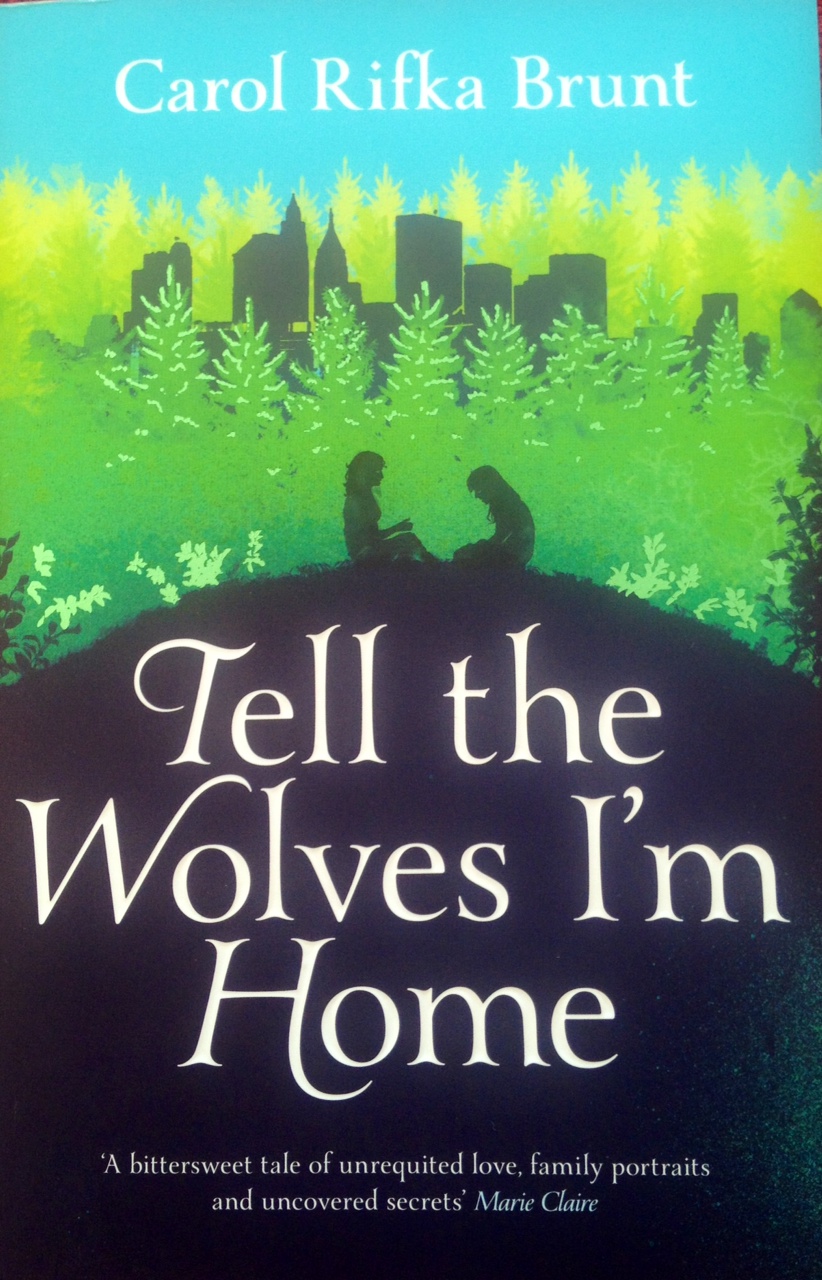
Tell the Wolves I'm HomeSet in 1980’s New York, ‘Tell the Wolves I’m Home’ is an intimate portrayal of one family in the grips of grief. Narrated by 14-year-old June, the novel follows the Elbus family in the wake of the death of Finn, June’s uncle, from AIDS in the opening pages

Devastated by the loss, June forms an unlikely connection with a strange man she sees at the funeral who might just be able to understand what she’s going through. The fact that this man is someone who her parents clearly don’t want her to know anything about is one more obstacle that June must overcome in her journey to make sense of recent events. Along the way, she must also find a way to reconnect with her older sister, Greta, who is dealing with issues of her own.

‘Tell The Wolves I’m Home’ is not just a novel about a family in turmoil. It’s also a novel about love and loss, friendship and jealousy, guilt and regret – and everything else in-between.Each member of the family has their own demons to tackle, and throughout the novel we’re right there with them as they attempt to come to terms with their feelings and mend the cracks in their relationships.

The author takes a difficult and highly emotionally charged topic and addresses it in way that’s both sensitive and refreshingly honest. As well as looking at the realities of living with and coping with AIDS, she also examines people’s responses to the disease, which in the mid-1980’s were all too often misinformed and misguided.

I found it hard to believe that this was Carol Rifka Brunt’s first novel. She writes with unerring compassion and conviction to create a vivid cast of characters that really come to life in the imagination of her readers, and I can’t wait to see what she comes out with next.

Whether you like true crime, romance or fantasy, this year’s Quick Read’s collection has something for everyone…

quickreads_banner

Today might be Valentines Day, but the 14th February also marks another very special occasion – the launch of the Quick Reads 2013 collection.

Formed in 2006, Quick Reads is a fantastic charity that aims to encourage adults across the UK to pick up a book and discover the joys of reading. Every year, it enlists some of the biggest and brightest names in literature to write a series of short books designed to deliver an entertaining and engaging story in no more than 128 pages.

Quick_Reads_Logo_BlackWith some pretty compelling research that suggests that some 12 million adults in the UK find reading difficult and may never as picked up a book, the project is a great way of building confidence in those who may not have been readers in the past – whether that’s because they find books intimidating, because they think reading is boring or simply because they just don’t think that they want to.

It’s a brilliant and unique project, and this year, Quick Reads is pulling out all the stops to build awareness and encourage people to take part. Available from most major retailers and libraries, the books are not just intended for the general public, they have proved to be a vital educational tool for environments such as further education colleges, prisons, family centres, care homes and workplace learning centres. Plus, there’s also the knock-on effect on the next generation, as adults who discover reading through the Quick Reads charity are much more likely to encourage their children to read.

When it comes to the books themselves, there’s something for everyone. I’m particularly looking forward to ‘A Dreadful Murder’ by Minette Walters. Based on a true story, the book reconstructs the events of a mysterious murder on the grounds of a large country estate in a bid to uncover the culprit. It sounds to me like it might have echoes of Kate Summerscale’s The Suspicions of Mr Whicher and I can’t wait to get my hands on it.

But if crime’s not your thing, there’s plenty more on offer in the form of a new Doctor Who story from Mike Tucker as well as a feel good romantic adventure in ‘Love is Blind’ by Kathy Lette.

Former SAS operative and soldier Andy McNab has also contributed to the collection with a brand new book reflecting on his time in the forces. Recruited following a stint in a juvenile detention facility at the age of sixteen, but with a reading age of just eleven, ‘Today Everything Changes’ tells of how his own experience of the Army education system changed his life forever.

I’ll post again with details of the individual books as soon as I’ve had a chance to read and review, but for now, this is just a short shout out to encourage everyone to spread the word!

More information on Quick Reads as well as all of this year’s books and authors can be found at http://www.quickreads.org.uk/ 

Is it right to rewrite a classic?

Last week, I walked past W. H. Smith and saw a full stand of Enid Blyton novels in pride of place in the children’s books department. Although the branding and packaging was very different from when I first read the books, sourced from a second hand bookshop nearly twenty years ago, it was great to see that the books I loved in my childhood are still popular today. In fact, Enid Blyton is still one of the UK’s most popular children’s authors, regularly making the list of most borrowed authors from libraries even now, forty-five years after her death in1968. The Famous Five series in particular still sells some half a million books every year.

But are they really the same novels they were when they were first published? In 2010, the Famous Five books were given their most dramatic overhaul to date. In a bid to make the language of novels first published in 1942 more accessible to a new generation of readers, the publisher has made some notable changes to various references, phrases and dialogue. Amongst other things, this included changing ‘mother and father’ to ‘mum and dad’, ‘mercy me’ to ‘oh no’ and removing what could be considered “dated” dialogue such as ‘jolly’ and ‘fellow’. Bizarrely, one of the changes was replacing the word ‘peculiar’ with ‘strange’.

Some of these changes, such as the decision to replace any words that might have become racist since the original publication of the series, I can understand, if only because we could potentially run the risk of allowing children to think that the use of this language is still acceptable. But what happens when the original books see the four children having a perfectly ‘gay ‘time, or something similar? These references too have been amended in recent times, despite the fact that they were written at a time when the word had no other meaning than simply being happy.

And despite the changes that have been made, there are still several basic aspects of the books that remain at odds with modern sensibilities, such as the predilection to let children go off for long periods of time without any adult supervision. And if, as this would suggest, the novels can never truly be made adapted for the 21st century, should they really be changed at all? My answer to this would have to be no.

The very fact that the Famous Five books are still so popular – they have sold over 50 million copies in 50 countries – suggests that the stories, which feature adventure, excitement and the absence of adults, haven’t lost their basic appeal. The fact that the books are, essentially, a product of the time in which they were written shouldn’t take away from this. Maybe it’s the fact that they’re children’s books, and as such not protected by their status as fine, classic literature like authors such as Dickens, or that the date of their publication in the 1940’s, 50’s and 60’s means that they’re still considered relatively modern compared to books like Little Women or Alice in Wonderland?

Whatever the case, I still believe that the Famous Five books, in their original form, should be used as a tool to teach children about the past and the accepted way of life in the time the novels were written. Although our views on things like gender roles or education may have changed, and the advent of technology has changed Enid Blyton’s world beyond recognition, children should still be aware of their heritage and the history of the world we live in. Literature, and classic children’s fiction in particular, is the perfect way to achieve this.

Charlotte Rogan’s The Lifeboat

Disturbing, intense and claustrophobic, Charlotte Rogan’s The Lifeboat follows the lives of 39 passengers following the sinking of an ocean liner in 1914. Adrift in the middle of the Atlantic Ocean with the possibility of rescue looking less and less likely, the lifeboat is dangerously over-full and provisions increasingly scarce.Charlotte Rogan's The Lifeboat

Thrown together in the confined space of the boat, the passengers face moral dilemmas and difficult decisions in their struggle for survival. Newly formed relationships are pushed to the limit as personalities clash and the survivors’ battle to take control of their surroundings. The Lifeboat tackles the darkest places of the human psyche and also reminds us of the wild and brutal potential of the natural world.

The novel is told through the words of 22-year-old Grace Winter, who came on board the doomed ship with her new husband, Henry, and was left widowed after the accident. However, throughout the book, we start to suspect that Grace may not be a very reliable source. Her narrative tone becomes increasingly distant and dispassionate, and the truth behind events is thrown into question.

As we follow the passengers from their perilous situation on the open seas to the trials of the courtroom on their eventual return, Charlotte Rogan tackles potentially contentious issues as she challenges everything from religious belief to inequality in gender roles.

I raced through this book and had to stop myself from reading ahead to the end. Some people have commented that it’s hard to sympathise with the characters, but I thought this just added to the overall tone of the novel. The author deliberately doesn’t write characters that are likeable. Instead, she uses the passengers of the lifeboat to explore the depths of human nature and personalities, both good and bad, as well as the lengths we will go to survive.

It’s impossible to imagine how we ourselves would react if we were forced into the same situation and you can’t help but put yourself in their place. It’s a gripping, and thought-provoking read, and although admittedly it did make for slightly uncomfortable reading I’d definitely recommend it.

The King in the car park

Today, a skeleton found underneath a car park in Leicester was confirmed to be the remains of Richard III. The last King of the Plantagenet line, his remains have laid undisturbed on the site of the old Grey Friars church since he died in battle at Bosworth Field in 1485. I won’t go into details of the discovery as it’s been discussed in great depth all over the Internet, but suffice it to say that DNA testing and extensive examination of the skeleton has proved his identity beyond reasonable doubt.

Richard IIIThroughout history, Richard III has proved to be a highly contentious figure and has long been shrouded in mystery, not least because of his suspected involvement in the disappearance of the Princes in the Tower. This mystery, along with the dubious politics and intense and famed rivalry of the York family, has inspired numerous and varying depictions of King Richard III in literature throughout the ages, from Shakespeare’s classic tragedy to Philippa Gregory’s latest series, The Cousins’ War.

These works have immortalised the Richard III and have irrevocably shaped the way that we view him today. However, the reliability of our literary sources has been called into question, with many insisting that this representation of the long dead king was born out of fear, prejudice and hate. It’s just one example of how literature, both past and present, can have a powerful influence over our thoughts and shape how we’re remembered by future generations.

However in this case, one of the most prevalent myths about Richard III circulated by Shakespeare’s play has actually been proven to be true. The late king really was a hunchback. But there’s only so much that physical evidence can prove. No matter how hard we look, his skeleton will never reveal what really happened to the princes or the true relationship between Richard and his brothers, wife, nephews or country.

It’s this ever present ambiguity that continues to fascinate historians, authors and the public alike – and it’s what keeps past and present historical fiction at the top of the bestseller lists. The fact that we can never really know what happened continues to prompt a hunger for knowledge amongst readers, and authors are only too happy to have the chance to fill in the blanks. So until we invent a time machine or find a portal to the past, historical fiction is most definitely here to stay!