High street vs. online book selling

Last week, I wrote about the perceived threat to the publishing industry from self-publishing (here). This week, I wanted to look at another issue facing the sector – the decline of the high street bookstore in favour of online super-sellers such as Amazon.

One of the main issues facing high street bookshops is that the simply can’t afford to compete with Amazon on prices. There are a number of measures and initiatives being put in place to combat this (see here for more info on something Waterstones is trialling), but the fact is that books are generally cheaper online thanks to low overheads and running costs of e-sellers.

There are notable exceptions to the rule, and impulse buyers, author signings and loyal booklovers with a preference for seeing and feeling a book before buying have and will continue to ensure that bookshops remain a feature on our high streets. However, these shops are increasingly facing even more competition. Major supermarket chains in particular are starting to encroach on their territory and are also able to offer popular books at cut prices.

One fear associated with the decline of bookstores is that readers won’t have the same capacity to discover new books, resulting in falling sales and a shrinking market. While I’m a proud supporter of high street book stores, I’m feel that this is an area where social media can really come into its own. For a while now, Twitter has been a great source of information and a major platform for conversation. Bloggers and professional reviewers are constantly pouring out a stream of opinion about new books and trends, which should help to drum up enthusiasm for a book prior to its publication and beyond.

Author John Green, for example, showed just how effective social media platforms such as Twitter and YouTube can be in driving sales in the run up to the launch of The Fault in Our Stars. Extensive vlogging, tweeting and audience engagement activity led to massive pre-orders, and the novel topped the Amazon best sellers list before Green had even finished writing it.

Hopefully, moving forward the industry will find a happy medium that works for everyone and every business model – and that continues to do so for the foreseeable future.

Going digital

The explosion of self-publishing platforms has, understandably, been a topic of great debate in the publishing world. Quite simply, these platforms have the potential to completely transform the structure of publishing as we know it – from who can publish a book in the public realm to the price that a book will be sold at. But what does this really mean for the industry?

In my opinion, ebooks and self-publishing present a range of new and exciting possibilities to traditional publishers to evolve. Take Penguin, for example. The publisher has recently invested into author services and self-publishing platform, Author Services, while in 2011, ebook sales made up 12% of its total revenue. It’s an impressive percentage that effectively demonstrates the direction that the market is moving in, and from a practical point of view, I can see the appeal. Embracing digital publishing has the potential to reduce overheads and unnecessary outgoings while still offering almost limitless opportunities for expansion.

The perceived threat comes from the vast array of authors who are now able to bypass traditional publishing houses and publish and market their work themselves. Examples of hugely successful self-published authors are not hard to find, and there are a few in particular that any discussion of the topic can’t fail to mention. E. L. James and her Fifty Shades trilogy is one. Hugh Howey and his widely acclaimed apocalyptic novel ‘Wool’ is another.

But I think it’s worth noting that although these authors began their journey in self-publishing, they also made agreements with traditional publishers to produce hard copies of their books. This undoubtedly is a major factor in their success. In fact, Fifty Shades accounted for almost one in ten of the 750 million books sold globally by publisher Random House across the year, resulting in record annual revenues and profits. And although I’d been reading rave reviews of Howey’s ‘Wool’ for a while, it wasn’t until it came out in paperback that I invested in a copy for myself.

This goes to show that the input and expertise of a traditional publishing house is still very much in demand. By positioning themselves as an expert in possession of all of the tools that self-published authors need to hit the big time, publishers can ensure that their knowledge and business model can go hand in hand with the digital revolution.

The real danger posed by self-publishing, as far as I can see, is in the already established, big name authors of the publishing world. There’s a real possibility that as self-publishing becomes more established, these authors could jump ship and take on the role of publisher and marketer for themselves, safe in the knowledge that a large percentage of their loyal readership will duly follow.

Whatever happens, the publishing industry almost certainly has more to gain from embracing digital publishing than it has to lose.

Reading between the lines

Since their introduction, e-Readers have exploded in popularity. Their ability to allow avid readers to carry an entire library of books in one simple, lightweight device marked the beginning of a reading revolution and changed the shape of the publishing industry beyond recognition. But while sales of eBooks continue to go through the roof, sales of e-Readers themselves have waned over recent months as other electronic device compete for their own share of the market.

In particular, I’m talking about tablets. Figures from the Ipsos MediaCT Technology Tracker show that in the Christmas sales race, tablets won hands down. In the last quarter alone, tablet ownership doubled to 25%, meaning that statistically, one in four households owns one. By marked contract, e-Readers saw an increase of just 1% over the same period.

To me, this comes as no great surprise. Yes, e-Readers have their advantages for readers – a glare free screen makes reading easier on the eye, and even the most advanced Kindle is still distinctly cheaper than Apple’s cheapest iPad – but if you’re going to invest in something, it should be in something that can offer everything that we’ve come to expect from modern technology.

That’s where a tablet can really shine. It’s a camera, music player, browser, e-Reader, games console and even a SatNav all rolled into one. in a second, anyone with an iPad and access to the internet can download app’s from all of the major players in the reader market, from Kindle to Kobo to Nook, while any apple device also offers access to the iBookstore. Put simply, a tablet, or even a smartphone, means that you’re not just limited to just one platform. The amount of choice on offer is limitless.

You could argue that the latest Kindle model is actually more of a tablet than a traditional e-reader. It’s no longer an e-ink reader, having abandoned this in favour of a LCD screen, and it’s clearly trying to re-position itself in the market and compete with the likes of tablet giants such as Apple or Samsung. That said, I’m sure there are plenty of users out there who choose a Kindle specifically because it’s better to read on. And is Amazon’s attempt to revolutionise the traditional e-Reader reaching a new audience, or alienating the old one?

Book release countdown…

After an intense hour browsing the internet for books to buy – and having read countless reviews and bloggers top read’s lists – I’ve come to the conclusion that most the books that I desperately want to read haven’t been released yet. With this in mind, I thought I’d put together a list of my own top five books to look out for this year. Make a note of the dates!

1. And the mountains echoed – Khaled Hosseini (Bloomsbury, 21st May 2013)

From the bestselling author of The Kite Runner and A Thousand Splendid Suns, And the Mountains Echoed is set in Afghanistan in the latter half of the twentieth century and focuses on the devastating effects of war on a country and on the families that live there. The author has a history of exploring powerful, evocative issues and it’s had rave reviews from everyone that’s read a preview copy.

2. Prisoner of Heaven – Carlos Ruiz Zafon (Phoenix, 11th April 2013)

Admittedly, this isn’t technically a new release, but I’ve been waiting for months for the paperback version to come out and it’s finally (almost) here! Previous books in the series – The Shadow of the Wind and The Angels Game – created an intricate world and a fascinating cast of characters. The Prisoner of Heaven completes this gothic, literary themed trilogy. Hopefully this lives up to the expectations I’ve got from the first two!

3. The Golem and the Djinni – Helene Wrecker (Blue Door, 15th August 2013)

This debut novel from Helene Wrecker has been compared to The Night Circus and A Discovery of Witches – both of which are amazing books that would probably make it onto my all time favourites list. Set in 19th century New York, it’s described as a tale of two fabled creatures, one made of fire and one make of clay, struggling to live, love and to overcome a powerful, villainous adversary.

4. MaddAddam – Margaret Atwood (Bloomsbury, 29th August 2013)

Margaret Atwood is one of those rare authors that, in my opinion, can write amazing fiction about any subject under the sun. This hugely anticipated finale to her dystopian trilogy (which also includes Oryx and Crake and The Year of the Flood) is being released at the end of the summer and I’m practically counting down the days.

5. The Winds of Winter – George R. R. Martin (Voyager Books, TBC)

I’ve put this one on the list because I want it to come out soon, but I’m not holding my breath. The author hasn’t given many clues as to when the manuscript will be finished, but sample chapters keep being released to keep everyone on tenterhooks. With a pretty dramatic cliffhanger at the end of the last instalment, I’m still hooked. If anyone has any news on this one, let me know!

Searching for Y/A gold

Over the past few years, Y/A fantasy fiction has exploded. The massive and unprecedented success of authors such as J. K. Rowling, Stephanie Meyer and Suzanne Collins has meant that the genre has become increasingly mainstream, appealing to both adults and teenagers alike.

Walk into any bookshop and you’ll find shelf upon shelf of books filled with vampires, werewolves, witches and the like, usually with a plucky human heroine thrown in there for good measure. But this begs the question, how far can you capitalise on the success of a genre before it becomes saturated?

For me, this is an issue that’s becoming more and more frustrating. Recently, I’ve been looking for a new series to read, but on several occasions I’ve picked up novels only to find them poorly written and full of stilted dialogue, underdeveloped, implausible characters and unconvincing love stories. I’ve been thinking about why this might be the case, and maybe it’s being caused precisely because of the success of books like the Twilight series. Massively popular even before they were adapted for our cinema screens, the films catapulted its actors into stardom and inspired a whole generation of devoted fans (myself included I might add!).

But now, people continue to search relentlessly for the new Twilight, or the new Harry Potter. And where there’s a demand, there will always be a supply. And although there are some really great books out there, there are equally a whole plethora of books that just don’t make the grade. In my opinion, the Y/A fantasy genre as a whole needs a refresh. I don’t know what the next big thing will be, but I do think that we need to see some new ideas that haven’t been done before. And most importantly, the readers need to want this too.

In the meantime, if anyone can recommend a really great series, please let me know!

Book bribery or just clever marketing?

Over recent months, the decline of the British high street has showed no sign of slowing. And although fashion retail has suffered some major hits, it’s arguably electronic, book and video game stores that have the most to fear from online retailers and supermarket chain contenders, with major names such as Jessops, HMV and Blockbuster falling into administration in 2013 alone.

WaterstonesWhen it comes to bookshops, the collapse of Borders in 2011 is a stark reminder that it’s not just independent stores that are at risk – but that seemingly well established, international brands are also just as vulnerable. In fact, despite their strong corporate support system, I’d argue that larger chains have their own difficulties in that they may struggle to build a personal connection to their customer base.

One retailer that’s trying to buck the trend is Waterstones. In a bid to boost sales and to challenge the rise of e-readers, this high street heavyweight has recently announced a new initiative that will see it team up with popular authors to offer exclusive bonus content. The business has signed a deal with Chocolat author Joanne Harris for an additional, non-plot essential chapter for her latest novel – Peaches For Monsieur Le Curé – which will be only available in copies purchased from Waterstones.

But as readers, what do we think of this new initiative? On the one hand, I can’t help but feel that authors should want their book to be the best that they possibly can be, regardless of who’s reading it or where they’ve purchased it from. Their reasons for signing up to the scheme may have stemmed from the best of intentions, but at the end of the day some fans are going to miss out, whether that’s through ignorance of the existence of Waterstone’s extra material or for financial reasons.

That said, is the Waterstones scheme really that different to others that have preceded it? The Richard and Judy Book Club for example, which is available exclusively at WH Smith, has long since offered readers additional reading material and discussion points, while many publishers choose to offer a sample chapter of the authors next novel as a teaser. And moving away from books for a second, DVD’s often provide viewers that chance to access deleted scenes or interviews with the cast.

At the end of a day, a business is a business and in these challenging economic times everyone has to think of new and innovative ways to make money and increase their profit margins. With online retailers and larger supermarket chains now able to offer significantly reduced prices, leaving traditional high street stores struggling to compete, the promise of additional material is just one way of helping stores like Waterstones to stand out from the crowd and to offer customers more for their money.

As for me – I’m torn. I can see the advantages of these initiatives from a marketing perspective and in theory I’d love to buy all my books from Waterstones. But in reality I just can’t afford to, especially not with my reading habits! If anyone has any thoughts on this, let me know!

Happy Mother’s Day!

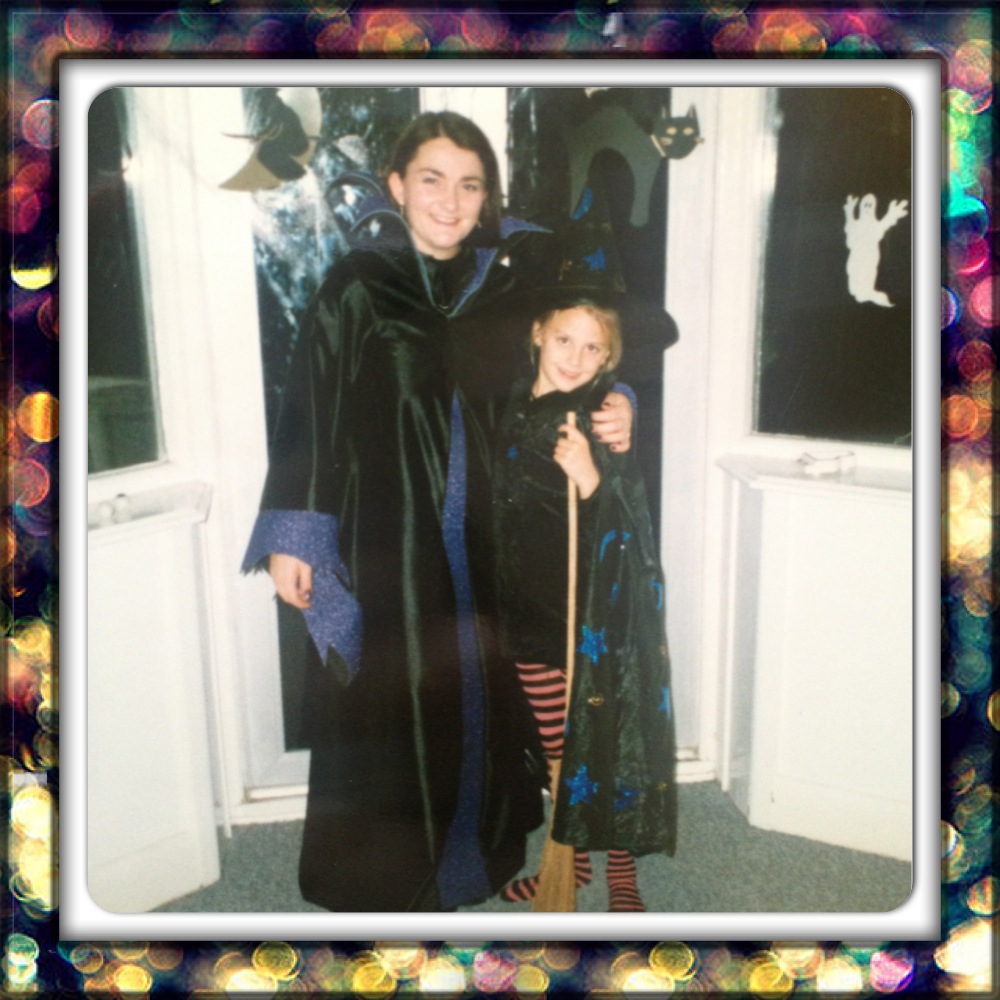
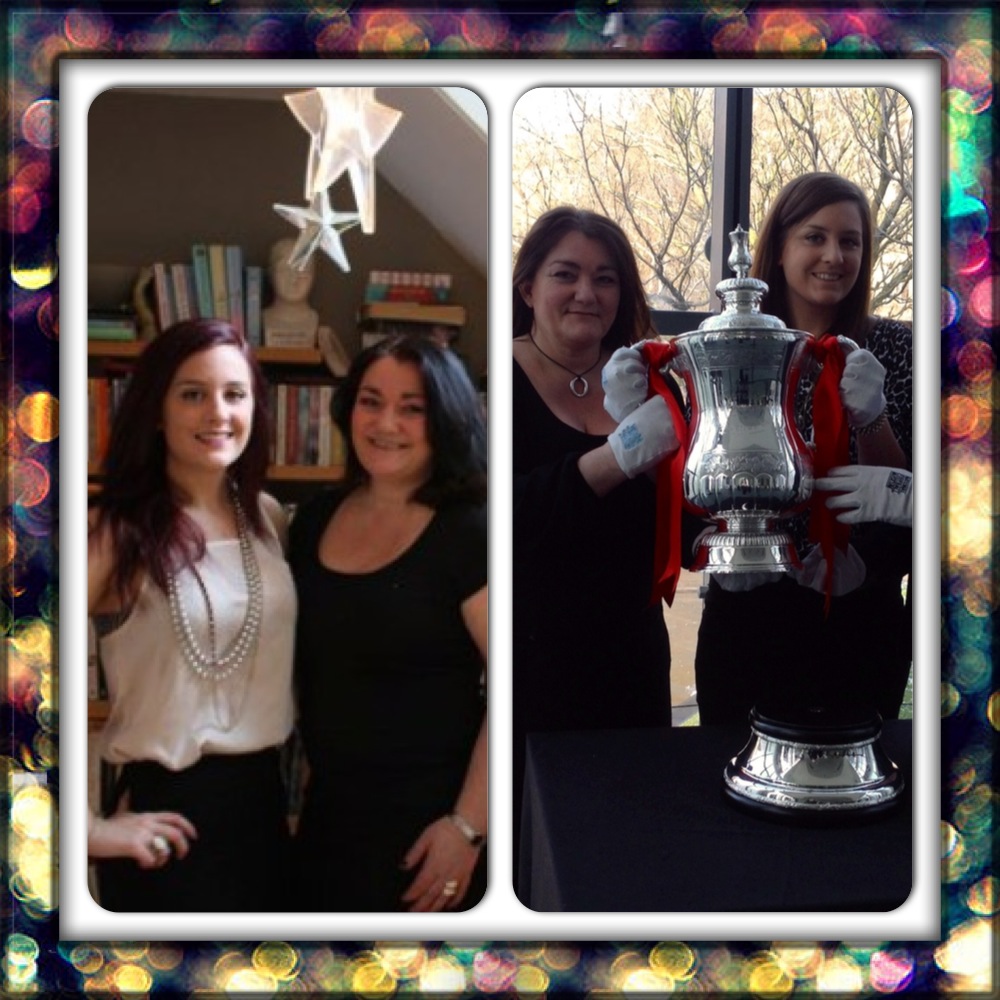
On a good day, I live a four hour drive away from my mum, and today she’s actually on holiday in Germany so she’s even further away than ever. And as I won’t be seeing her to say Happy Mother’s Day in person, I thought I’d write a post dedicated to her instead.

She’s always there for me, keeping me company on the phone, answering obscure cooking questions on demand and letting me vent if I’ve had a particularly crap day. She always goes after what she wants, whether that’s learning something new or finding the new dream home (hopefully she’ll find one soon!), and she’s got a whole host of (slightly mental!) hobbies and talents, from shooting, art or acupuncture to chocolate making or belly dancing!

So for my Mum, I miss you and I love you and I can’t wait to see you soon.
Mum 3Mum 2Mum 1


Campaigning for women worldwide

iwd_squareToday, March 8th, is International Women’s Day. In honour of the event, I’m taking a slight detour from my usual literary topics to try and raise awareness of some of the issues facing women across the world, and in particular, in South Africa.

Last month, while reading Cosmopolitan magazine’s special feature on International Women’s Day, I came across a shocking statistic, so shocking in fact that I felt compelled to write about it. A massive 37% of South African men admit to rape, although only a tiny percentage of these crimes are reported. What makes this worse is that South Africa has a 24.8% HIV & AIDS infection rate, affecting an estimated 5 million adults and children. The high rape count could be considered a driving factor behind that fact that the majority of new cases of HIV infection are women or girls (unfortunately, some men in the country still believe that sex with a virgin can cure AIDS, resulting in a high number of increasingly young victims).

One organisation that’s committed to helping address this issue is VSO (http://www.vso.org.uk/), an international development charity that works with communities across the globe. In particular, it’s doing a lot of work in South Africa to achieve equality for women. With one in four women fleeing their homes as a result of domestic violence, the work of charities in this area is vitally important. Many women are also financially dependant on men and face the additional challenge of caring for family members living with, or orphaned by, AIDS related illnesses.

International Women’s Day is a great opportunity to raise awareness of the issues – like this one – that women worldwide face on a daily basis, so this is just a quick shout out to encourage everyone to take the opportunity to help spread the word and to do something to support the efforts of these charities, not just today but all year round.

* all facts are sourced from the VSO website (here) and Cosmopolitan March 2013 issue, p73

Whether you like true crime, romance or fantasy, this year’s Quick Read’s collection has something for everyone…

quickreads_banner

Today might be Valentines Day, but the 14th February also marks another very special occasion – the launch of the Quick Reads 2013 collection.

Formed in 2006, Quick Reads is a fantastic charity that aims to encourage adults across the UK to pick up a book and discover the joys of reading. Every year, it enlists some of the biggest and brightest names in literature to write a series of short books designed to deliver an entertaining and engaging story in no more than 128 pages.

Quick_Reads_Logo_BlackWith some pretty compelling research that suggests that some 12 million adults in the UK find reading difficult and may never as picked up a book, the project is a great way of building confidence in those who may not have been readers in the past – whether that’s because they find books intimidating, because they think reading is boring or simply because they just don’t think that they want to.

It’s a brilliant and unique project, and this year, Quick Reads is pulling out all the stops to build awareness and encourage people to take part. Available from most major retailers and libraries, the books are not just intended for the general public, they have proved to be a vital educational tool for environments such as further education colleges, prisons, family centres, care homes and workplace learning centres. Plus, there’s also the knock-on effect on the next generation, as adults who discover reading through the Quick Reads charity are much more likely to encourage their children to read.

When it comes to the books themselves, there’s something for everyone. I’m particularly looking forward to ‘A Dreadful Murder’ by Minette Walters. Based on a true story, the book reconstructs the events of a mysterious murder on the grounds of a large country estate in a bid to uncover the culprit. It sounds to me like it might have echoes of Kate Summerscale’s The Suspicions of Mr Whicher and I can’t wait to get my hands on it.

But if crime’s not your thing, there’s plenty more on offer in the form of a new Doctor Who story from Mike Tucker as well as a feel good romantic adventure in ‘Love is Blind’ by Kathy Lette.

Former SAS operative and soldier Andy McNab has also contributed to the collection with a brand new book reflecting on his time in the forces. Recruited following a stint in a juvenile detention facility at the age of sixteen, but with a reading age of just eleven, ‘Today Everything Changes’ tells of how his own experience of the Army education system changed his life forever.

I’ll post again with details of the individual books as soon as I’ve had a chance to read and review, but for now, this is just a short shout out to encourage everyone to spread the word!

More information on Quick Reads as well as all of this year’s books and authors can be found at http://www.quickreads.org.uk/ 

Is it right to rewrite a classic?

Last week, I walked past W. H. Smith and saw a full stand of Enid Blyton novels in pride of place in the children’s books department. Although the branding and packaging was very different from when I first read the books, sourced from a second hand bookshop nearly twenty years ago, it was great to see that the books I loved in my childhood are still popular today. In fact, Enid Blyton is still one of the UK’s most popular children’s authors, regularly making the list of most borrowed authors from libraries even now, forty-five years after her death in1968. The Famous Five series in particular still sells some half a million books every year.

But are they really the same novels they were when they were first published? In 2010, the Famous Five books were given their most dramatic overhaul to date. In a bid to make the language of novels first published in 1942 more accessible to a new generation of readers, the publisher has made some notable changes to various references, phrases and dialogue. Amongst other things, this included changing ‘mother and father’ to ‘mum and dad’, ‘mercy me’ to ‘oh no’ and removing what could be considered “dated” dialogue such as ‘jolly’ and ‘fellow’. Bizarrely, one of the changes was replacing the word ‘peculiar’ with ‘strange’.

Some of these changes, such as the decision to replace any words that might have become racist since the original publication of the series, I can understand, if only because we could potentially run the risk of allowing children to think that the use of this language is still acceptable. But what happens when the original books see the four children having a perfectly ‘gay ‘time, or something similar? These references too have been amended in recent times, despite the fact that they were written at a time when the word had no other meaning than simply being happy.

And despite the changes that have been made, there are still several basic aspects of the books that remain at odds with modern sensibilities, such as the predilection to let children go off for long periods of time without any adult supervision. And if, as this would suggest, the novels can never truly be made adapted for the 21st century, should they really be changed at all? My answer to this would have to be no.

The very fact that the Famous Five books are still so popular – they have sold over 50 million copies in 50 countries – suggests that the stories, which feature adventure, excitement and the absence of adults, haven’t lost their basic appeal. The fact that the books are, essentially, a product of the time in which they were written shouldn’t take away from this. Maybe it’s the fact that they’re children’s books, and as such not protected by their status as fine, classic literature like authors such as Dickens, or that the date of their publication in the 1940’s, 50’s and 60’s means that they’re still considered relatively modern compared to books like Little Women or Alice in Wonderland?

Whatever the case, I still believe that the Famous Five books, in their original form, should be used as a tool to teach children about the past and the accepted way of life in the time the novels were written. Although our views on things like gender roles or education may have changed, and the advent of technology has changed Enid Blyton’s world beyond recognition, children should still be aware of their heritage and the history of the world we live in. Literature, and classic children’s fiction in particular, is the perfect way to achieve this.