Khaled Hosseini’s ‘And the Mountains Echoed’

And the Mountains EchoedIn a village in Afghanistan, a man sets out on a journey with his two young children. Ten-year-old Abdullah has no way of knowing that this journey will tear him away from his beloved younger sister and change the course of both of their lives forever. From here, we’re taken on a journey through the history of Afghanistan and its people, covering major themes such as war, class, race and immigration.

As with all of Khaled Hosseini’s books, ‘And the Mountains Echoed’ is beautifully written. Each of the characters, even though they may appear only briefly, feel so completely real they could almost walk off the page. I also feel like I’ve definitely learnt a lot more about the changing culture of Afghanistan.

But when I was asked if I enjoyed reading this book, I didn’t know quite how to answer. I don’t really have any strong feelings either way. I didn’t dislike it, but at the same time I definitely don’t think that it lived up to its potential. Given how much I enjoyed his first two novels, this one fell a little flat.

The blurb describes this book as an epic, heart breaking tale of a brother and sister who refuse to be separated. I disagree. This is more of a collection of stories about a group of people all loosely connected to each other, which collectively come together. At its heart, this book is not really about the characters themselves, it’s more of an overarching statement about human nature, love and loss and about Afghanistan’s relationship with its citizens – both at home and abroad. Continue reading

A brutal and compelling family epic

TheSonPhilipp Meyer’s sweeping American epic, ‘The Son’, covers over one hundred years of family history – taking us on a journey from the wild frontiers of Texas to the turn of the twenty-first century.

As a young boy living on the frontier, Eli McCollough sees his family murdered in front of him and is taken captive by the local Comanche tribe. Against the odds, he thrives, becoming like an adopted son to the chief. He learns to live off the land, working hard and learning the value of everything. When his tribe is decimated, he has no choice but to return to the more civilised life of the white men, but struggles to fit in and rails against society. Having nothing at all to his name, Eli joins the Texas Rangers – a brutal and dangerous life. In the aftermath of the civil war, Eli takes the opportunity to carve out his fortune. He forges an empire that will last for years to come by milking everything that the land can offer, and by acting brutally and swiftly against anyone that might hinder his progress.

His son, Peter, is intrinsically aware that he and his father are cut from different cloths. Peter sees first-hand how the McCollough’s profit from the misfortune of others. He struggles to come to terms with the imbalance of power and wealth in his hometown. In an atmosphere that’s highly charged with racial tensions, others around him need only the slightest excuse to react with violence and claim with force what does not belong to them. Continue reading

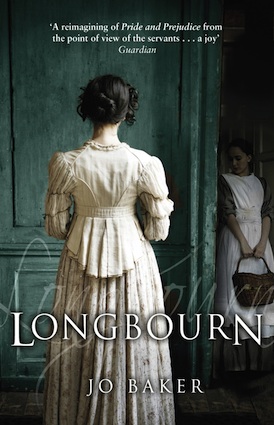
Jo Baker’s ‘Longbourn’

LongbournThere’s been a recent trend towards modern authors drawing on elements of classic novels. In Longbourn, we’re taken into the world of ‘Pride and Prejudice’.

In Jane Austen’s classic, Longbourn is the Bennett family residence. In Jo Baker’s re-imagining, we see behind the facades of the rich and get a glimpse of the world inhabited by the servants. While the Bennett sisters search for husbands, their housemaid Sarah toils away in the kitchens, washing their underclothes and scrubbing the sheets until her hands bleed. While the ladies of the house are swept off in carriages, she walks for hours in the rain to fetch bows to decorate their shoes. While they get new dresses and go to balls, she relies on hand-me downs and darning and looks forward to a village knees up on her rare night off.

But while we all know the fate of the Bennett sisters, Sarah’s fate is much less certain. While Mr Bailey’s arrival sends the family into a tailspin, it’s his handsome footman that turns Sarah’s head. His knowledge of the world and his ambition to leave his position and set up for himself makes Sarah question everything about her life. At the same time, the new footman at Longbourn, James, seems too good to be true, and Sarah is determined to uncover his secrets. Continue reading

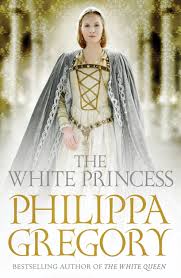
Historical melodrama with Philippa Gregory

If you’ve read any of the other books in Philippa Gregory’s Cousins War series, then you’ll soon see that the White Princess is very much in the same vein. Each book in the series is told from the point of view of a woman at the heart of the royal court. Here, we experience events through the eyes of Elizabeth, Princess of York. Daughter of Edward IV and Elizabeth Woodville, the young princess is no stranger to war, loss and hardship – having experienced the extreme highs and lows of being in a position of power throughout her father’s reign.

The White PrincessAfter her father’s death, his youngest brother, Richard III is King. Her two younger brothers are believed to have been murdered in the Tower of London. Her mother continues to plot and conspire with enemies both at home and abroad – determined that, one way or another, her children will find their way back to the throne.

As Elizabeth’s relationship with Richard grows, and his wife continues to fail to provide an heir, she reigns over the royal court like a queen. But when Henry Tudor invades to take Richard’s crown, Elizabeth must learn to adapt to a very different way of life. With her lover dead on the battlefield, she must play the role of a dutiful wife in a court where her heritage means that she will never be trusted, even by those closest to her.

This novel does a great job of exploring a marriage arranged for political reasons. In this case, their match has been made out of a need to protect their families and to win over the hearts of the Yorkist public. At first their relationship is portrayed as being driven by hate, fear and suspicion. As plots by York loyalists continue to abound, Elizabeth is viewed as a threat and tightly controlled by her husband and mother-in-law. But as her relationship with Henry grows, and her beloved children are raised in the ways of the reigning royal court, Elizabeth is forced to come to terms with what it means to be a Tudor.

Royal women at the time were used as nothing more than pawns in a strategy to get to the crown. Elizabeth is married to a king, but the people closest to her continue to conspire to get a York boy on the throne. If they are successful, Elizabeth would be cast down and her sons disinherited in the name of her father’s family. She is trusted by no-one, putting her in the most dangerous and precarious position of all. For her, there are no outcomes that can truly be a win, as someone she loves will have suffered.

Unlike some of the women featured elsewhere in the series, Elizabeth has very little power to control events. She is kept in the dark and must make her way through as best she can, doing anything she can to emerge unscathed. The helplessness of her situation is quite frustrating. However, Gregory’s writing remains compelling and riveting and her characters are entirely convincing. This book also goes over a lot of the material that we’ve already seen earlier in the series. For these reasons alone, I didn’t enjoy this novel as much as some of the others.

Other reviewers have made a lot of the fact the Gregory take liberties with the historical evidence that we have, twisting it to meet her fictional narrative. I’ve never had a problem with this aspect of Gregory’s writing – the facts that we have are all open to interpretation in some way and it’s interesting to read someone ‘s take on things, even though one look on Wikipedia will mean that we all know what will ultimately happen to all of the characters.

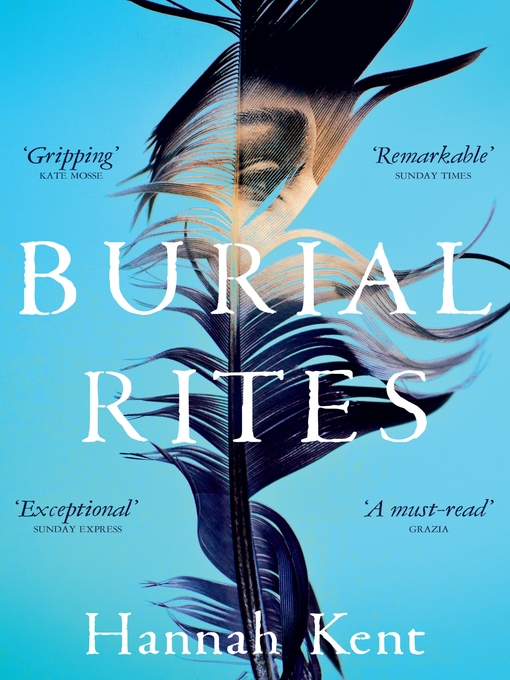
Hannah Kent’s ‘Burial Rites’

Burial RitesSet in rural Iceland in the late 1820’s, ‘Burial Rites’ is based on a real life double murder case. In the absence of places to detain criminals for any length of time, the convicted murderers are each sent to stay with different families across the area.

One of these prisoners is Agnes. The family she is assigned to rails against her presence, refusing to call her by name, and the youngest daughter in particular is shamed to have her living under their roof. In the months leading up to her execution, Agnes internally rages against her conviction. Gradually, through Agnes’ stories to her priest, and eventually to the family themselves, the truth behind the death of her two alleged victims is uncovered.

As Agnes tells her story, the family also get to know her and start to accept her presence, forcing them to question their prejudices. This asks the larger question of whether the legal system can be trusted to make the right decision Continue reading

A vibrant assault on the senses

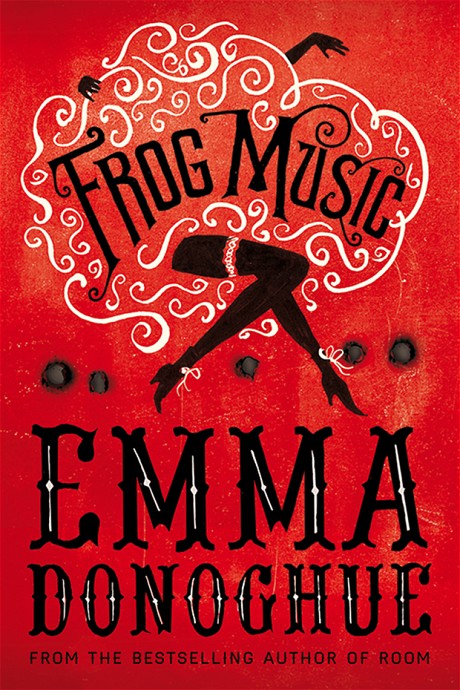
Frog Music‘Frog Music’, from Emma Donoghue, takes us back to the brothels and backstreets of San Francisco, and to the sweltering heatwave and smallpox epidemic that characterised the summer of 1876. The novel opens with the murder of Jenny Bonnet. The only other person present at the scene of the crime is her friend Blanche, one of the star performers at the infamous House of Mirrors bordel.

The rest of the novel flits back and forward in time. In one narrative stream, we learn how Blanche and Jenny first met, and how their chance meeting and friendship may have led to the shooting. In the other strand, we follow Blanche’s wild search for the guilty party after Jenny’s death.

Famous for her ability to capture the hearts, minds and bodies of men, Blanche lives with Arthur – her ‘maque’, her man or her pimp depending on how you look at it – in a Chinatown apartment, performing twice a week in a titillating dance show of risqué burlesque. We quickly learn that Blanche’s baby son is being raised out of town, and is seen by his parents only rarely, allowing them to carry on with their own lifestyles without worrying about his upbringing.

But when Blanche happens to run right into the infamous Jenny Bonnet, it’s the catalyst that will change everything. Continue reading

A truly extraordinary tale

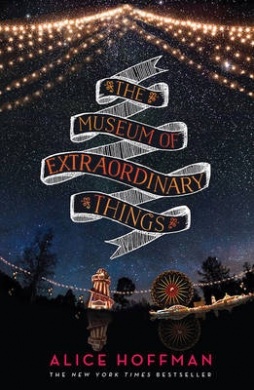
Museum of ETAlice Hoffman’s latest novel, ‘The Museum of Extraordinary Things’, takes us into the beating heat of New York city at the turn of the century.

Born with webbed fingers, Coralie has been raised to be a human mermaid in her father’s museum for the strange and the unusual. From an early age, she’s been trained to hold her breath, withstand extreme cold and swim for miles in the Hudson River. Now eighteen, she performs in a tank for people who come to view her and a whole host of other living wonders for their amusement. Her father, the cold and detached Professor Sardie, rules every aspect of her life, and ruthlessly exploits his star attraction to help bring in business. As the large amusement parks of Coney Island threaten to tempt away his customers, the Professor’s methods become more and more extreme.

Eddie, born in Ukraine and driven to New York with his father after vicious pogroms killed his mother, has spent his life railing against the expectations of his Jewish faith. Now a photographer working for the New York newspapers, he sees first-hand some of the city’s most horrendous crimes and events, including the notorious Triangle Fire. But Eddie also has a skill for finding people that are lost, and when he’s approached by a man hoping to find the truth of what happened to his missing daughter, his world and Coralie’s are set to collide.

But while Coralie and Eddie and their romantic story-arc take centre stage, the story that I fell in love with was the story of New York itself. Continue reading

A modern gothic ghost story

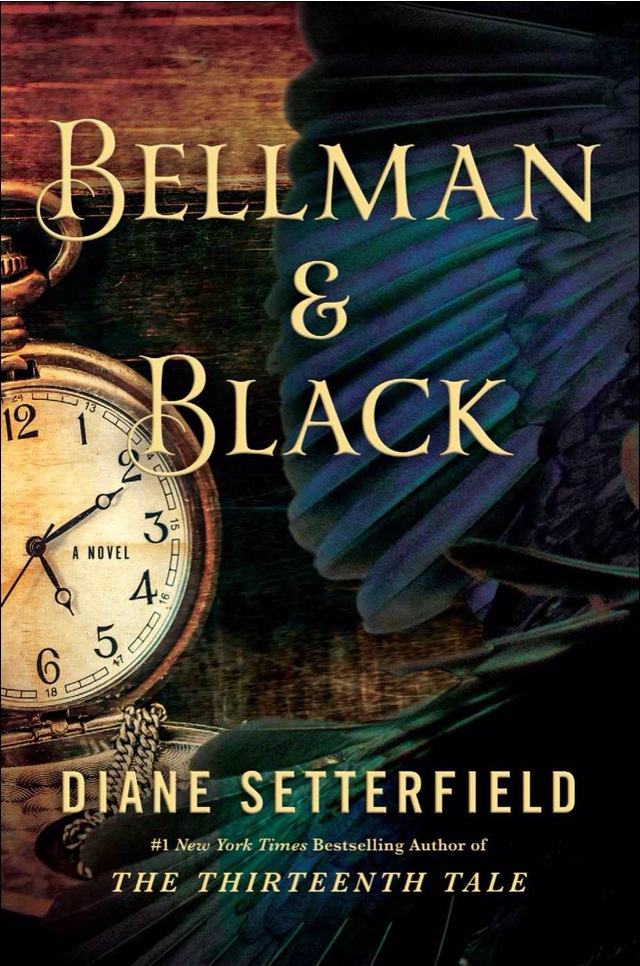
‘Bellman and Black’ is the latest offering from Diane Setterfield, whose bestselling novel ‘The Thirteenth Tale’ was recently adapted as a TV drama.

Bellman and BlackAt the age of ten, William Bellman makes a perfect shot with a catapult. His target, a rook, falls to the ground. As an adult, William Bellman seems to live a charmed life. His drive, determination and willingness to learn have helped him to make his fortunes and build a happy, healthy family around him. It seems as though nothing can go wrong. But then one horrific, unstoppable incident has a devastating effect on the world that William has created. A chance encounter with Mr Black, and a promise of a business deal made in darkness, casts a shadow over his future that he can never shake off or outrun.

Business wise it seems that he can’t fail. From the mill, where he started his career, to the Bellman and Black emporium of mourning that he creates, William has an unerring sense of how to succeed. He fills every minute of his day in a frenzy of activity, trying to block out the darkness by sheer force of will. But as his life goes on, we end up longing for him to turn the same attentions and intuitions to his personal life. Continue reading

‘Perfect’ by Rachel Joyce

perfect-rachel-joyce-uk-newI loved Rachel Joyce’s first novel, ‘The Unlikely Pilgrimage of Harold Fry’, but found her second one harder to get through.

On the one hand, we follow the lives of Byron, his family and his friend James over the course of a summer in the 1970’s. An accident, two additional seconds and a childish need to right a wrong will have devastating effects on the lives of everyone involved.

In the other, Jim cleans tables at a café. Having been in and out of psychiatric care all his life, he keeps his head down and avoids contact with others as much as possible. He lives alone, and only by following a strict regime of rituals and routine does he feel safe.

These two threads weave together, until the truth behind what happened in 1972 is finally revealed. Continue reading

Markus Zusak’s ‘The Book Thief’

The Book ThiefThe Book Thief opens with a crowded train, snow and the death of Liesel’s younger brother. This is the first death to touch her life. There will be many more. This is also the moment when she steals her first book, a gravediggers instruction manual.

When war breaks out, it will affect everyone living on Himmel Street – including Liesel and her new foster family. It will drive wedges between fathers and sons, and cause others to give up all hope. It will make people keep secrets from their best friends. It will force families into impossible dilemmas, as they have to choose whether or not to sacrifice their principles by staying silent and protecting themselves and those that are dependent on them.

Unlike other books set against the backdrop of WW2, The Book Thief moves away from the action of the battlefields and instead takes us inside a typical German home, on a typical German street. Rather than being a story about war, it’s a story of how war and events impacted on the life of individuals. Continue reading