M. L. Stedman’s ‘The Light Between Oceans’

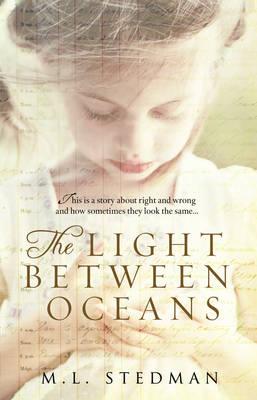
the-light-between-oceansIn the early half of the twentieth century, lighthouse keeper Tom and his young wife Isabel are living on an isolated life on an island far off the coast of the Australian mainland. The conditions are tough, contact with the outside world is few and far between and the job is demanding, but they make it their home.

It’s a life that seems perfect, but for one thing. Isabel is unable to carry a baby to term. After numerous heartbreaks, all seems lost. Then a boat washes ashore, carrying the body of a dead man and a very much alive baby girl. The decision they make that day, to not report the wreck and to keep the baby and raise it as their own, will set into motion a chain of events that will last for years to come.

The book questions our morality, and asks whether doing something you know is wrong can ever be right. It also questions what makes a parent – is it the person that’s raises a child or the person that gives birth to it? Continue reading

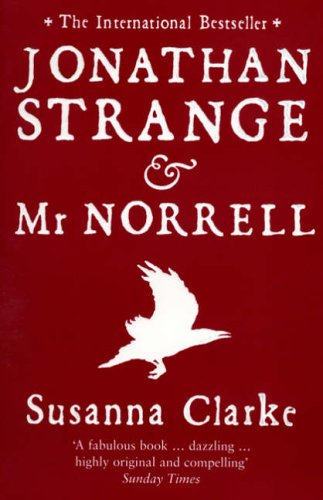
‘Jonathan Strange and Mr Norrell’ by Susanna Clarke

Touted as the Harry Potter for adults, Susanna Clarke’s ‘Jonathan Strange and Mr Norrell’ is set in an alternate version of 19th Century England rife where magic is very much present. From the theoretical magicians that gather across the country to the hundred of people across the northern counties still waiting for their Raven King to come back and claim his throne, magic has an undeniable impact on everyone in the kingdom, rich or poor.

StrangeBut while magical societies discuss the great feats of the past, in Yorkshire one man is determined to bring back practical magic. Surrounded by his precious books, the reclusive Mr Norrell heads to London to lend his help to the war effort and defeat Napoleon. Meanwhile, Jonathan Strange stumbles across magic as a profession almost by accident. Inventive, passionate and eccentric, his style and approach to the study and practice of magic is entirely different from Norrell’s – leading to an inevitable clash of opinions.

England is split into ‘Strangites’ and ‘Norrellites’. A war of words is played out through the magical journals. Increasingly great and ambitious magic is played out on the battlefields of Europe, the savage English coastline and the drawing rooms of the English aristocracy. People are raised from the dead, rain takes on solid forms, darkness falls for days on end and cities, roads and forests are moved to a magician’s whim. But beyond all of this lurks shadowy figure of the Raven King and the malevolent world of faerie looking to reek havoc on those that dare to lay a claim on English magic – bringing dark and unforeseen consequences.

It is undoubtedly an amazing feat of world building. There’s a whole bibliography of fictional titles mentioned throughout the book, each with a fictional author and subject matter, as well as a complete magical history stretching back for almost 1000 years. This history is recounted along with numerous stories, legends and folklore relevant in long explanatory footnotes that make the book seem almost like an academic work rather than a novel.

This does help to give a great sense of context, but at some points it did get a little frustrating, especially when I was nearing the end of the novel and more interested in the actual characters than an exhaustive story that seems in no way connected to the story. At these points, it was probably a good job that I was listening to this as an audiobook – as I would have been sorely tempted to skip thorough these whole sections.

One up-side of the impressive length, however, is that each and every single character is completely and utterly brought to life. Everyone is given his or her own backstory and individual characteristics, again helping to totally immerse the reader in Clarke’s world. The book is packed with black humour and subtle social commentary that continues to drive the story along even through the more intense sections dedicated to historical magical debates and incidents.

Another thing I loved was the ending, which worked really well and made me smile. I actually enjoyed it so much that I haven’t been able to get really interested in another book since – always the sign of a good read!

Also, for anyone interested and those that have already read the book, it’s recently been announced that the BBC are producing a TV adaptation starring Eddie Marsan and Bertie Carvel in the title roles.

Kate Atkinson’s ‘Life After Life’

On a snowy night in 1910, a baby is born. The doctor is unable to reach her due to the weather, and she dies. Or the doctor makes it in time, and she is saved. Or a mother’s instinct pulls her back from the edge, and she lives. This is how Ursula Todd’s life begins, again and again.

life-after-life-coverOver the course of her life, Ursula continues to die and be reborn, over and over again. Each life brings with it a different set of choices, different experiences and a different fate. Her family and certain key characters throughout the book feature in many different incarnations, their lives at some times entirely separate and at some times intrinsically linked with Ursula’s. Her decisions see her take a variety of paths – sometimes to the London war office and sometimes to Germany, sometimes as a mistress and sometimes as a wife, sometimes happy and sometimes utterly alone.

The main point of the novel seems to be to demonstrate how the smallest thing can impact on your entire life. Ursula is continually faced with deadly situations, but some lingering feelings and an uncanny sense of déjà vu from a past life continues to propel her forward. Some incidents are harder to avoid than others – a deadly outbreak of Spanish Influenza proves particularly hazardous. In other cases, a few offhand words spoken here or there can change the course of an entire life.

War is a major theme throughout the book, and in many strands it is a pervading influence on the central characters. Ursula’s role in events changes from life to life, but the reality of fighting and the hardship of living through World War II is constant. Ultimately, Atkinson uses Ursula’s individual story to ask if one person’s actions can influence events on a global scale, and change the course of history forever. It’s a really interesting concept, although I personally found the ending a little abrupt and there wasn’t a great deal of build up to her final actions in the same way as with some of her earlier turning points.

The structure of the novel, which flits around in time and place indiscriminately, is quite hard to get used to. Central characters appear and disappear, and live or die, depending on which particular narrative strand Ursula’s life has taken. Some of her lives are truly awful, seeing her a victim of extreme violence, loneliness, or emotional turmoil. I found myself hoping for the death that was sure to come just so she could escape whatever horrible reality she was in at the time. On the other hand, in some strands she is happy, successful and simply in the wrong place at the wrong time. In these cases, I was desperately hoping she could fight fate.

Kate Atkinson writes with immense skill. Despite the continually shifting time periods, all of the characters are really well rounded and developed. Ursula is portrayed especially well. Her circumstances, frame of mind and outlook can change completely from chapter to chapter but her core remains the same and I was really rooting for her to choose the right path and end up happily ever after.

There’s a certain inevitability about this book. Death comes no matter what choices Ursula makes, and all she can do is to try and overcome obstacles until she gets it right. In the end, there was an overwhelming sense that we can’t have everything. Every one of Ursula’s lives had a sense of compromise and its own share of tragedy. But at the end of the day, that’s just life.
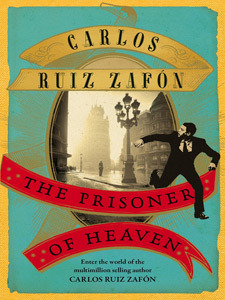
‘The Prisoner of Heaven’ by Carlos Ruiz Zafon

The third installment in a planned quartet of novels from Carlos Ruiz Zafon, The Prisoner of Heaven has been on my wishlist for a while now (see here for a full round-up). It’s predecessors, The Shadow of the Wind and The Angels Game were both gripping reads, so my expectations when it came to this book were understandably high. That said, it’s not necessary to have read the books in order, so if you haven’t read the others, it doesn’t take anything away from this one.

The-Prisoner-of-Heaven_225The Prisoner of Heaven tells the story of Fermin Romero de Torres – mentioned in previous novels but coming to a forefront here. Imprisoned in horrifying conditions by the regime during the Spanish Civil War, Fermin crosses paths with some of the most detestable and terrifying figures of the Spanish authority. Condemned to a prison where so called ‘enemies of the state’ are sent to die, his fellow cell mates and gaolers are varying degrees of crazy and intensely dangerous.

To survive, Fermin must put his trust in a man whose sanity is increasingly called into question, a brilliant but eccentric writer named David Martin. The words that pass between them and the pact they make within the prison walls will continue to reverberate for years to come. When a man from his past arrives on his doorstep, Fermin is forced to confront his worst memories and to relive a previous life. And as his story comes to light, it becomes clear that the past never truly stays in the past.

As with all of Zafon’s previous works, The Prisoner of Heaven is beautifully written and creates a brilliantly dark and realistic vision of post-war Spain. But ultimately what he does so well is to capture the magic and the mystery of the unknown. The skill with which he writes invites the reader to make their own connections, to see the scene as it continues to play out on the pages and to draw their own conclusions.

For me, The Prisoner of Heaven lacked some of the magic of Zafon’s previous novels. While it started off very much in the dark gothic vein that we’ve come to know him for, it soon diverged into a more straightforward, but no less sinister, plot. Still, there’s no denying that Zafon is a master storyteller, weaving together narratives to create a story with just the right amount of tension, pace and humour.

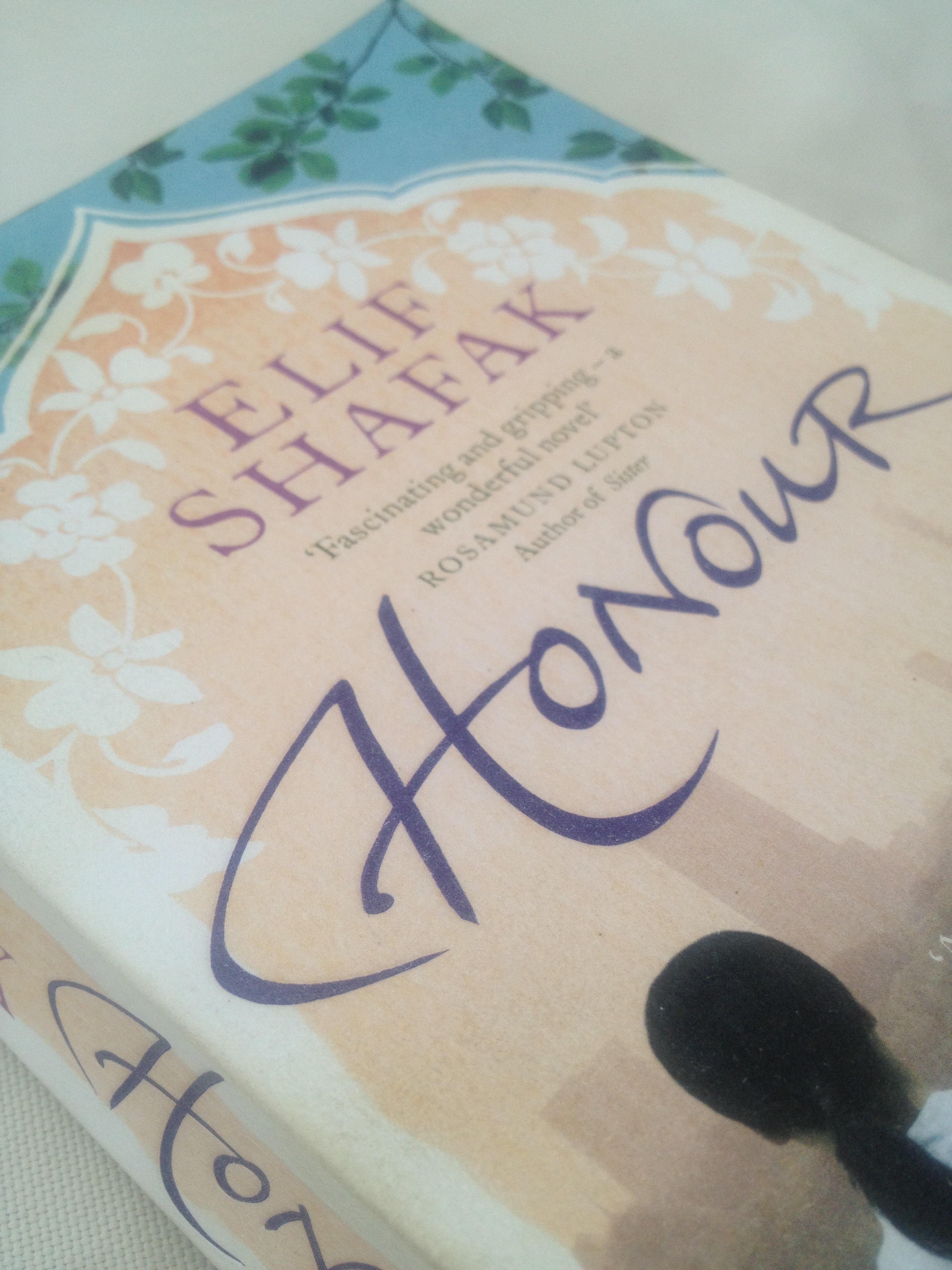
‘Honour’ by Elif Shafak

Elif Shafak’s Honour hinges around one horrible crime. The nature of this crime itself is revealed within the first few pages, and the rest of the book is spent examining the lives of the people affected and the events that led up to and contributed to the event.Honour

It’s a story that spans four generations, split between the remote villages of Turkey and the metropolis of 1970’s London. When Pembe and Adem leave their home country to build a new life in Britain, their children must find a way to mesh new traditions with the old, to speak two languages and to adapt the cultural norms of their heritage to new situations.

In Honour, Elif Shafak examines how gender, history and expectations combine to have a powerful impact on our behaviour and our future actions. It’s also fair to say that this book is an exploration of immigrant culture. It looks in detail at the relationships between parents and their children and how a rich cultural history is blended with new experiences.

I actually read this book while I was in Turkey, and the sections set in the villages really came to life for me. However, it felt as though it was lacking in the crucial emotional connection to the central characters. The narrative style, which tends to jump around between different times and different viewpoints, also made the novel quite hard to follow. It also meant that certain events were revealed out of sequence, taking away some of the tension from the main plotline.

Honour does a great job of setting out facts and events and of creating a very real and powerful backdrop, but at no point does the author really use her position to give an opinion on the twin cultures that she’s describing. It’s up to us as readers to make the observations for ourselves. In doing so, I think the author misses out on an opportunity to get across what has the potential to be a very powerful statement.

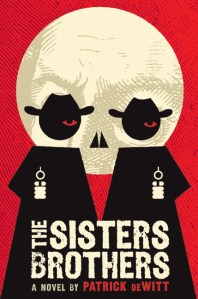
Review of ‘The Sisters Brothers’ by Patrick DeWitt

(Granta Books, January 2012)

An homage to a classic Western, Patrick DeWitt’s ‘The Sisters Brothers’ is a tale of two notorious gunmen for hire, Eli and Charlie Sisters. Their latest mark – a one Hermann Kermit Warm.

The-Sisters-Brothers

Under the orders of the greedy and ruthless Commodore, the brothers travel across America to California, where their target is embroiled in the frenzy of the gold rush of the early 1850’s. Along the way they suffer numerous setbacks and come across a cast of extraordinary characters, from a crying man to a murderous child to a gypsy witch. Their fortunes change, from good to bad and back and forth again, and when they finally track down their quarry they have a life-changing choice to make.

While Charlie seems to thrive under their murderous choice of profession, Eli struggles with their nomadic and lonely lifestyle. The journey to California acts as a foil for his own personal search for something more. Ruled by his temper and prone to violent outbursts, he’s aware that he’s often manipulated by his brother but is keen to settle down to a more respectable way of life.

It’s narrated by Eli in an almost deadpan, slightly unhinged fashion that shapes the character of the entire book. When I was reading it I actually found myself imagining the dialogue said in an accent, something I don’t usually tend to do but in this case I just couldn’t help myself. It made the characters feel wonderfully real and gave them a real sense of personality.

Eli’s relationships – with his brother, his horses and with his feelings about what he does for a living – form the beating heart of this book. The classic younger brother, he looks up to Charlie with an almost hero worship and gladly follows in his lead. The dialogue between the two is incredibly realistic – it’s sometimes tense, sometimes cruel, sometimes brutally honest and sometimes the most natural thing in the world.

The way that this book was written was really interesting, and it’s easy to see how it made the long list for the Man Booker prize. It’s almost like it’s a selection of separate stories or anecdotes tied together by the strength of the central characters and the flair of DeWitt’s unique writing style. It was full of wit and dark humour and conjured up a vivid and colourful image of the life on the frontiers.

But while I can appreciate the incredibly talented writing and the construction, I’m not sure if I felt completely satisfied by the time I turned the last page. The story takes a while to kick in and I found the first quarter of the novel quite slow going. Even then, I reached the end and I felt like it was missing something story-wise. It felt as if so much time was used describing the details that the wider picture was lost to some extent. I know that other people have loved it, and if anyone else has read it I’d be really interested to know what you think!

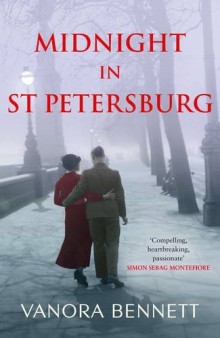
A review of ‘Midnight in St Petersburg’ by Vanora Bennett

*Advance review*
(Century, April 2013)

In a city brimming with unrest and on the brink of revolution, one young woman steps off a train in possession of stolen papers and in search of a refuge from the violent pogroms of Kiev. Welcomed into the Leman family, Inna becomes an apprentice in their violin-making workshop and as she carves out her place in St Petersburg, she also gains a newfound confidence in herself.

midnight-st-petersburg-220x338As political tensions escalate, Inna finds herself torn between two men who represent very different paths. Wild and quick-tempered, Yasha throws himself into revolutionary politics with abandon. Their relationship, while built on passion and desire, also has the potential to destroy the safety of the life that Inna has created. On the other hand, respectable Englishman Horace, with a position at the prestigious Fabergé jewelry house, represents security and steady, unerring loyalty.

As the situation in St Petersburg becomes increasingly dangerous, Inna is forced to choose between following her head or her heart.

I loved this book. Set in one of the most tumultuous periods of Russian history, the reader experiences some of the most important events of the period through the eyes of an ordinary family who are just trying to live and to stay afloat. From a historical point of view, we’re introduced to some of the key figures of the time, from Rasputin to Lenin, and it really shone a light on the cultural and religious differences of the people living in St Petersburg at the time and the how events impacted on these different groups.

As someone who’s trying to learn Russian (albeit extremely slowly!) I really enjoyed how the author added little details explaining the nuances of Russian language and customs. I can only imagine how tough it would have been – and probably still is – to live in Russia as a foreigner. I also loved that the character of Horace was based on the real life story of the author’s great-uncle, it gave the novel a really personal touch.

One thing that I would say is that it took me a while to get really into the story. I didn’t immediately relate to Inna as a character, I found she came across as quite dispassionate and almost calculating. That said, as a young Jewish woman fighting for her survival, that’s probably exactly who she needed to be, and the tone contributed to the overall feeling of distrust and of tension revolutionary Russia. Still, it would have been great to have a bit more information about the central characters earlier on in the novel, as it might have helped me to become emotionally invested in them a bit earlier on.

By the end though, I was completely hooked. It was fast paced, packed full of tension and led up to a really satisfying conclusion. A definite must read for anyone interested in historical fiction!

(Massive thanks to the publishers for the review copy – much appreciated and enjoyed!)

A review of Julia Gregson’s Jasmine Nights

As I’ve no doubt mentioned before, I have a soft spot for historical novels. I especially like it if these historical novels happen to focus on a subject that I know relatively little about. As any reader will know, World War II has – quite rightly – inspired a whole plethora of books over the years, and in my experience it’s quite rare to come across one that has a completely fresh take on the genre. However, Julia Gregson’s Jasmine Nights managed to do just that.

Jasmine nightsFar away from the trenches of central Europe or the grey, rationed world of 1940’s London, Jasmine Nights presents a completely different aspect of war experienced in the exotic cities of Cairo, Alexandria and Istanbul and the open skies over the Egyptian desert.

Against the wishes of her family and in a move may alienate her from her father forever, ENSA singer Saba has risked everything to pursue her passion and to serve her country. Egypt offers her a chance to grow in ways that she could never have imagined, but as the war progresses she finds herself increasingly embroiled in the shady world of espionage, with devastating consequences.

Pilot Officer Dominic Benson, serving with the Desert Air Force, has recovered physically from a traumatic injury but is struggling with the guilt of losing his best friend. When he hears Saba singing in a hospital concert, he dares to hope again. But taking to the skies again comes with it’s own dangers, and when disaster strikes, can they find their way back to one another?

The switching narratives give an insight into two very different sides of war, from Saba, fighting for her independence from the constraints of home, to Dom, who has experienced the all the horrors of war first hand but can’t bring himself to talk about it. At it’s heart, it’s essentially a romance novel, and yes, it does have some clichés and yes, the characters could have been developed a little further, but that didn’t stop me from thoroughly enjoying it.

Prior to Jasmine Nights, I hadn’t read much about WWII in Africa, and this book was packed full of vivid visual imagery and a wealth of detail and description that spoke to all the senses. I listened to this as an audiobook, mostly on my way to and from work, and on several occasions found myself loitering in the snow because I couldn’t bring myself to turn it off! The protagonists are interesting and appealing and there’s enough tension and intrigue to keep you hooked all the way to the end. Above all it’s entertaining, what more do you need?

Review of The Secret Keeper by Kate Morton

On a scorching summer’s day in 1961, 16-year-old Laurel is the only witness to a shocking crime that will shake the foundations of her beliefs forever. Fast forward 40 years and Laurel, sitting at her dying mother’s bedside, struggles to reconcile the events of that fateful day with the loving family she has always known – before the truth is lost forever.

The Secret KeeperThe story stretches from 1940’s London, when England is caught up in the midst of The Blitz, to a rural family home in 2011. To say goodbye to her mother, Laurel must try to piece together a mystery seventy years old and in doing so, will find herself immersed in the lives of Dorothy, Jimmy and Vivian, whose paths will collide with devastating and far reaching effects.

I’ve read all of Kate Morton’s previous novels and really enjoyed them, but I’m also well aware that this type of novel – which combines multiple threads set in different periods of history working their way towards a dramatic revelation and family resolution at the end of the novel – is in danger of becoming a generic fallback format for authors writing in this genre. However, in The Secret Keeper, Kate Morton has managed to take this type of novel and somehow make it seem fresh, new and exciting.

I actually listened to this as an audiobook and thought it really worked in this format. The narrator, Caroline Lee did a really good job of maintaining a sense of urgency and interest despite the fact that the recording was nearly 20 hours long.

The big twist at the end of this novel was one that I really didn’t see coming, and I couldn’t stop thinking about it long after I’d finished the book. Also with this style of novel, I tend to have a ‘favourite’ thread, and can sometimes come to resent chunks of the novel set outside of that time or away from those characters. This didn’t happen this time. I enjoyed every strand of this book equally and I actually slowed down towards the end because I wanted to stay in the world that Morton had created for just that little bit longer.

Charlotte Rogan’s The Lifeboat

Disturbing, intense and claustrophobic, Charlotte Rogan’s The Lifeboat follows the lives of 39 passengers following the sinking of an ocean liner in 1914. Adrift in the middle of the Atlantic Ocean with the possibility of rescue looking less and less likely, the lifeboat is dangerously over-full and provisions increasingly scarce.Charlotte Rogan's The Lifeboat

Thrown together in the confined space of the boat, the passengers face moral dilemmas and difficult decisions in their struggle for survival. Newly formed relationships are pushed to the limit as personalities clash and the survivors’ battle to take control of their surroundings. The Lifeboat tackles the darkest places of the human psyche and also reminds us of the wild and brutal potential of the natural world.

The novel is told through the words of 22-year-old Grace Winter, who came on board the doomed ship with her new husband, Henry, and was left widowed after the accident. However, throughout the book, we start to suspect that Grace may not be a very reliable source. Her narrative tone becomes increasingly distant and dispassionate, and the truth behind events is thrown into question.

As we follow the passengers from their perilous situation on the open seas to the trials of the courtroom on their eventual return, Charlotte Rogan tackles potentially contentious issues as she challenges everything from religious belief to inequality in gender roles.

I raced through this book and had to stop myself from reading ahead to the end. Some people have commented that it’s hard to sympathise with the characters, but I thought this just added to the overall tone of the novel. The author deliberately doesn’t write characters that are likeable. Instead, she uses the passengers of the lifeboat to explore the depths of human nature and personalities, both good and bad, as well as the lengths we will go to survive.

It’s impossible to imagine how we ourselves would react if we were forced into the same situation and you can’t help but put yourself in their place. It’s a gripping, and thought-provoking read, and although admittedly it did make for slightly uncomfortable reading I’d definitely recommend it.