Curtis Sittenfeld’s ‘Sisterland’

SisterlandIdentical twins Violet and Kate have grown up as two halves of a whole. With an often absent father and a mother suffering from some sort of implied depression, they are left to find their way through their adolescence together. But Violet and Kate also have a physic gift, with an uncanny ability to see what isn’t there and to predict what’s coming. As children, this gift binds them together, but it also drives others away.

As the twins grow up, their lives take very different directions. Kate changes her name and does everything she can to blend in and conform. She aims to be the model friend, mother and wife. She sees her psychic abilities as the root cause of everything bad that has happened in her past, and she does all she can to supress them. On the other hand, Violet embraces her differences. Exuberant and eccentric, she makes a living as a psychic and has no inhibitions when it comes to embracing life and exploring her sexuality.

Their wildly different choices have been the cause of strained relationships between the sisters their whole lives, but they are still linked by the unbreakable bond of sisterhood. When Violet predicts a catastrophic earthquake and is catapulted into the public eye, Kate is drawn back into the world that she hoped to have left behind. As the date of the event draws near, tensions rise. For Kate, the cracks in the life she has built will be revealed. For Violet, her life is about to be put under a microscope by the media. Continue reading

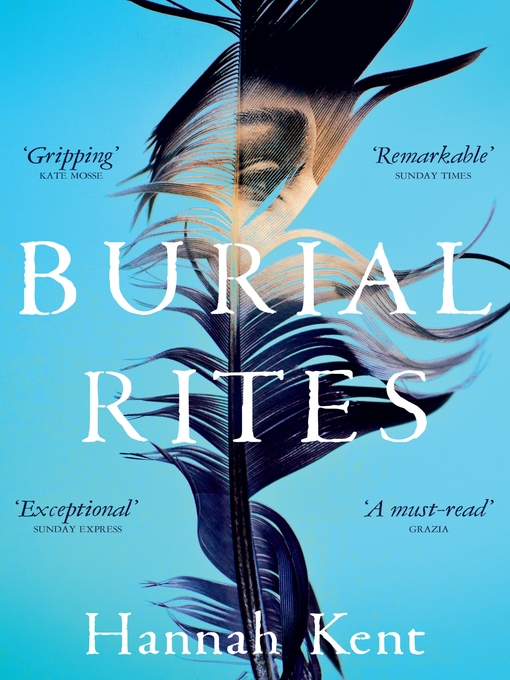
Hannah Kent’s ‘Burial Rites’

Burial RitesSet in rural Iceland in the late 1820’s, ‘Burial Rites’ is based on a real life double murder case. In the absence of places to detain criminals for any length of time, the convicted murderers are each sent to stay with different families across the area.

One of these prisoners is Agnes. The family she is assigned to rails against her presence, refusing to call her by name, and the youngest daughter in particular is shamed to have her living under their roof. In the months leading up to her execution, Agnes internally rages against her conviction. Gradually, through Agnes’ stories to her priest, and eventually to the family themselves, the truth behind the death of her two alleged victims is uncovered.

As Agnes tells her story, the family also get to know her and start to accept her presence, forcing them to question their prejudices. This asks the larger question of whether the legal system can be trusted to make the right decision Continue reading

A vibrant assault on the senses

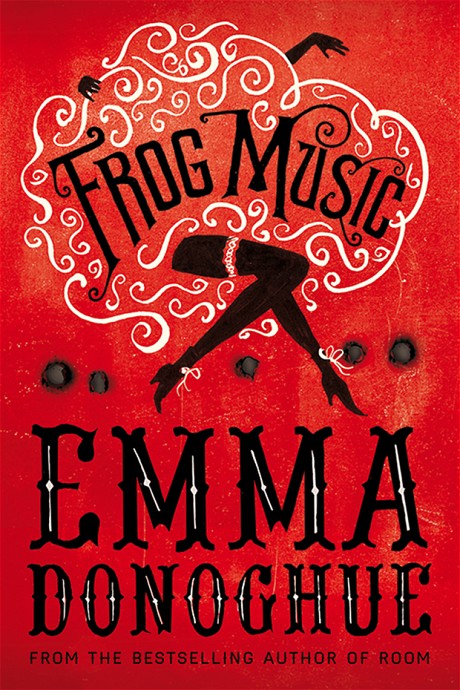
Frog Music‘Frog Music’, from Emma Donoghue, takes us back to the brothels and backstreets of San Francisco, and to the sweltering heatwave and smallpox epidemic that characterised the summer of 1876. The novel opens with the murder of Jenny Bonnet. The only other person present at the scene of the crime is her friend Blanche, one of the star performers at the infamous House of Mirrors bordel.

The rest of the novel flits back and forward in time. In one narrative stream, we learn how Blanche and Jenny first met, and how their chance meeting and friendship may have led to the shooting. In the other strand, we follow Blanche’s wild search for the guilty party after Jenny’s death.

Famous for her ability to capture the hearts, minds and bodies of men, Blanche lives with Arthur – her ‘maque’, her man or her pimp depending on how you look at it – in a Chinatown apartment, performing twice a week in a titillating dance show of risqué burlesque. We quickly learn that Blanche’s baby son is being raised out of town, and is seen by his parents only rarely, allowing them to carry on with their own lifestyles without worrying about his upbringing.

But when Blanche happens to run right into the infamous Jenny Bonnet, it’s the catalyst that will change everything. Continue reading

NoViolet Bulawayo’s ‘We Need New Names’

We need new names‘We Need New Names’, the debut novel from author NoViolet Bulawayo, is split into two distinct halves.

In the first section, Darling is growing up in a shanty town in Zimbabwe, playing with her friends on the hot streets and eating guavas. Each chapter takes us through a different aspect of living in Zimbabwe at the time – from the violence or political oppression to religion or AIDS – taking us through the history of the country to how Darling now sees it today, through a child’s eyes. This innocence and the matter of fact style in which Darling recounts events is particularly harrowing – in particular some of the games the children invent and their horrific attempt to abort a child pregnancy.

But even though the author takes us through some of the worst sides of Zimbabwe’s history, there is still a vibrancy to her writing and a really strong sense of culture comes through. The children accept their lives and see the world around them in a way that their parents can’t. They might dream of leaving and going to America, or other developed countries, but even though they have very little, their community is supportive and bound together by strong family and cultural values. Continue reading

A truly extraordinary tale

Museum of ETAlice Hoffman’s latest novel, ‘The Museum of Extraordinary Things’, takes us into the beating heat of New York city at the turn of the century.

Born with webbed fingers, Coralie has been raised to be a human mermaid in her father’s museum for the strange and the unusual. From an early age, she’s been trained to hold her breath, withstand extreme cold and swim for miles in the Hudson River. Now eighteen, she performs in a tank for people who come to view her and a whole host of other living wonders for their amusement. Her father, the cold and detached Professor Sardie, rules every aspect of her life, and ruthlessly exploits his star attraction to help bring in business. As the large amusement parks of Coney Island threaten to tempt away his customers, the Professor’s methods become more and more extreme.

Eddie, born in Ukraine and driven to New York with his father after vicious pogroms killed his mother, has spent his life railing against the expectations of his Jewish faith. Now a photographer working for the New York newspapers, he sees first-hand some of the city’s most horrendous crimes and events, including the notorious Triangle Fire. But Eddie also has a skill for finding people that are lost, and when he’s approached by a man hoping to find the truth of what happened to his missing daughter, his world and Coralie’s are set to collide.

But while Coralie and Eddie and their romantic story-arc take centre stage, the story that I fell in love with was the story of New York itself. Continue reading

‘Perfect’ by Rachel Joyce

perfect-rachel-joyce-uk-newI loved Rachel Joyce’s first novel, ‘The Unlikely Pilgrimage of Harold Fry’, but found her second one harder to get through.

On the one hand, we follow the lives of Byron, his family and his friend James over the course of a summer in the 1970’s. An accident, two additional seconds and a childish need to right a wrong will have devastating effects on the lives of everyone involved.

In the other, Jim cleans tables at a café. Having been in and out of psychiatric care all his life, he keeps his head down and avoids contact with others as much as possible. He lives alone, and only by following a strict regime of rituals and routine does he feel safe.

These two threads weave together, until the truth behind what happened in 1972 is finally revealed. Continue reading

Markus Zusak’s ‘The Book Thief’

The Book ThiefThe Book Thief opens with a crowded train, snow and the death of Liesel’s younger brother. This is the first death to touch her life. There will be many more. This is also the moment when she steals her first book, a gravediggers instruction manual.

When war breaks out, it will affect everyone living on Himmel Street – including Liesel and her new foster family. It will drive wedges between fathers and sons, and cause others to give up all hope. It will make people keep secrets from their best friends. It will force families into impossible dilemmas, as they have to choose whether or not to sacrifice their principles by staying silent and protecting themselves and those that are dependent on them.

Unlike other books set against the backdrop of WW2, The Book Thief moves away from the action of the battlefields and instead takes us inside a typical German home, on a typical German street. Rather than being a story about war, it’s a story of how war and events impacted on the life of individuals. Continue reading

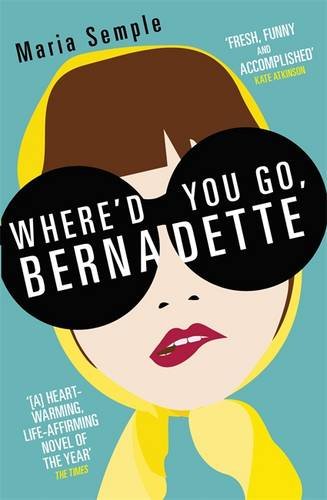
‘Where’d you go, Bernadette’ by Maria Semple

Bernadette Fox has disappeared. Everyone assumes she is dead, or gone for good. But her fifteen-year-old daughter, Bee, is determined to do everything she can to find her.

41qQVsFZtmLOver an eclectic collection of notes, letters, private emails, articles, blog posts and reports, we gradually gain a unique insight into all of the characters, their motivations and their emotions. These are interspersed with commentary from Bee, as she attempts to piece everything together. These all come together to form a bigger picture of the string of events that took place in the run-up to Bernadette’s disappearance, and to help us – and Bee – solve the mystery as to where she is now.

The format of the book is really interesting. It’s quite hard to describe the plot for this exact reason. It didn’t feel as if I was reading a story, instead, it felt like I was piecing together a case and a narrative from the raw material. Only in this case, the raw material is incredibly witty and expertly crafted to give away just the right information at any given point in time. Each character has their own voice, and this voice is real, rounded and completely convincing. I think one of the real skills on display here is the author’s ability is to flit from character to character, switching between different perspectives from page to page.

The overall narrator, Bee, is strong willed, independent and funny, and her mother is wonderfully eccentric and entertaining. I wanted to know them. The story does veer into the ridiculous at some points, but this only adds to the overall charm of the book and it somehow manages to also stay believable. It’s been a while since I enjoyed a book as much as I enjoyed this, and I wouldn’t hesitate to recommend it.

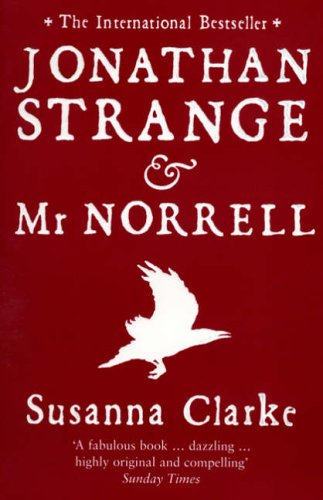
‘Jonathan Strange and Mr Norrell’ by Susanna Clarke

Touted as the Harry Potter for adults, Susanna Clarke’s ‘Jonathan Strange and Mr Norrell’ is set in an alternate version of 19th Century England rife where magic is very much present. From the theoretical magicians that gather across the country to the hundred of people across the northern counties still waiting for their Raven King to come back and claim his throne, magic has an undeniable impact on everyone in the kingdom, rich or poor.

StrangeBut while magical societies discuss the great feats of the past, in Yorkshire one man is determined to bring back practical magic. Surrounded by his precious books, the reclusive Mr Norrell heads to London to lend his help to the war effort and defeat Napoleon. Meanwhile, Jonathan Strange stumbles across magic as a profession almost by accident. Inventive, passionate and eccentric, his style and approach to the study and practice of magic is entirely different from Norrell’s – leading to an inevitable clash of opinions.

England is split into ‘Strangites’ and ‘Norrellites’. A war of words is played out through the magical journals. Increasingly great and ambitious magic is played out on the battlefields of Europe, the savage English coastline and the drawing rooms of the English aristocracy. People are raised from the dead, rain takes on solid forms, darkness falls for days on end and cities, roads and forests are moved to a magician’s whim. But beyond all of this lurks shadowy figure of the Raven King and the malevolent world of faerie looking to reek havoc on those that dare to lay a claim on English magic – bringing dark and unforeseen consequences.

It is undoubtedly an amazing feat of world building. There’s a whole bibliography of fictional titles mentioned throughout the book, each with a fictional author and subject matter, as well as a complete magical history stretching back for almost 1000 years. This history is recounted along with numerous stories, legends and folklore relevant in long explanatory footnotes that make the book seem almost like an academic work rather than a novel.

This does help to give a great sense of context, but at some points it did get a little frustrating, especially when I was nearing the end of the novel and more interested in the actual characters than an exhaustive story that seems in no way connected to the story. At these points, it was probably a good job that I was listening to this as an audiobook – as I would have been sorely tempted to skip thorough these whole sections.

One up-side of the impressive length, however, is that each and every single character is completely and utterly brought to life. Everyone is given his or her own backstory and individual characteristics, again helping to totally immerse the reader in Clarke’s world. The book is packed with black humour and subtle social commentary that continues to drive the story along even through the more intense sections dedicated to historical magical debates and incidents.

Another thing I loved was the ending, which worked really well and made me smile. I actually enjoyed it so much that I haven’t been able to get really interested in another book since – always the sign of a good read!

Also, for anyone interested and those that have already read the book, it’s recently been announced that the BBC are producing a TV adaptation starring Eddie Marsan and Bertie Carvel in the title roles.

Kate Atkinson’s ‘Life After Life’

On a snowy night in 1910, a baby is born. The doctor is unable to reach her due to the weather, and she dies. Or the doctor makes it in time, and she is saved. Or a mother’s instinct pulls her back from the edge, and she lives. This is how Ursula Todd’s life begins, again and again.

life-after-life-coverOver the course of her life, Ursula continues to die and be reborn, over and over again. Each life brings with it a different set of choices, different experiences and a different fate. Her family and certain key characters throughout the book feature in many different incarnations, their lives at some times entirely separate and at some times intrinsically linked with Ursula’s. Her decisions see her take a variety of paths – sometimes to the London war office and sometimes to Germany, sometimes as a mistress and sometimes as a wife, sometimes happy and sometimes utterly alone.

The main point of the novel seems to be to demonstrate how the smallest thing can impact on your entire life. Ursula is continually faced with deadly situations, but some lingering feelings and an uncanny sense of déjà vu from a past life continues to propel her forward. Some incidents are harder to avoid than others – a deadly outbreak of Spanish Influenza proves particularly hazardous. In other cases, a few offhand words spoken here or there can change the course of an entire life.

War is a major theme throughout the book, and in many strands it is a pervading influence on the central characters. Ursula’s role in events changes from life to life, but the reality of fighting and the hardship of living through World War II is constant. Ultimately, Atkinson uses Ursula’s individual story to ask if one person’s actions can influence events on a global scale, and change the course of history forever. It’s a really interesting concept, although I personally found the ending a little abrupt and there wasn’t a great deal of build up to her final actions in the same way as with some of her earlier turning points.

The structure of the novel, which flits around in time and place indiscriminately, is quite hard to get used to. Central characters appear and disappear, and live or die, depending on which particular narrative strand Ursula’s life has taken. Some of her lives are truly awful, seeing her a victim of extreme violence, loneliness, or emotional turmoil. I found myself hoping for the death that was sure to come just so she could escape whatever horrible reality she was in at the time. On the other hand, in some strands she is happy, successful and simply in the wrong place at the wrong time. In these cases, I was desperately hoping she could fight fate.

Kate Atkinson writes with immense skill. Despite the continually shifting time periods, all of the characters are really well rounded and developed. Ursula is portrayed especially well. Her circumstances, frame of mind and outlook can change completely from chapter to chapter but her core remains the same and I was really rooting for her to choose the right path and end up happily ever after.

There’s a certain inevitability about this book. Death comes no matter what choices Ursula makes, and all she can do is to try and overcome obstacles until she gets it right. In the end, there was an overwhelming sense that we can’t have everything. Every one of Ursula’s lives had a sense of compromise and its own share of tragedy. But at the end of the day, that’s just life.