‘Five Days’ by Douglas Kennedy

For twenty years, Laura has been in a marriage that’s not unhappy, but that doesn’t set her world alight. She has in a career that she enjoys and is good at, but she’s never been confident enough to take it to the next level. She’s always dreamed of travelling, but she’s built a life in a small town that she can’t leave behind. She dwells continually on the belief that she could have done more with her life.
Five Days
Given the rare opportunity to go to a conference in the city, she meets a man with whom she has an instant, undeniable connection. His situation is not dissimilar from her own, and both are harbouring a secret, selfish to break free from their old lives and to have a chance of being truly happy. Richard comes to represent everything she’s doesn’t have. Over the course, of the weekend, their relationship deepens and they have to make the decision of whether or not to make difficult changes and to strike out fresh, knowing that it will hurt everyone but themselves.

I usually really enjoy Kennedy’s work. I know that he usually tackles emotional subjects and his books often provoke quite strong emotions. In the case of Five Days, the themes still definitely got a reaction from me – and I can still vividly remember the story months after turning the last page. However, I can’t honestly say that I enjoyed this latest offering. It makes for quite uncomfortable reading and delivers a stark and uncompromising message.

Essentially, that message was this: Yes, the grass is greener on the other side. No, there’s no way you’re ever going to get over there to enjoy it so you may as well resign yourself to an average life. Ultimately, the chances are that you’ll live your life without ever fulfilling your true potential and without ever being as happy as you could have been if you’d made different choices along the way. But the worst thing of all is that the only one you have to blame for how things have turned out is yourself. This applies to love, friendship, families and career indiscriminately.

For me, the book represented a complete and total lack of hope. So although Douglas Kennedy writes beautifully, as usual, and I really could empathise and relate to the characters, this book was a little too depressing for me. Every book needs a little bit of escapism, and that’s what Five Days was lacking. It’s most definitely not light reading.

Peggy Riley’s ‘Amity and Sorrow’

On a remote farm, a car crash leaves Amaranth and her two teenage daughters, Amity and Sorrow stranded and at the mercy of strangers. Fleeing a polygamous religious cult, they are completely ill-equipped to deal with modern life. Over the course of the novel, the attempts of the three women to reconcile their past with their present throw their beliefs and their identities into question. Having lived their whole lives in the isolation of their community, Amity and Sorrow initially rail against their new situation. But while Amity begins to adapt, Sorrow fights to get back to the only place she’s ever called home, with devastating consequences.

A&SThis book tackles some interesting and hard-hitting themes. From the start, it’s obvious that Sorrow’s relationship with her father is more than it seems, and some of the scenes are quite disturbing. More disturbing though is the total and unrelenting religious zeal demonstrated by Sorrow. While her younger sister Amity is more open to change and to the outside world, Sorrow remains completely and utterly certain that her God is the only God, that the cult’s way of life is the only true way and that she alone is the Oracle that can act as God’s vessel on earth. She never sways from her convictions and often resorts to extreme and violent measures in order to get what she wants. In short, she’s completely unlikable and irredeemable.

The novel is set almost entirely in remote country locations, where there’s plenty of space, theoretically and literally, for the three main characters to work through their various issues away from the rest of the world. The farmer, his elderly father and their farm hand act as a strong reminder of the alternative to the women’s former lives and constantly force them question everything about themselves. For me, there was one main question that this novel posed. Is a child that’s been brought up in a certain way really responsible for their actions? Or does the fault lie with the parent?

The flashback scenes where we find out how Amaranth found herself as one of fifty wives, which are set in the city and in the modern world, are a stark contrast to the rest of the novel. It demonstrates how easy it is to slip it is for vulnerable women like Amaranth to find themselves in situations that they never expected to be in.

This is a great book with plenty of points to discuss in book groups and I definitely can see why it made the short list for prizes. But despite the strength of the characters and the skill with which Peggy Riley builds the layers of drama throughout the novel, I found that the characters were quite hard to relate to. Their alienation from familiar modern day life meant that they were completely unique, in some ways childlike but also completely capable of making decisions that have the potential to change their own lives and the lives of the people around them. It was fascinating, but in my opinion, it almost works better as a literary examination on the effects of religious cults than it does as a story on a basic level.

‘The Casual Vacancy’ by J.K. Rowling

This month, the literary world has been buzzing at the revelation that J. K. Rowling has been unveiled as the author of The Cuckoos Calling. While this has generally been praised by critics, her first post-Harry Potter venture, The Casual Vacancy, generated a storm of debate, and this week I finally got around to finishing it.

casualvacancyThe Casual Vacancy opens with the untimely death of Barry Fairbrother, a central figure in the town of Pagford and an active member of the parish council. As the town looks to fill Barry’s empty seat on the council, the divisions, fractions and tensions between the town residents come to a head. As competition heats up, more than one family is set on a course for disaster. And when tragedy strikes, we’re left wondering whether events have been brought about by circumstance or whether they are the inevitable outcome of a flawed society.

First on every agenda is a longstanding issue concerning  local council estate, The Fields. The town and its parish council are essentially divided into two opposing groups. One side is keen to integrate the estate into the community, while the other is desperate to pass responsibility for the estate and its residents back to nearby Yeovil.

Told from multiple perspectives, the reader is treated to an in-depth character assessment of various town residents. Overall, the majority of these characters are deeply unlikeable, narrow minded and self-centred – from the pompous local shop owner Howard to his bored and acerbic daughter-in-law Samantha or the slightly ridiculous and over excitable figure of deputy headmaster Colin.

However, there are also a number of characters that really struck a chord with me. Most notably, this included local troublemaker Krystal Wheedon. The daughter of a habitual drug user, she is trapped in a constant cycle of circumstance. No doubt intended to illustrate the potentially devastating effects of inherent social prejudices, Krystal is shown as a victim of the system and the attitudes and stereotypes of the middle classes, but remains a completely believable and well rounded character in her own right.

Rowling puts herself firmly inside the heads of her characters, and the result is a relentless and damning exploration of the human nature. It actually made me quite uncomfortable to read, as throughout the course of the novel we’re exposed to every horrible, selfish and self-loathing thought that could ever cross a person’s head.

Did I enjoy it? I’m not sure. I thought it was really well written, and the tongue in cheek humour and subtle mockery throughout the book kept the plot flowing. All of the characters, those that I hated and those that I emphasized with, were well constructed and felt incredibly real to me by the end of the novel. Overall, it’s maybe a touch too political for my liking, but the themes explored by Rowling throughout the course of the novel stuck with me long after I turned the last page.

‘The Innocents’ by Francesca Segal

Francesca Segal’s The Innocents received a great deal of critical acclaim. Not only did it win the 2012 Costa First Novel award, it also won the Sami Rohr Prize for Jewish Literature in Fiction and made the shortlist for the Women’s Prize for Fiction. But does it live up to the hype?

InnocentsLoosely based on Edith Wharton’s The Age of Innocence, Francesca Segal’s debut novel follows childhood sweethearts Adam and Rachel. Their lives are threaded together in every way – from their intricate family relationships to the fact that Adam is a trusted employee of a business run by Rachel’s father – so their engagement comes as little surprise to anyone in their immediate circle. But while Rachel is busy planning the perfect big day, Adam is having a crisis of confidence.

Full of self-doubt, Adam is torn between Rachel, as well as the inherent expectations that lie on him as a member of a tight-knit Jewish community, and her alluring, vibrant and vulnerable younger cousin Ellie.

Ellie is the antithesis to Rachel, the family black sheep with a devil-may-care attitude to life. For Adam, already questioning his mapped out future as the perfect Jewish husband, her appearance is the catalyst that pushes him over the edge.

Some people have criticised this book for its in-depth descriptions of Jewish culture and community, but this was actually the aspect of the book that I most enjoyed. It’s the most detailed discussion of Jewish society that I’ve ever read, and I found it really interesting.

However, I just didn’t feel that the central figures were in any way likeable. This was probably because we see everyone else from Adam’s perspective, and for me, Adam is nothing but self-centred and weak. As a result we see Rachel alternatively as either a homely and loving safe haven or a clingy and vapid black hole sucking him into a life that he’s not sure he wants.

I’m not even really sure who can really be considered as ‘innocent’. Adam is lacking in any life experience, Rachel is clueless to all of her fiancé’s misgivings and Ellie has her own childhood traumas leaving us questioning whether she’s an instigator of trouble or a victim of her own troubled past. This may have been the very point that the author was trying to convey, that we are in fact all innocent in our own ways. But while the book read really well and I did enjoy it, I just couldn’t relate to any of the characters.

Essentially, it all boils down to one simple question. How do we know if the grass is really greener on the other side, and is what we have ever good enough?

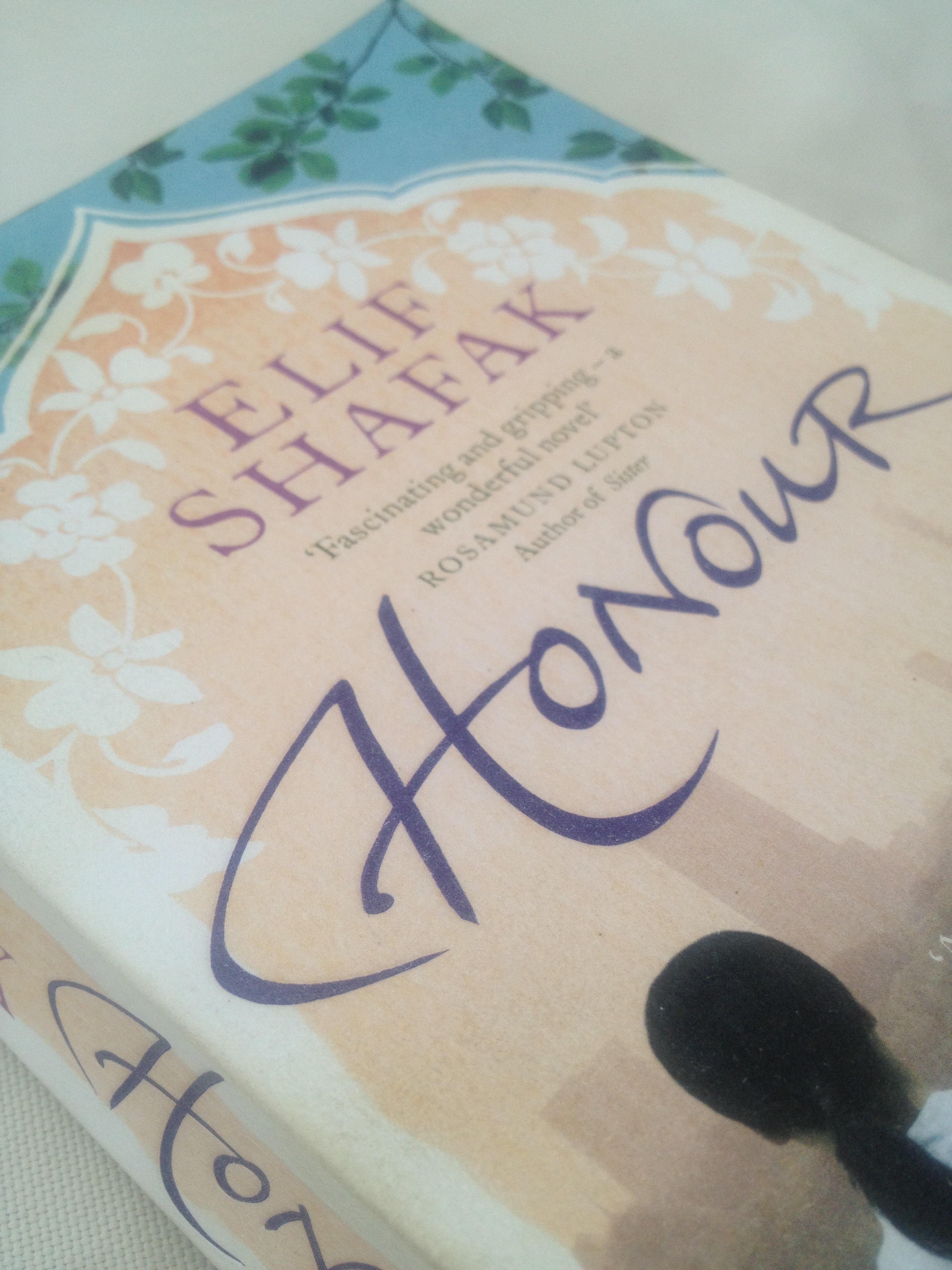
‘Honour’ by Elif Shafak

Elif Shafak’s Honour hinges around one horrible crime. The nature of this crime itself is revealed within the first few pages, and the rest of the book is spent examining the lives of the people affected and the events that led up to and contributed to the event.Honour

It’s a story that spans four generations, split between the remote villages of Turkey and the metropolis of 1970’s London. When Pembe and Adem leave their home country to build a new life in Britain, their children must find a way to mesh new traditions with the old, to speak two languages and to adapt the cultural norms of their heritage to new situations.

In Honour, Elif Shafak examines how gender, history and expectations combine to have a powerful impact on our behaviour and our future actions. It’s also fair to say that this book is an exploration of immigrant culture. It looks in detail at the relationships between parents and their children and how a rich cultural history is blended with new experiences.

I actually read this book while I was in Turkey, and the sections set in the villages really came to life for me. However, it felt as though it was lacking in the crucial emotional connection to the central characters. The narrative style, which tends to jump around between different times and different viewpoints, also made the novel quite hard to follow. It also meant that certain events were revealed out of sequence, taking away some of the tension from the main plotline.

Honour does a great job of setting out facts and events and of creating a very real and powerful backdrop, but at no point does the author really use her position to give an opinion on the twin cultures that she’s describing. It’s up to us as readers to make the observations for ourselves. In doing so, I think the author misses out on an opportunity to get across what has the potential to be a very powerful statement.

A review of ‘Snake Ropes’ by Jess Richards

On a remote and isolated island off the edge of the map, Mary is searching desperately for her little brother, missing since the day the Tall Men came to trade. Convinced that someone on the island knows more than they’re revealing, Mary will not rest until she finds him. But Barney is not the only boy to have disappeared lately, and the women of the island are calling on all their power, as well as their knowledge of ancient rites and rituals, to find the perpetrator.

Snake-RopesElsewhere on the island, Morgan, the ‘hidden daughter’, is confined behind a tall fence and a padlocked gate, the key of which never leaves her mothers grasp. Living life through the characters in her books, she dreams of the day when she can escape to the mainland.

Snake Ropes is a book made up of a fascinating combination of myths, legends, fantasy and folk tales. It’s a book of shadow selves, buried truths and keys that can talk. It’s a book where ghosts can cross paths with the living, where poisoned hair spreads across the sea onto the shores, and where seals shed their pelt to walk on the sands.

It’s a book of mysterious and mystical places that cannot be explained, from the Weaving Room, where the women decide on the fates of wrong-doers, to the mysterious and deadly Thrashing House, which can be controlled by no-one and which never relinquishes its hold on its victims.

Snake Ropes is a real exploration into the unknown, and I really enjoyed how the author played with our perceptions of what’s real, what’s not real and what we can make real through the power of our beliefs. It’s a really interesting debut novel, and it’s easy to see why it was nominated for awards.

However, I do have one thing that I have to criticise. While the writing style is certainly interesting, at some points I found that the unusual style, and the numerous diversions into fantasy, took away from the story rather than adding to it. It was quite intense, which also meant that it could be a little confusing. For me, this made it difficult to keep track of the main storyline.

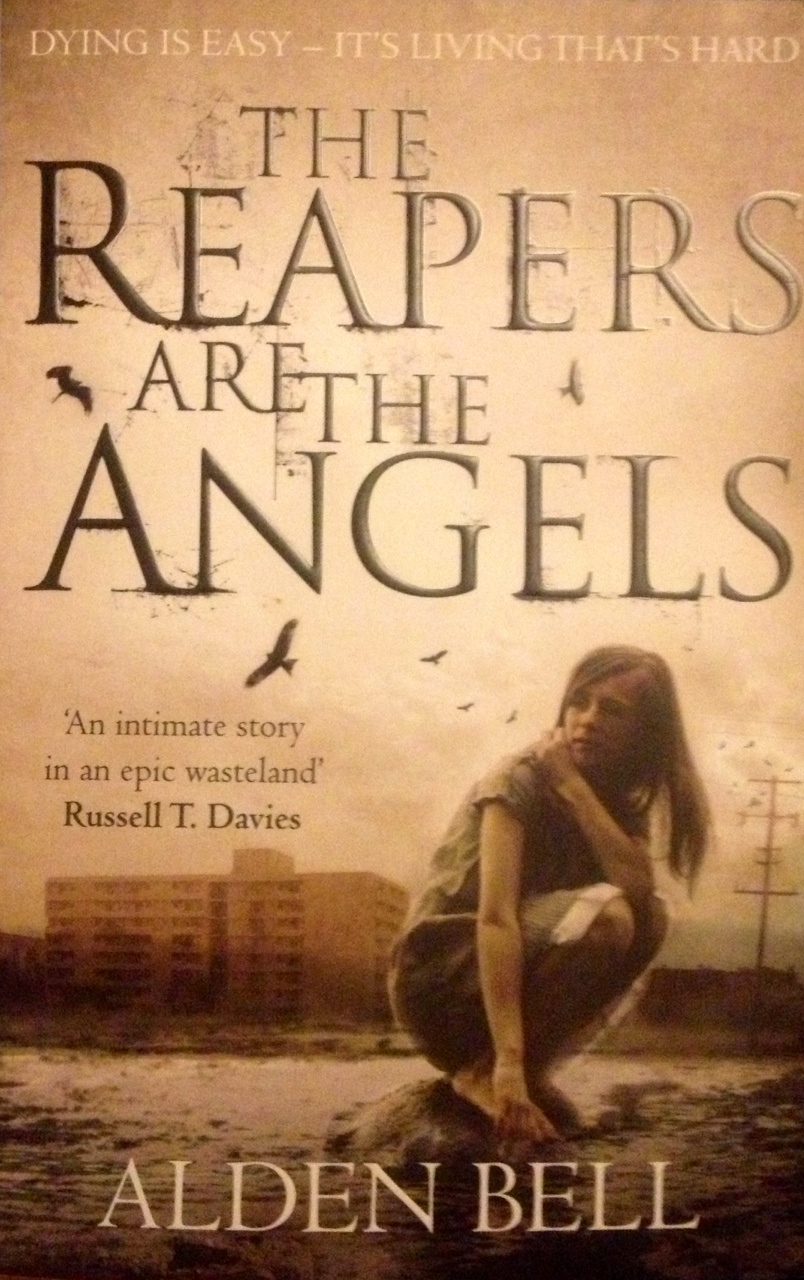
A review of Alden Bell’s The Reapers are the Angels

(Tor, September 2011)

When I started reading The Reapers are the Angels, it was hot off the back of the season finale of The Walking Dead and I was suffering from acute zombie drama withdrawal symptoms. I’d also read a quote that said this book was perfect for fans of Justin Cronin’s The Passage – which ranks as one of my all time favourite dystopian fiction novels – so I was expecting something equally mind-blowing and action packed.

ReapersFor those who haven’t heard about this book, it’s the story of Temple. Fifteen years old, a loner and a survivor, Temple wanders the country with no destination, only a will to live. Along the way, she runs into other survivors, one of whom becomes her sworn enemy. Driven by a conviction that killing her is the only thing that makes sense, he will stop at nothing to do so. In trying to evade her pursuer, Temple comes across a man named Maury. He’s helpless and vulnerable, and Temple makes a pact with herself to deliver him back to his family, whatever it takes.

As it turned out, this novel was actually quite different from what I was expecting. For a start, it was a lot slower in pace. The zombies, or ‘meatskins’ as they’re known, were used more as a device to set the scene for the action than as a central part of the story. That’s where my main problem lay with this novel. It is described as post-apocalyptic world, however none of the characters we meet seem to struggle for supplies or shelter, even when they’re out in the big bad open. And despite the fact that zombies have been roaming the earth for near on twenty years, there is still electricity, working GPS device and fully functional abandoned petrol stations stocked with food.

The writing style of The Reapers are the Angels was really different and I have to admit that it took me a little while to get used to it. There’s no real separation of dialogue from the rest of the text, which gives the impression that the reader is a passive witness to Temple’s stream of consciousness. By the end of the book, however, I thought it really worked and it really contributed to the whole isolated and estranged feel of the book.

The characters were well developed and well rounded, but there was a little too much of a focus on the theme of heavenly salvation and redemption for my personal liking. That said, I can see why the author has chosen to go down this route, and it was interesting to see his interpretation of how certain people would react under very difficult circumstances and in the absence of any real hope.

Overall, I didn’t love it, but I did think it was a good and enjoyable read. I know that others have said they weren’t keen on the ending, but I actually thought it worked really well – it’s refreshing to read a book in this genre that works as a standalone novel without spending too much time building up to a sequel.

Review of ‘The Sisters Brothers’ by Patrick DeWitt

(Granta Books, January 2012)

An homage to a classic Western, Patrick DeWitt’s ‘The Sisters Brothers’ is a tale of two notorious gunmen for hire, Eli and Charlie Sisters. Their latest mark – a one Hermann Kermit Warm.

The-Sisters-Brothers

Under the orders of the greedy and ruthless Commodore, the brothers travel across America to California, where their target is embroiled in the frenzy of the gold rush of the early 1850’s. Along the way they suffer numerous setbacks and come across a cast of extraordinary characters, from a crying man to a murderous child to a gypsy witch. Their fortunes change, from good to bad and back and forth again, and when they finally track down their quarry they have a life-changing choice to make.

While Charlie seems to thrive under their murderous choice of profession, Eli struggles with their nomadic and lonely lifestyle. The journey to California acts as a foil for his own personal search for something more. Ruled by his temper and prone to violent outbursts, he’s aware that he’s often manipulated by his brother but is keen to settle down to a more respectable way of life.

It’s narrated by Eli in an almost deadpan, slightly unhinged fashion that shapes the character of the entire book. When I was reading it I actually found myself imagining the dialogue said in an accent, something I don’t usually tend to do but in this case I just couldn’t help myself. It made the characters feel wonderfully real and gave them a real sense of personality.

Eli’s relationships – with his brother, his horses and with his feelings about what he does for a living – form the beating heart of this book. The classic younger brother, he looks up to Charlie with an almost hero worship and gladly follows in his lead. The dialogue between the two is incredibly realistic – it’s sometimes tense, sometimes cruel, sometimes brutally honest and sometimes the most natural thing in the world.

The way that this book was written was really interesting, and it’s easy to see how it made the long list for the Man Booker prize. It’s almost like it’s a selection of separate stories or anecdotes tied together by the strength of the central characters and the flair of DeWitt’s unique writing style. It was full of wit and dark humour and conjured up a vivid and colourful image of the life on the frontiers.

But while I can appreciate the incredibly talented writing and the construction, I’m not sure if I felt completely satisfied by the time I turned the last page. The story takes a while to kick in and I found the first quarter of the novel quite slow going. Even then, I reached the end and I felt like it was missing something story-wise. It felt as if so much time was used describing the details that the wider picture was lost to some extent. I know that other people have loved it, and if anyone else has read it I’d be really interested to know what you think!

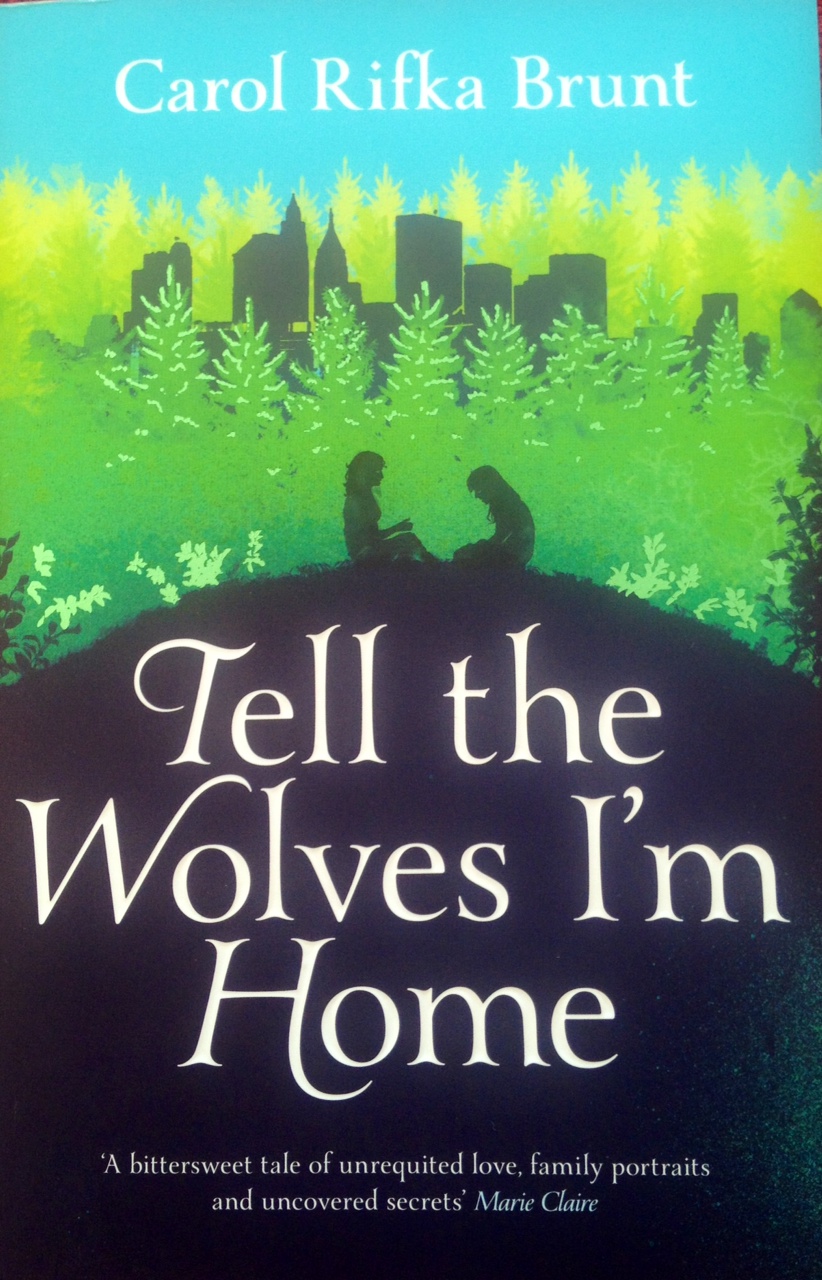
A Review of ‘Tell The Wolves I’m Home’ by Carol Rifka Brunt

Tell the Wolves I'm HomeSet in 1980’s New York, ‘Tell the Wolves I’m Home’ is an intimate portrayal of one family in the grips of grief. Narrated by 14-year-old June, the novel follows the Elbus family in the wake of the death of Finn, June’s uncle, from AIDS in the opening pages

Devastated by the loss, June forms an unlikely connection with a strange man she sees at the funeral who might just be able to understand what she’s going through. The fact that this man is someone who her parents clearly don’t want her to know anything about is one more obstacle that June must overcome in her journey to make sense of recent events. Along the way, she must also find a way to reconnect with her older sister, Greta, who is dealing with issues of her own.

‘Tell The Wolves I’m Home’ is not just a novel about a family in turmoil. It’s also a novel about love and loss, friendship and jealousy, guilt and regret – and everything else in-between.Each member of the family has their own demons to tackle, and throughout the novel we’re right there with them as they attempt to come to terms with their feelings and mend the cracks in their relationships.

The author takes a difficult and highly emotionally charged topic and addresses it in way that’s both sensitive and refreshingly honest. As well as looking at the realities of living with and coping with AIDS, she also examines people’s responses to the disease, which in the mid-1980’s were all too often misinformed and misguided.

I found it hard to believe that this was Carol Rifka Brunt’s first novel. She writes with unerring compassion and conviction to create a vivid cast of characters that really come to life in the imagination of her readers, and I can’t wait to see what she comes out with next.

The Unlikely Pilgrimage of Harold Fry by Rachel Joyce

The concept behind Rachel Joyce’s The Unlikely Pilgrimage of Harold Fry is beautifully simple, yet at the same time it’s a book that is packed with emotion, self-doubt and heartache that’s sure to hit a nerve with every reader.

It begins when Harold Fry receives a letter from an old colleague and friend informing him that she has been diagnosed with terminal cancer. What starts as a trip to the nearest post-box to send a letter expressing his condolences turns into an epic journey across the country. Without a map, a change of clothes or a mobile phone Harold’s walk is dependent completely on his instincts, the kindness of strangers and the strength of his belief in the fact that if he keeps on walking, Queenie will keep on living.

Harold’s walk seems so simple on the outside. As he describes it, it’s just putting one foot in front of the other. But as he attempts to walks from Cornwall to Berwick-upon-Tweed, Harold is forced to confront the tragedies of his past, his estrangement from his wife and growing detachment from the world.

Left behind, his wife Maureen is also battling her own demons as she struggles with feelings of repressed loss and anger. Harold’s walk and the space left by his absence, prompts her own personal journey.

The bit I loved most about this book was how the two central characters somehow, against the backdrop of everything that’s happened in their lives, managed to find a way to rediscover their love for each other.  It’s an intense and emotional read and it really drives home the fact that it’s never too late to change.