‘The Age of Miracles’ by Karen Thompson Walker

One day, the world wakes up to find that the rotation of the earth has begun to slow. As the days continue to stretch and the minutes pile in, the very notion of time is distorted thrown out of proportion and has to be redefined. This has a catastrophic effect on nature, throwing life as we know it out of kilter.

age of miraclesThroughout the novel, we have only one narrator. Julia is eleven years old when the slowing begins. Her perspective shapes the entire book, from her views on her parents’ marriage to her experiences of loss, death and change. This has a really interesting narrative effect and I thought it worked incredibly well.

We don’t know anything about the rest of the planet other than what we hear from Julia. Throughout the whole novel, Julia is more involved in the immediate problems of school, friends, bras and first crushes than with the impending disaster that continues to turn everything she knows about the world upside down. The news about the progress of the world is reported rather than dwelled upon, and as society fights to retain a sense of normality, Julia’s attention is absorbed by the small details of daily life.

That’s the main difference between ‘The Age of Miracles’ and other dystopian, end-of-the-world fiction. It’s such a stark contrast that I’d probably classify this as more of a coming of age novel. Rather, than focusing on the cause and solutions of the global crisis, this book is much more concerned with human relationships.

It raises some interesting questions. Does the slowing really affect Julia’s childhood, or are her experiences common adolescents all over the world, in every culture, no matter what the situation? It also drives home some truths. Relationships will always be put under strain. People will always disagree. Society will always marginalise certain groups that go against the norm. Humans will always adapt and find a way to survive.

Others have commented that they thought the pace was a bit too slow or that there wasn’t enough of a focus on the science fiction aspect, but I really enjoyed this book. I found the ending in particular really interesting. I don’t want to ruin it for anyone who hasn’t read it, but it draws together all of the themes set out in the book and it continued to play on my mind for hours after I turned the last page. All in all I’d definitely recommend it, just make sure you’re not expecting it to be something it’s not.
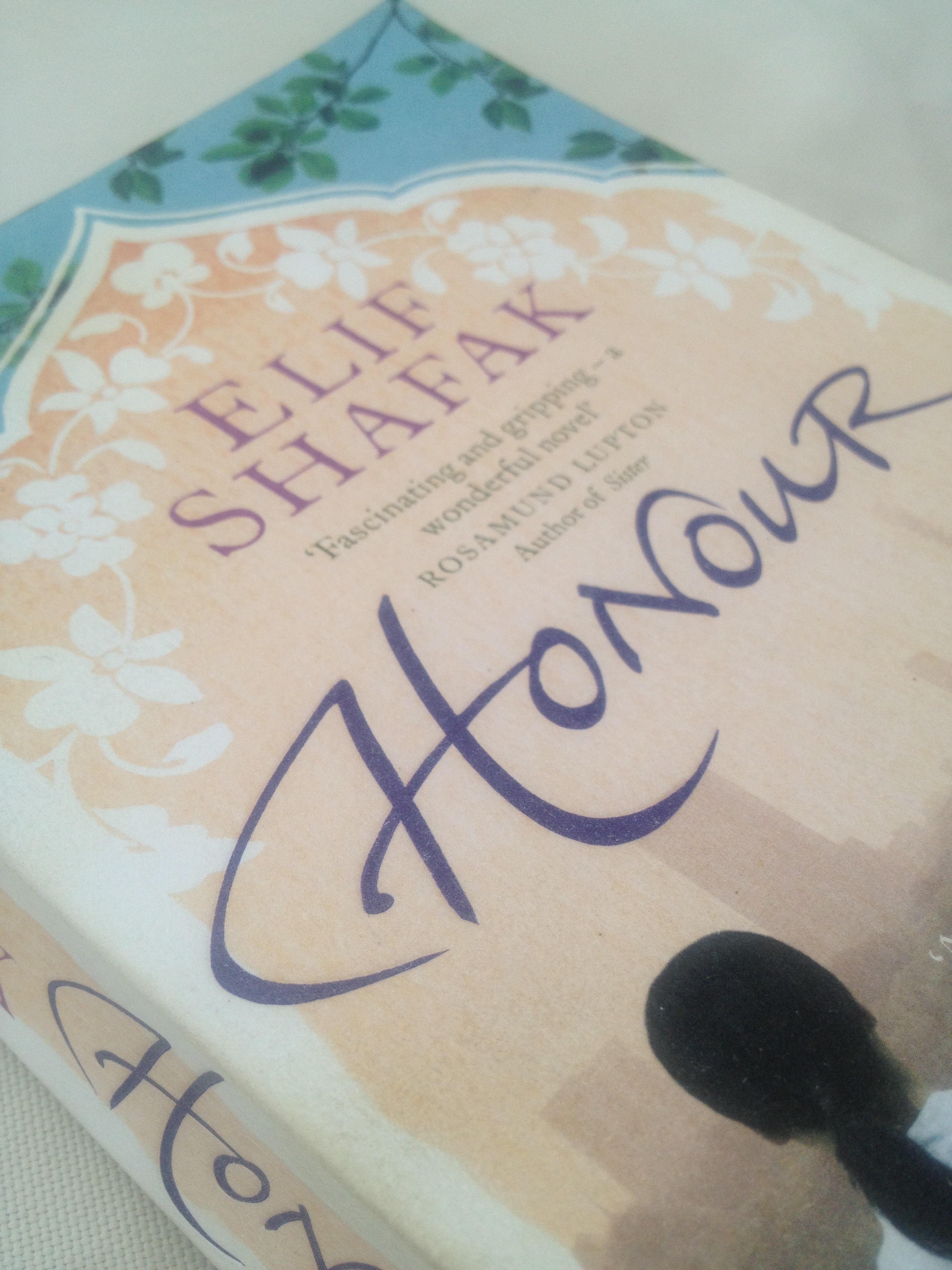
‘Honour’ by Elif Shafak

Elif Shafak’s Honour hinges around one horrible crime. The nature of this crime itself is revealed within the first few pages, and the rest of the book is spent examining the lives of the people affected and the events that led up to and contributed to the event.Honour

It’s a story that spans four generations, split between the remote villages of Turkey and the metropolis of 1970’s London. When Pembe and Adem leave their home country to build a new life in Britain, their children must find a way to mesh new traditions with the old, to speak two languages and to adapt the cultural norms of their heritage to new situations.

In Honour, Elif Shafak examines how gender, history and expectations combine to have a powerful impact on our behaviour and our future actions. It’s also fair to say that this book is an exploration of immigrant culture. It looks in detail at the relationships between parents and their children and how a rich cultural history is blended with new experiences.

I actually read this book while I was in Turkey, and the sections set in the villages really came to life for me. However, it felt as though it was lacking in the crucial emotional connection to the central characters. The narrative style, which tends to jump around between different times and different viewpoints, also made the novel quite hard to follow. It also meant that certain events were revealed out of sequence, taking away some of the tension from the main plotline.

Honour does a great job of setting out facts and events and of creating a very real and powerful backdrop, but at no point does the author really use her position to give an opinion on the twin cultures that she’s describing. It’s up to us as readers to make the observations for ourselves. In doing so, I think the author misses out on an opportunity to get across what has the potential to be a very powerful statement.

A review of ‘The Daughter of Smoke and Bone’ by Laini Taylor

(Hodder, September 2011)

Recently, I’ve read a few Y/A fantasy fiction novels, some of which I’ve loved and some of which have been distinctly underwhelming (see here for more). Since its publication, The Daughter of Smoke and Bone has received rave reviews from Y/A bloggers, so when I was casting my eye around for something new to read, it naturally made the list.

Smoke and BoneKarou has grown up between worlds, her childhood was spent in the back of a mysterious shop owned by Brimstone, a dealer in teeth and wishes and Karou’s guardian for as long as she can remember. Now Karou is old enough to fend for herself, and she has gradually begun to forge a life in the human world, but she’s increasingly torn between normality and the exciting, dangerous and macabre duties that she carries out on Brimstone’s behalf. She is also desperately searching for answers regarding her identity and how she came to be in Brimstone’s care. Then one day, she comes into contact with one cold-hearted and extremely powerful angel, Akiva, who might just hold the answers she needs.

As with most Y/A fantasy novels, there is a strong love story at the heart of ‘The Daughter of Smoke and Bones’, the true extent of which becomes clear as the novel progresses. That said, the author has really tried to approach this in a different way and break free of the traditional stereotypes. There’s no escaping the fact that all the clichéd elements are there, but it was interesting and different, with a bit of a twist, and the way the novel was written kept me turning the pages.

My main criticism of this novel is that I felt it was wholly focussed on building up to a sequel. There’s a lot of time dedicated to explaining Karou’s background and history of her world, but the action was just about to kick off when the book ended, which was frustrating to say the least. I’m all for sequels, and I think they can work really well, but The Daughter of Smoke and Bones needed more of a story of its own. Now my big debate is whether this annoyed me too much to read the next in the series – or whether my curiosity as to what happens next will win out?!

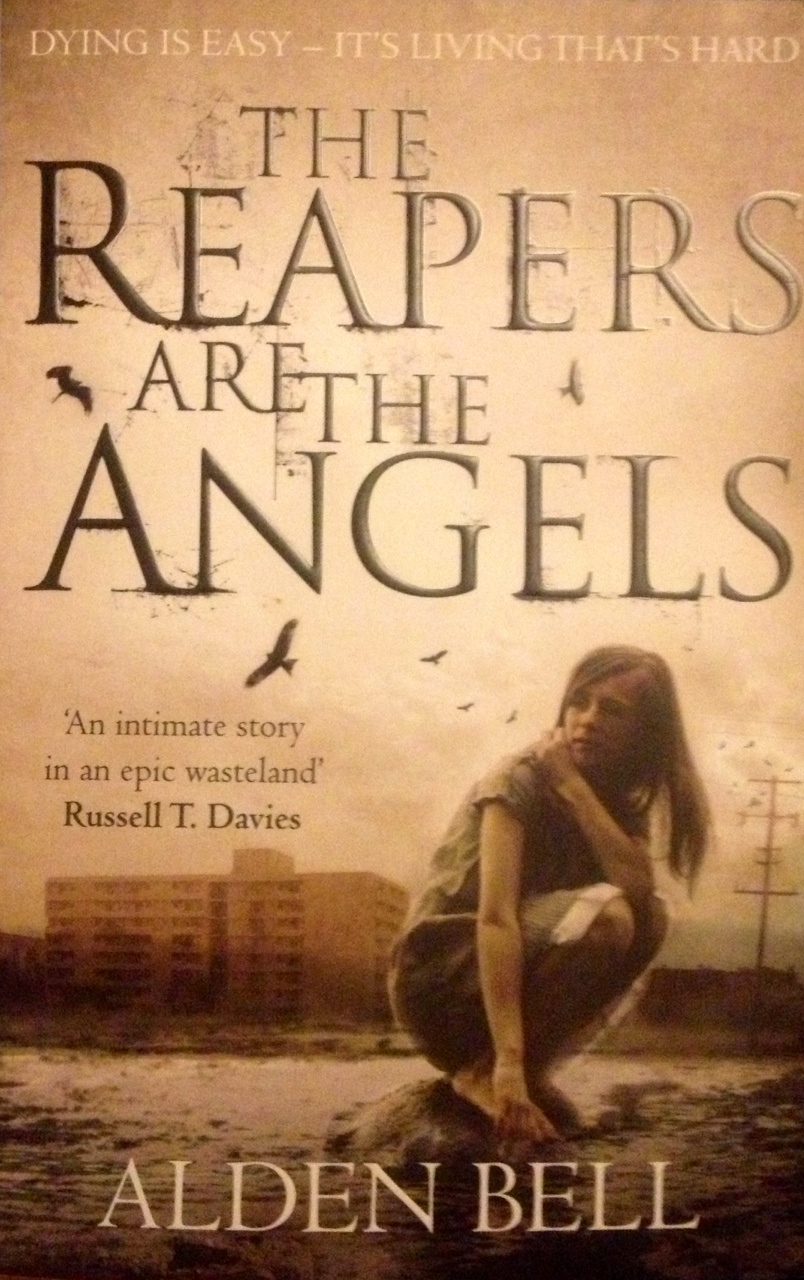
A review of Alden Bell’s The Reapers are the Angels

(Tor, September 2011)

When I started reading The Reapers are the Angels, it was hot off the back of the season finale of The Walking Dead and I was suffering from acute zombie drama withdrawal symptoms. I’d also read a quote that said this book was perfect for fans of Justin Cronin’s The Passage – which ranks as one of my all time favourite dystopian fiction novels – so I was expecting something equally mind-blowing and action packed.

ReapersFor those who haven’t heard about this book, it’s the story of Temple. Fifteen years old, a loner and a survivor, Temple wanders the country with no destination, only a will to live. Along the way, she runs into other survivors, one of whom becomes her sworn enemy. Driven by a conviction that killing her is the only thing that makes sense, he will stop at nothing to do so. In trying to evade her pursuer, Temple comes across a man named Maury. He’s helpless and vulnerable, and Temple makes a pact with herself to deliver him back to his family, whatever it takes.

As it turned out, this novel was actually quite different from what I was expecting. For a start, it was a lot slower in pace. The zombies, or ‘meatskins’ as they’re known, were used more as a device to set the scene for the action than as a central part of the story. That’s where my main problem lay with this novel. It is described as post-apocalyptic world, however none of the characters we meet seem to struggle for supplies or shelter, even when they’re out in the big bad open. And despite the fact that zombies have been roaming the earth for near on twenty years, there is still electricity, working GPS device and fully functional abandoned petrol stations stocked with food.

The writing style of The Reapers are the Angels was really different and I have to admit that it took me a little while to get used to it. There’s no real separation of dialogue from the rest of the text, which gives the impression that the reader is a passive witness to Temple’s stream of consciousness. By the end of the book, however, I thought it really worked and it really contributed to the whole isolated and estranged feel of the book.

The characters were well developed and well rounded, but there was a little too much of a focus on the theme of heavenly salvation and redemption for my personal liking. That said, I can see why the author has chosen to go down this route, and it was interesting to see his interpretation of how certain people would react under very difficult circumstances and in the absence of any real hope.

Overall, I didn’t love it, but I did think it was a good and enjoyable read. I know that others have said they weren’t keen on the ending, but I actually thought it worked really well – it’s refreshing to read a book in this genre that works as a standalone novel without spending too much time building up to a sequel.

The good and the bad of Y/A fantasy fiction

As some of you might know, a few weeks ago I wrote a post on Y/A fiction and how I was struggling to find a really good fantasy series to get my teeth into (see more here). Since then, having followed some suggestions and done a little research of my own, I’ve read the first few books of a couple of major young adult series. One of these I really enjoyed – despite the fact that on paper it may not have seemed like my kind of book – and the other I think could definitely have been done better. With this in mind, I thought I’d do a quick comparison of the two.

MI trilogyFirst off, I took on the first three books of the Mortal Instruments series by Cassandra Clare – City of Bones, City of Ashes and City of Glass. These books were originally intended as a trilogy, with a complete story that reaches a resolution at the end of the third novel, so this was a natural place to stop. Next, I moved on to the first two books of a planned trilogy by Rae Carson, The Girl of Fire and Thorns and The Crown of Embers.

In terms of storylines, the Mortal Instruments story was the one that appealed the most on paper. It follows sixteen-year-old Clary Fray, a normal girl living in New York. One night, her mother disappears and she’s plunged into a world of demons, Shadowhunters, vampires and warlocks. I won’t go into too much detail on the specifics to avoid spoilers, but there’s a brooding male lead, forbidden love, an arch nemesis and some complicated family dynamics.

While the author’s storylines are fairly imaginative, I felt that the characters were really underdeveloped. Jace, Clary’s complicated love interest, was incredibly stereotypical. He’s arrogant and good looking with some serious issues to be resolved but so inexplicably drawn to the main character that she’s the only one that can really ‘reach’ him. The other male in the love triangle, Simon, is a typical boy-who-is-just-a-friend that turns into more, and I didn’t think he was particularly likeable. Clary herself is supposed to be likeable but I just couldn’t connect with her as a character.City of Bones

One of my main criticisms of Y/A fiction is that I feel the writing can let them down. The Mortal Instruments is a case in point. I may not have been quite so overly critical of the character development if the writing had not also been stilted and slightly wooden. The dialogue didn’t flow, the descriptions were clichéd and the relationships unbelievable. Written with a bit more care, I think this series could have had some real potential, but as it is, I won’t be buying the next three books in the series.

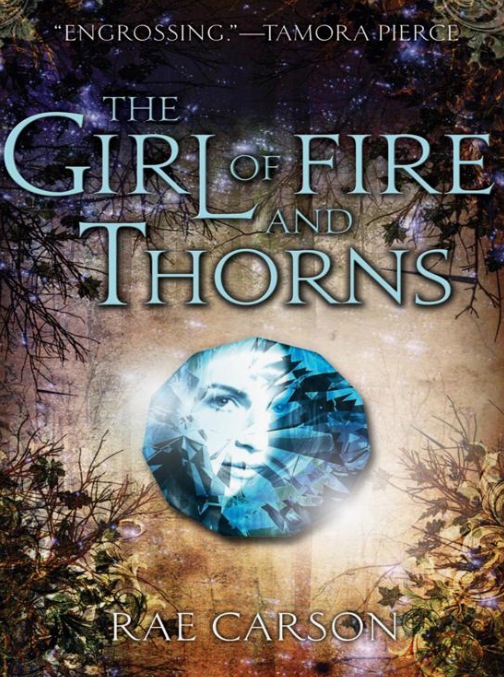
The Girl of Fire and Thorns, on the other hand was an example of a book I felt was written really well, so much so that even though I didn’t particularly enjoy the central premise of the novels, I went on to read the second book in the series. I read these on a recommendation, without researching them too heavily beforehand. However, fairly soon after starting the first book I realised that despite the fact it’s a fantasy novel set in a fantasy world, it’s heavily religious in its theme.

Fire and thornsIt’s not something I’d usually buy but I persevered – and I’m glad I did. On her sixteenth birthday, Elisa is married to a prince of a neighbouring kingdom. She is also named in an ancient prophecy that marks out one person a century for life of greatness. But this prophecy also makes her a target, and with the realm facing increasing tension and civil war, Elisa is unwillingly drawn into the heart of the action.

Like any good protagonist, Elisa undergoes a personal, and in this case a physical, transformation over the course of the book. However, this transformation was woven into the fabric of the book and it didn’t feel forced. There was also a great cast of supporting characters, and although I didn’t relate to some of them, this was purely because of the nature of their personalities rather than a lack of one.

Both books have a strong fantasy and magical element as well as an intricate central love story. The difference, however, was in how they engaged me as a reader. While I’ll definitely be reading the last in Rae Carson’s trilogy, I won’t be taking on the next books in the Mortal Instruments series any time soon.

Review of ‘The Sisters Brothers’ by Patrick DeWitt

(Granta Books, January 2012)

An homage to a classic Western, Patrick DeWitt’s ‘The Sisters Brothers’ is a tale of two notorious gunmen for hire, Eli and Charlie Sisters. Their latest mark – a one Hermann Kermit Warm.

The-Sisters-Brothers

Under the orders of the greedy and ruthless Commodore, the brothers travel across America to California, where their target is embroiled in the frenzy of the gold rush of the early 1850’s. Along the way they suffer numerous setbacks and come across a cast of extraordinary characters, from a crying man to a murderous child to a gypsy witch. Their fortunes change, from good to bad and back and forth again, and when they finally track down their quarry they have a life-changing choice to make.

While Charlie seems to thrive under their murderous choice of profession, Eli struggles with their nomadic and lonely lifestyle. The journey to California acts as a foil for his own personal search for something more. Ruled by his temper and prone to violent outbursts, he’s aware that he’s often manipulated by his brother but is keen to settle down to a more respectable way of life.

It’s narrated by Eli in an almost deadpan, slightly unhinged fashion that shapes the character of the entire book. When I was reading it I actually found myself imagining the dialogue said in an accent, something I don’t usually tend to do but in this case I just couldn’t help myself. It made the characters feel wonderfully real and gave them a real sense of personality.

Eli’s relationships – with his brother, his horses and with his feelings about what he does for a living – form the beating heart of this book. The classic younger brother, he looks up to Charlie with an almost hero worship and gladly follows in his lead. The dialogue between the two is incredibly realistic – it’s sometimes tense, sometimes cruel, sometimes brutally honest and sometimes the most natural thing in the world.

The way that this book was written was really interesting, and it’s easy to see how it made the long list for the Man Booker prize. It’s almost like it’s a selection of separate stories or anecdotes tied together by the strength of the central characters and the flair of DeWitt’s unique writing style. It was full of wit and dark humour and conjured up a vivid and colourful image of the life on the frontiers.

But while I can appreciate the incredibly talented writing and the construction, I’m not sure if I felt completely satisfied by the time I turned the last page. The story takes a while to kick in and I found the first quarter of the novel quite slow going. Even then, I reached the end and I felt like it was missing something story-wise. It felt as if so much time was used describing the details that the wider picture was lost to some extent. I know that other people have loved it, and if anyone else has read it I’d be really interested to know what you think!

A review of ‘Midnight in St Petersburg’ by Vanora Bennett

*Advance review*
(Century, April 2013)

In a city brimming with unrest and on the brink of revolution, one young woman steps off a train in possession of stolen papers and in search of a refuge from the violent pogroms of Kiev. Welcomed into the Leman family, Inna becomes an apprentice in their violin-making workshop and as she carves out her place in St Petersburg, she also gains a newfound confidence in herself.

midnight-st-petersburg-220x338As political tensions escalate, Inna finds herself torn between two men who represent very different paths. Wild and quick-tempered, Yasha throws himself into revolutionary politics with abandon. Their relationship, while built on passion and desire, also has the potential to destroy the safety of the life that Inna has created. On the other hand, respectable Englishman Horace, with a position at the prestigious Fabergé jewelry house, represents security and steady, unerring loyalty.

As the situation in St Petersburg becomes increasingly dangerous, Inna is forced to choose between following her head or her heart.

I loved this book. Set in one of the most tumultuous periods of Russian history, the reader experiences some of the most important events of the period through the eyes of an ordinary family who are just trying to live and to stay afloat. From a historical point of view, we’re introduced to some of the key figures of the time, from Rasputin to Lenin, and it really shone a light on the cultural and religious differences of the people living in St Petersburg at the time and the how events impacted on these different groups.

As someone who’s trying to learn Russian (albeit extremely slowly!) I really enjoyed how the author added little details explaining the nuances of Russian language and customs. I can only imagine how tough it would have been – and probably still is – to live in Russia as a foreigner. I also loved that the character of Horace was based on the real life story of the author’s great-uncle, it gave the novel a really personal touch.

One thing that I would say is that it took me a while to get really into the story. I didn’t immediately relate to Inna as a character, I found she came across as quite dispassionate and almost calculating. That said, as a young Jewish woman fighting for her survival, that’s probably exactly who she needed to be, and the tone contributed to the overall feeling of distrust and of tension revolutionary Russia. Still, it would have been great to have a bit more information about the central characters earlier on in the novel, as it might have helped me to become emotionally invested in them a bit earlier on.

By the end though, I was completely hooked. It was fast paced, packed full of tension and led up to a really satisfying conclusion. A definite must read for anyone interested in historical fiction!

(Massive thanks to the publishers for the review copy – much appreciated and enjoyed!)

Review of Gillian Flynn’s Gone Girl

With over 2 million copies sold worldwide, Gillian Flynn’s Gone Girl was one of the most talked about books of the last year- and rightly so.

Gone GirlA dark and disturbing thriller, Gone Girl is the story of the disappearance of a seemingly perfect wife on her fifth wedding anniversary. For Nick, left behind in smalltown Carthage, Missouri, Amy’s disappearance plunges him into a waking nightmare. As the police and the American public begin to turn against him, it’s clear that something about his take on recent events doesn’t quite add up.

The first part of the novel switches between Nick’s first hand experiences of the days immediately after the disappearance and Amy’s diary entry’s, dating back to the day that they first met. But as the book progresses, we begin to realise that the two narratives we’re hearing are telling very different stories, and that at least one of the two of them is not telling the whole truth. In fact, they’re telling anything but the truth.

Then – and there are spoilers coming up so if you don’t want to know, don’t read ahead – the second half of the book hits and we realise that we have two very unreliable and wholly unlikeable characters on our hands. Both Nick and Amy are lying, concealing and misleading both themselves and the reader. It’s a bold move from Gillian Flynn, as she runs the risk of alienating her audience. Not everyone wants to read a whole novel with central characters they can’t relate to.

But in this case, it’s a risk that really paid off. Nick and Amy are human and throughout the novel they display very human weaknesses. Whether they have any redeeming qualities is a very different matter.

Gillian Flynn really ramps up the tension and holds her readers in suspense the whole way through. I was hooked and couldn’t put it down until I turned last pages in the (very) early hours of the morning! Ultimately, in Gone Girl Gillian Flynn has created a master psychological thriller that thoroughly deserves the praise that has been heaped upon it.

Review of The Secret Keeper by Kate Morton

On a scorching summer’s day in 1961, 16-year-old Laurel is the only witness to a shocking crime that will shake the foundations of her beliefs forever. Fast forward 40 years and Laurel, sitting at her dying mother’s bedside, struggles to reconcile the events of that fateful day with the loving family she has always known – before the truth is lost forever.

The Secret KeeperThe story stretches from 1940’s London, when England is caught up in the midst of The Blitz, to a rural family home in 2011. To say goodbye to her mother, Laurel must try to piece together a mystery seventy years old and in doing so, will find herself immersed in the lives of Dorothy, Jimmy and Vivian, whose paths will collide with devastating and far reaching effects.

I’ve read all of Kate Morton’s previous novels and really enjoyed them, but I’m also well aware that this type of novel – which combines multiple threads set in different periods of history working their way towards a dramatic revelation and family resolution at the end of the novel – is in danger of becoming a generic fallback format for authors writing in this genre. However, in The Secret Keeper, Kate Morton has managed to take this type of novel and somehow make it seem fresh, new and exciting.

I actually listened to this as an audiobook and thought it really worked in this format. The narrator, Caroline Lee did a really good job of maintaining a sense of urgency and interest despite the fact that the recording was nearly 20 hours long.

The big twist at the end of this novel was one that I really didn’t see coming, and I couldn’t stop thinking about it long after I’d finished the book. Also with this style of novel, I tend to have a ‘favourite’ thread, and can sometimes come to resent chunks of the novel set outside of that time or away from those characters. This didn’t happen this time. I enjoyed every strand of this book equally and I actually slowed down towards the end because I wanted to stay in the world that Morton had created for just that little bit longer.

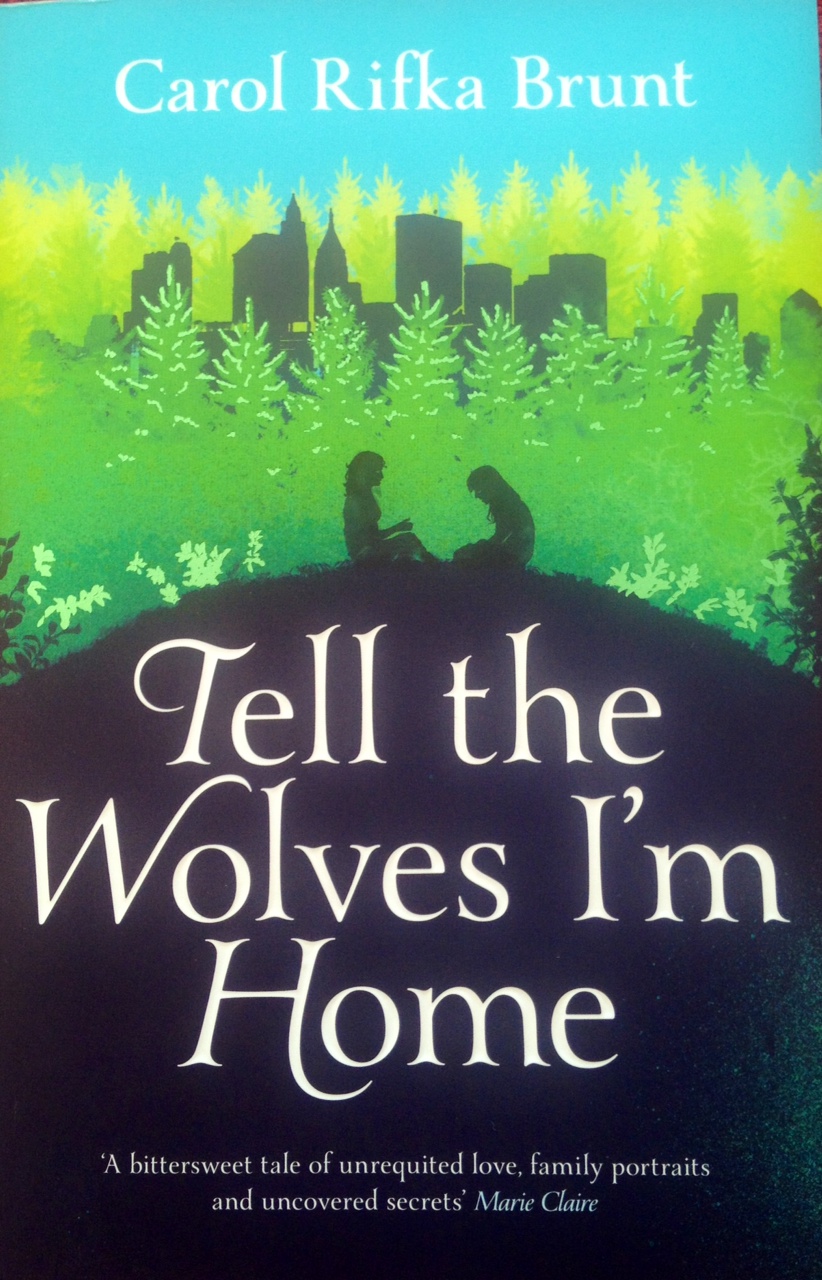
A Review of ‘Tell The Wolves I’m Home’ by Carol Rifka Brunt

Tell the Wolves I'm HomeSet in 1980’s New York, ‘Tell the Wolves I’m Home’ is an intimate portrayal of one family in the grips of grief. Narrated by 14-year-old June, the novel follows the Elbus family in the wake of the death of Finn, June’s uncle, from AIDS in the opening pages

Devastated by the loss, June forms an unlikely connection with a strange man she sees at the funeral who might just be able to understand what she’s going through. The fact that this man is someone who her parents clearly don’t want her to know anything about is one more obstacle that June must overcome in her journey to make sense of recent events. Along the way, she must also find a way to reconnect with her older sister, Greta, who is dealing with issues of her own.

‘Tell The Wolves I’m Home’ is not just a novel about a family in turmoil. It’s also a novel about love and loss, friendship and jealousy, guilt and regret – and everything else in-between.Each member of the family has their own demons to tackle, and throughout the novel we’re right there with them as they attempt to come to terms with their feelings and mend the cracks in their relationships.

The author takes a difficult and highly emotionally charged topic and addresses it in way that’s both sensitive and refreshingly honest. As well as looking at the realities of living with and coping with AIDS, she also examines people’s responses to the disease, which in the mid-1980’s were all too often misinformed and misguided.

I found it hard to believe that this was Carol Rifka Brunt’s first novel. She writes with unerring compassion and conviction to create a vivid cast of characters that really come to life in the imagination of her readers, and I can’t wait to see what she comes out with next.