Review of ‘The Sisters Brothers’ by Patrick DeWitt

(Granta Books, January 2012)

An homage to a classic Western, Patrick DeWitt’s ‘The Sisters Brothers’ is a tale of two notorious gunmen for hire, Eli and Charlie Sisters. Their latest mark – a one Hermann Kermit Warm.
The-Sisters-Brothers

Under the orders of the greedy and ruthless Commodore, the brothers travel across America to California, where their target is embroiled in the frenzy of the gold rush of the early 1850’s. Along the way they suffer numerous setbacks and come across a cast of extraordinary characters, from a crying man to a murderous child to a gypsy witch. Their fortunes change, from good to bad and back and forth again, and when they finally track down their quarry they have a life-changing choice to make.

While Charlie seems to thrive under their murderous choice of profession, Eli struggles with their nomadic and lonely lifestyle. The journey to California acts as a foil for his own personal search for something more. Ruled by his temper and prone to violent outbursts, he’s aware that he’s often manipulated by his brother but is keen to settle down to a more respectable way of life.

It’s narrated by Eli in an almost deadpan, slightly unhinged fashion that shapes the character of the entire book. When I was reading it I actually found myself imagining the dialogue said in an accent, something I don’t usually tend to do but in this case I just couldn’t help myself. It made the characters feel wonderfully real and gave them a real sense of personality.

Eli’s relationships – with his brother, his horses and with his feelings about what he does for a living – form the beating heart of this book. The classic younger brother, he looks up to Charlie with an almost hero worship and gladly follows in his lead. The dialogue between the two is incredibly realistic – it’s sometimes tense, sometimes cruel, sometimes brutally honest and sometimes the most natural thing in the world.

The way that this book was written was really interesting, and it’s easy to see how it made the long list for the Man Booker prize. It’s almost like it’s a selection of separate stories or anecdotes tied together by the strength of the central characters and the flair of DeWitt’s unique writing style. It was full of wit and dark humour and conjured up a vivid and colourful image of the life on the frontiers.

But while I can appreciate the incredibly talented writing and the construction, I’m not sure if I felt completely satisfied by the time I turned the last page. The story takes a while to kick in and I found the first quarter of the novel quite slow going. Even then, I reached the end and I felt like it was missing something story-wise. It felt as if so much time was used describing the details that the wider picture was lost to some extent. I know that other people have loved it, and if anyone else has read it I’d be really interested to know what you think!
Book release countdown…

After an intense hour browsing the internet for books to buy – and having read countless reviews and bloggers top read’s lists – I’ve come to the conclusion that most the books that I desperately want to read haven’t been released yet. With this in mind, I thought I’d put together a list of my own top five books to look out for this year. Make a note of the dates!

1. And the mountains echoed – Khaled Hosseini (Bloomsbury, 21st May 2013)

From the bestselling author of The Kite Runner and A Thousand Splendid Suns, And the Mountains Echoed is set in Afghanistan in the latter half of the twentieth century and focuses on the devastating effects of war on a country and on the families that live there. The author has a history of exploring powerful, evocative issues and it’s had rave reviews from everyone that’s read a preview copy.

2. Prisoner of Heaven – Carlos Ruiz Zafon (Phoenix, 11th April 2013)

Admittedly, this isn’t technically a new release, but I’ve been waiting for months for the paperback version to come out and it’s finally (almost) here! Previous books in the series – The Shadow of the Wind and The Angels Game – created an intricate world and a fascinating cast of characters. The Prisoner of Heaven completes this gothic, literary themed trilogy. Hopefully this lives up to the expectations I’ve got from the first two!

3. The Golem and the Djinni – Helene Wrecker (Blue Door, 15th August 2013)

This debut novel from Helene Wrecker has been compared to The Night Circus and A Discovery of Witches – both of which are amazing books that would probably make it onto my all time favourites list. Set in 19th century New York, it’s described as a tale of two fabled creatures, one made of fire and one make of clay, struggling to live, love and to overcome a powerful, villainous adversary.

4. MaddAddam – Margaret Atwood (Bloomsbury, 29th August 2013)

Margaret Atwood is one of those rare authors that, in my opinion, can write amazing fiction about any subject under the sun. This hugely anticipated finale to her dystopian trilogy (which also includes Oryx and Crake and The Year of the Flood) is being released at the end of the summer and I’m practically counting down the days.

5. The Winds of Winter – George R. R. Martin (Voyager Books, TBC)

I’ve put this one on the list because I want it to come out soon, but I’m not holding my breath. The author hasn’t given many clues as to when the manuscript will be finished, but sample chapters keep being released to keep everyone on tenterhooks. With a pretty dramatic cliffhanger at the end of the last instalment, I’m still hooked. If anyone has any news on this one, let me know!

A review of ‘Midnight in St Petersburg’ by Vanora Bennett

*Advance review*
(Century, April 2013)

In a city brimming with unrest and on the brink of revolution, one young woman steps off a train in possession of stolen papers and in search of a refuge from the violent pogroms of Kiev. Welcomed into the Leman family, Inna becomes an apprentice in their violin-making workshop and as she carves out her place in St Petersburg, she also gains a newfound confidence in herself.

midnight-st-petersburg-220x338As political tensions escalate, Inna finds herself torn between two men who represent very different paths. Wild and quick-tempered, Yasha throws himself into revolutionary politics with abandon. Their relationship, while built on passion and desire, also has the potential to destroy the safety of the life that Inna has created. On the other hand, respectable Englishman Horace, with a position at the prestigious Fabergé jewelry house, represents security and steady, unerring loyalty.

As the situation in St Petersburg becomes increasingly dangerous, Inna is forced to choose between following her head or her heart.

I loved this book. Set in one of the most tumultuous periods of Russian history, the reader experiences some of the most important events of the period through the eyes of an ordinary family who are just trying to live and to stay afloat. From a historical point of view, we’re introduced to some of the key figures of the time, from Rasputin to Lenin, and it really shone a light on the cultural and religious differences of the people living in St Petersburg at the time and the how events impacted on these different groups.

As someone who’s trying to learn Russian (albeit extremely slowly!) I really enjoyed how the author added little details explaining the nuances of Russian language and customs. I can only imagine how tough it would have been – and probably still is – to live in Russia as a foreigner. I also loved that the character of Horace was based on the real life story of the author’s great-uncle, it gave the novel a really personal touch.

One thing that I would say is that it took me a while to get really into the story. I didn’t immediately relate to Inna as a character, I found she came across as quite dispassionate and almost calculating. That said, as a young Jewish woman fighting for her survival, that’s probably exactly who she needed to be, and the tone contributed to the overall feeling of distrust and of tension revolutionary Russia. Still, it would have been great to have a bit more information about the central characters earlier on in the novel, as it might have helped me to become emotionally invested in them a bit earlier on.

By the end though, I was completely hooked. It was fast paced, packed full of tension and led up to a really satisfying conclusion. A definite must read for anyone interested in historical fiction!

(Massive thanks to the publishers for the review copy – much appreciated and enjoyed!)

A review of Julia Gregson’s Jasmine Nights

As I’ve no doubt mentioned before, I have a soft spot for historical novels. I especially like it if these historical novels happen to focus on a subject that I know relatively little about. As any reader will know, World War II has – quite rightly – inspired a whole plethora of books over the years, and in my experience it’s quite rare to come across one that has a completely fresh take on the genre. However, Julia Gregson’s Jasmine Nights managed to do just that.

Jasmine nightsFar away from the trenches of central Europe or the grey, rationed world of 1940’s London, Jasmine Nights presents a completely different aspect of war experienced in the exotic cities of Cairo, Alexandria and Istanbul and the open skies over the Egyptian desert.

Against the wishes of her family and in a move may alienate her from her father forever, ENSA singer Saba has risked everything to pursue her passion and to serve her country. Egypt offers her a chance to grow in ways that she could never have imagined, but as the war progresses she finds herself increasingly embroiled in the shady world of espionage, with devastating consequences.

Pilot Officer Dominic Benson, serving with the Desert Air Force, has recovered physically from a traumatic injury but is struggling with the guilt of losing his best friend. When he hears Saba singing in a hospital concert, he dares to hope again. But taking to the skies again comes with it’s own dangers, and when disaster strikes, can they find their way back to one another?

The switching narratives give an insight into two very different sides of war, from Saba, fighting for her independence from the constraints of home, to Dom, who has experienced the all the horrors of war first hand but can’t bring himself to talk about it. At it’s heart, it’s essentially a romance novel, and yes, it does have some clichés and yes, the characters could have been developed a little further, but that didn’t stop me from thoroughly enjoying it.

Prior to Jasmine Nights, I hadn’t read much about WWII in Africa, and this book was packed full of vivid visual imagery and a wealth of detail and description that spoke to all the senses. I listened to this as an audiobook, mostly on my way to and from work, and on several occasions found myself loitering in the snow because I couldn’t bring myself to turn it off! The protagonists are interesting and appealing and there’s enough tension and intrigue to keep you hooked all the way to the end. Above all it’s entertaining, what more do you need?

Book bribery or just clever marketing?

Over recent months, the decline of the British high street has showed no sign of slowing. And although fashion retail has suffered some major hits, it’s arguably electronic, book and video game stores that have the most to fear from online retailers and supermarket chain contenders, with major names such as Jessops, HMV and Blockbuster falling into administration in 2013 alone.

WaterstonesWhen it comes to bookshops, the collapse of Borders in 2011 is a stark reminder that it’s not just independent stores that are at risk – but that seemingly well established, international brands are also just as vulnerable. In fact, despite their strong corporate support system, I’d argue that larger chains have their own difficulties in that they may struggle to build a personal connection to their customer base.

One retailer that’s trying to buck the trend is Waterstones. In a bid to boost sales and to challenge the rise of e-readers, this high street heavyweight has recently announced a new initiative that will see it team up with popular authors to offer exclusive bonus content. The business has signed a deal with Chocolat author Joanne Harris for an additional, non-plot essential chapter for her latest novel – Peaches For Monsieur Le Curé – which will be only available in copies purchased from Waterstones.

But as readers, what do we think of this new initiative? On the one hand, I can’t help but feel that authors should want their book to be the best that they possibly can be, regardless of who’s reading it or where they’ve purchased it from. Their reasons for signing up to the scheme may have stemmed from the best of intentions, but at the end of the day some fans are going to miss out, whether that’s through ignorance of the existence of Waterstone’s extra material or for financial reasons.

That said, is the Waterstones scheme really that different to others that have preceded it? The Richard and Judy Book Club for example, which is available exclusively at WH Smith, has long since offered readers additional reading material and discussion points, while many publishers choose to offer a sample chapter of the authors next novel as a teaser. And moving away from books for a second, DVD’s often provide viewers that chance to access deleted scenes or interviews with the cast.

At the end of a day, a business is a business and in these challenging economic times everyone has to think of new and innovative ways to make money and increase their profit margins. With online retailers and larger supermarket chains now able to offer significantly reduced prices, leaving traditional high street stores struggling to compete, the promise of additional material is just one way of helping stores like Waterstones to stand out from the crowd and to offer customers more for their money.

As for me – I’m torn. I can see the advantages of these initiatives from a marketing perspective and in theory I’d love to buy all my books from Waterstones. But in reality I just can’t afford to, especially not with my reading habits! If anyone has any thoughts on this, let me know!

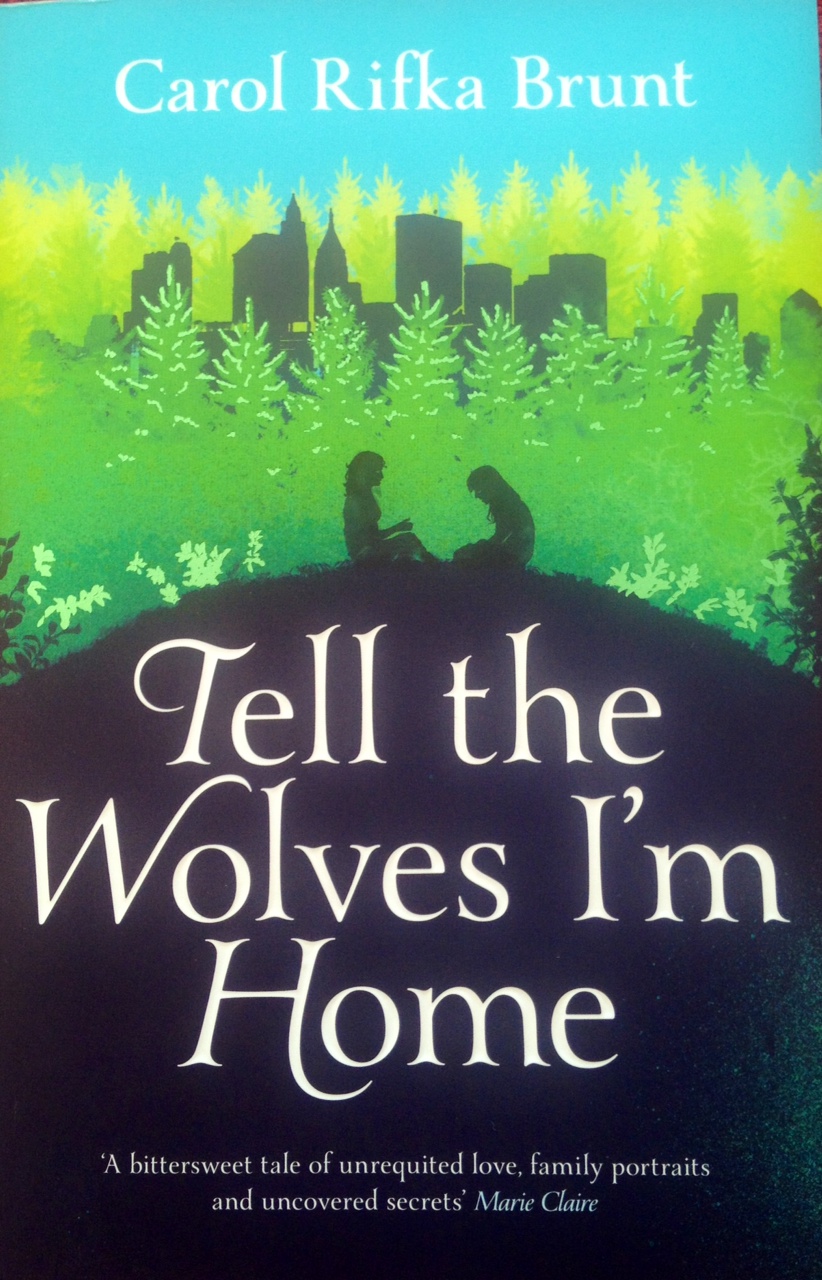
A Review of ‘Tell The Wolves I’m Home’ by Carol Rifka Brunt

Tell the Wolves I'm HomeSet in 1980’s New York, ‘Tell the Wolves I’m Home’ is an intimate portrayal of one family in the grips of grief. Narrated by 14-year-old June, the novel follows the Elbus family in the wake of the death of Finn, June’s uncle, from AIDS in the opening pages

Devastated by the loss, June forms an unlikely connection with a strange man she sees at the funeral who might just be able to understand what she’s going through. The fact that this man is someone who her parents clearly don’t want her to know anything about is one more obstacle that June must overcome in her journey to make sense of recent events. Along the way, she must also find a way to reconnect with her older sister, Greta, who is dealing with issues of her own.

‘Tell The Wolves I’m Home’ is not just a novel about a family in turmoil. It’s also a novel about love and loss, friendship and jealousy, guilt and regret – and everything else in-between.Each member of the family has their own demons to tackle, and throughout the novel we’re right there with them as they attempt to come to terms with their feelings and mend the cracks in their relationships.

The author takes a difficult and highly emotionally charged topic and addresses it in way that’s both sensitive and refreshingly honest. As well as looking at the realities of living with and coping with AIDS, she also examines people’s responses to the disease, which in the mid-1980’s were all too often misinformed and misguided.

I found it hard to believe that this was Carol Rifka Brunt’s first novel. She writes with unerring compassion and conviction to create a vivid cast of characters that really come to life in the imagination of her readers, and I can’t wait to see what she comes out with next.

Whether you like true crime, romance or fantasy, this year’s Quick Read’s collection has something for everyone…

quickreads_banner

Today might be Valentines Day, but the 14th February also marks another very special occasion – the launch of the Quick Reads 2013 collection.

Formed in 2006, Quick Reads is a fantastic charity that aims to encourage adults across the UK to pick up a book and discover the joys of reading. Every year, it enlists some of the biggest and brightest names in literature to write a series of short books designed to deliver an entertaining and engaging story in no more than 128 pages.

Quick_Reads_Logo_BlackWith some pretty compelling research that suggests that some 12 million adults in the UK find reading difficult and may never as picked up a book, the project is a great way of building confidence in those who may not have been readers in the past – whether that’s because they find books intimidating, because they think reading is boring or simply because they just don’t think that they want to.

It’s a brilliant and unique project, and this year, Quick Reads is pulling out all the stops to build awareness and encourage people to take part. Available from most major retailers and libraries, the books are not just intended for the general public, they have proved to be a vital educational tool for environments such as further education colleges, prisons, family centres, care homes and workplace learning centres. Plus, there’s also the knock-on effect on the next generation, as adults who discover reading through the Quick Reads charity are much more likely to encourage their children to read.

When it comes to the books themselves, there’s something for everyone. I’m particularly looking forward to ‘A Dreadful Murder’ by Minette Walters. Based on a true story, the book reconstructs the events of a mysterious murder on the grounds of a large country estate in a bid to uncover the culprit. It sounds to me like it might have echoes of Kate Summerscale’s The Suspicions of Mr Whicher and I can’t wait to get my hands on it.

But if crime’s not your thing, there’s plenty more on offer in the form of a new Doctor Who story from Mike Tucker as well as a feel good romantic adventure in ‘Love is Blind’ by Kathy Lette.

Former SAS operative and soldier Andy McNab has also contributed to the collection with a brand new book reflecting on his time in the forces. Recruited following a stint in a juvenile detention facility at the age of sixteen, but with a reading age of just eleven, ‘Today Everything Changes’ tells of how his own experience of the Army education system changed his life forever.

I’ll post again with details of the individual books as soon as I’ve had a chance to read and review, but for now, this is just a short shout out to encourage everyone to spread the word!

More information on Quick Reads as well as all of this year’s books and authors can be found at http://www.quickreads.org.uk/ 

Is it right to rewrite a classic?

Last week, I walked past W. H. Smith and saw a full stand of Enid Blyton novels in pride of place in the children’s books department. Although the branding and packaging was very different from when I first read the books, sourced from a second hand bookshop nearly twenty years ago, it was great to see that the books I loved in my childhood are still popular today. In fact, Enid Blyton is still one of the UK’s most popular children’s authors, regularly making the list of most borrowed authors from libraries even now, forty-five years after her death in1968. The Famous Five series in particular still sells some half a million books every year.

But are they really the same novels they were when they were first published? In 2010, the Famous Five books were given their most dramatic overhaul to date. In a bid to make the language of novels first published in 1942 more accessible to a new generation of readers, the publisher has made some notable changes to various references, phrases and dialogue. Amongst other things, this included changing ‘mother and father’ to ‘mum and dad’, ‘mercy me’ to ‘oh no’ and removing what could be considered “dated” dialogue such as ‘jolly’ and ‘fellow’. Bizarrely, one of the changes was replacing the word ‘peculiar’ with ‘strange’.

Some of these changes, such as the decision to replace any words that might have become racist since the original publication of the series, I can understand, if only because we could potentially run the risk of allowing children to think that the use of this language is still acceptable. But what happens when the original books see the four children having a perfectly ‘gay ‘time, or something similar? These references too have been amended in recent times, despite the fact that they were written at a time when the word had no other meaning than simply being happy.

And despite the changes that have been made, there are still several basic aspects of the books that remain at odds with modern sensibilities, such as the predilection to let children go off for long periods of time without any adult supervision. And if, as this would suggest, the novels can never truly be made adapted for the 21st century, should they really be changed at all? My answer to this would have to be no.

The very fact that the Famous Five books are still so popular – they have sold over 50 million copies in 50 countries – suggests that the stories, which feature adventure, excitement and the absence of adults, haven’t lost their basic appeal. The fact that the books are, essentially, a product of the time in which they were written shouldn’t take away from this. Maybe it’s the fact that they’re children’s books, and as such not protected by their status as fine, classic literature like authors such as Dickens, or that the date of their publication in the 1940’s, 50’s and 60’s means that they’re still considered relatively modern compared to books like Little Women or Alice in Wonderland?

Whatever the case, I still believe that the Famous Five books, in their original form, should be used as a tool to teach children about the past and the accepted way of life in the time the novels were written. Although our views on things like gender roles or education may have changed, and the advent of technology has changed Enid Blyton’s world beyond recognition, children should still be aware of their heritage and the history of the world we live in. Literature, and classic children’s fiction in particular, is the perfect way to achieve this.

Charlotte Rogan’s The Lifeboat

Disturbing, intense and claustrophobic, Charlotte Rogan’s The Lifeboat follows the lives of 39 passengers following the sinking of an ocean liner in 1914. Adrift in the middle of the Atlantic Ocean with the possibility of rescue looking less and less likely, the lifeboat is dangerously over-full and provisions increasingly scarce.Charlotte Rogan's The Lifeboat

Thrown together in the confined space of the boat, the passengers face moral dilemmas and difficult decisions in their struggle for survival. Newly formed relationships are pushed to the limit as personalities clash and the survivors’ battle to take control of their surroundings. The Lifeboat tackles the darkest places of the human psyche and also reminds us of the wild and brutal potential of the natural world.

The novel is told through the words of 22-year-old Grace Winter, who came on board the doomed ship with her new husband, Henry, and was left widowed after the accident. However, throughout the book, we start to suspect that Grace may not be a very reliable source. Her narrative tone becomes increasingly distant and dispassionate, and the truth behind events is thrown into question.

As we follow the passengers from their perilous situation on the open seas to the trials of the courtroom on their eventual return, Charlotte Rogan tackles potentially contentious issues as she challenges everything from religious belief to inequality in gender roles.

I raced through this book and had to stop myself from reading ahead to the end. Some people have commented that it’s hard to sympathise with the characters, but I thought this just added to the overall tone of the novel. The author deliberately doesn’t write characters that are likeable. Instead, she uses the passengers of the lifeboat to explore the depths of human nature and personalities, both good and bad, as well as the lengths we will go to survive.

It’s impossible to imagine how we ourselves would react if we were forced into the same situation and you can’t help but put yourself in their place. It’s a gripping, and thought-provoking read, and although admittedly it did make for slightly uncomfortable reading I’d definitely recommend it.

The rise of self-publishing

The advent of epublishing platforms and the ability for authors to self-publish their work without going through traditional publishing avenues has opened up a whole realm of new possibilities. The success of authors such as Amanda Hocking make it clear that this route is one that has the potential to deliver substantial returns – even the hugely successful Fifty Shades of Grey started life as online fan fiction.

There are now hundreds of thousands of free ebooks available on Amazon’s Kindle store, and according to a recent survey by Bowker Market Research’s Book and Consumers UK survey, self-published books accounted for around 11% of all ebooks purchased by UK consumers in the first half of 2012. But with so many authors choosing to go down this route, what does it take for a book to stand out from the crowd? And how much difference does the lack of input from professional editors, readers and designers really make?

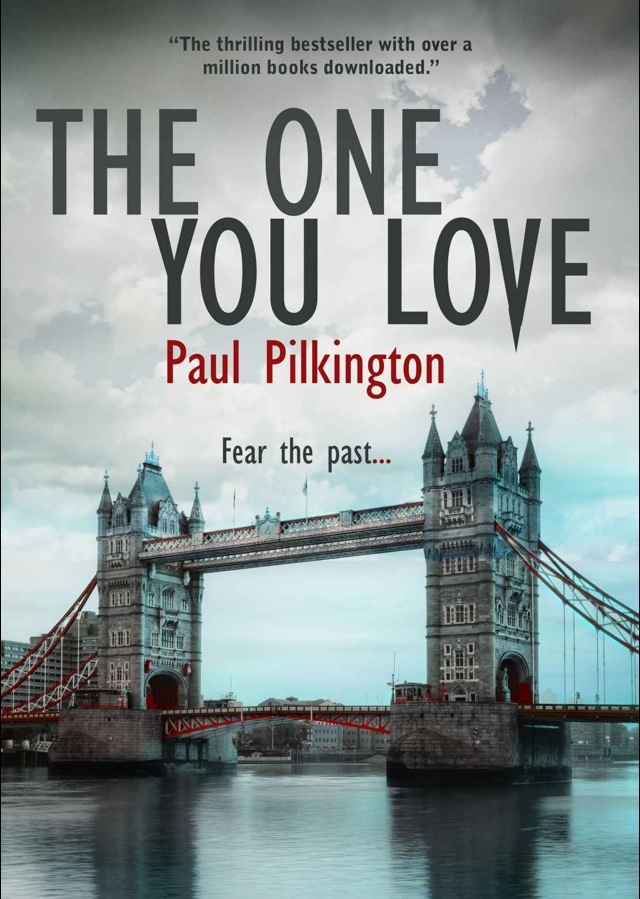
Paul PilkingtonTo see for myself, I recently read a book by Paul Pilkington, an independently published suspense mystery writer. Paul’s first novel, The One You Love, was made available on the Kindle store in July 2011 (see here). As of 30th January 2013, the book is number one on Amazon’s free download chart and has generated over 800 reviews on the site, many of them positive.

The One You Love revolves around Emma Holden, who comes with a troubled past and emotional baggage to boot. Two weeks before her wedding, her finance, Dan, has disappeared leaving a trail of suspicion and lies in his wake. Fast paced and action packed, this book raced along to a dramatic conclusion with plenty of twists and cliff-hangers along the way. It was interesting, well thought out and I didn’t have a clue who was behind the chain of increasingly mysterious events until the very end!

I do, however, have a few criticisms. There were a lot of central characters and I think one or two could have been cut back to minor parts without taking too much away from the story. While these characters were useful in illustrating potential avenues for the plot, the central thread of the story could have been more cohesive.

This book was all about the action, which I liked, but I would have preferred to have a bit more of a back story on the characters and their relationships with each other. In particular, Emma’s relationships with the men in the book were not examined in great detail and the reader is left to take things entirely at face value. There were also a couple of loose ends that I felt could have done with being tied up.

There’s no doubt that I enjoyed The One You Love – I read it in its entirety in just one sitting. However, the input of a publishing house would probably have helped to iron out the issues highlighted above and to turn a reasonably good book into a great one. Since it’s release, this book has been hovering steadily at the top of the download charts, but put it – in its current form – into the paid category at the same price point as books like Gillian Flynn’s Gone Girl, and I don’t think it would perform anywhere near as well.

Having said that, the success of ebooks like this just goes to show that if people have a story to tell, they should put themselves out there and tell it. Self-publishing has real potential to give authors an opportunity to break into the industry and I’ll definitely be looking to read more independently published ebooks in the future.