Historical melodrama with Philippa Gregory

If you’ve read any of the other books in Philippa Gregory’s Cousins War series, then you’ll soon see that the White Princess is very much in the same vein. Each book in the series is told from the point of view of a woman at the heart of the royal court. Here, we experience events through the eyes of Elizabeth, Princess of York. Daughter of Edward IV and Elizabeth Woodville, the young princess is no stranger to war, loss and hardship – having experienced the extreme highs and lows of being in a position of power throughout her father’s reign.
The White PrincessAfter her father’s death, his youngest brother, Richard III is King. Her two younger brothers are believed to have been murdered in the Tower of London. Her mother continues to plot and conspire with enemies both at home and abroad – determined that, one way or another, her children will find their way back to the throne.

As Elizabeth’s relationship with Richard grows, and his wife continues to fail to provide an heir, she reigns over the royal court like a queen. But when Henry Tudor invades to take Richard’s crown, Elizabeth must learn to adapt to a very different way of life. With her lover dead on the battlefield, she must play the role of a dutiful wife in a court where her heritage means that she will never be trusted, even by those closest to her.

This novel does a great job of exploring a marriage arranged for political reasons. In this case, their match has been made out of a need to protect their families and to win over the hearts of the Yorkist public. At first their relationship is portrayed as being driven by hate, fear and suspicion. As plots by York loyalists continue to abound, Elizabeth is viewed as a threat and tightly controlled by her husband and mother-in-law. But as her relationship with Henry grows, and her beloved children are raised in the ways of the reigning royal court, Elizabeth is forced to come to terms with what it means to be a Tudor.

Royal women at the time were used as nothing more than pawns in a strategy to get to the crown. Elizabeth is married to a king, but the people closest to her continue to conspire to get a York boy on the throne. If they are successful, Elizabeth would be cast down and her sons disinherited in the name of her father’s family. She is trusted by no-one, putting her in the most dangerous and precarious position of all. For her, there are no outcomes that can truly be a win, as someone she loves will have suffered.

Unlike some of the women featured elsewhere in the series, Elizabeth has very little power to control events. She is kept in the dark and must make her way through as best she can, doing anything she can to emerge unscathed. The helplessness of her situation is quite frustrating. However, Gregory’s writing remains compelling and riveting and her characters are entirely convincing. This book also goes over a lot of the material that we’ve already seen earlier in the series. For these reasons alone, I didn’t enjoy this novel as much as some of the others.

Other reviewers have made a lot of the fact the Gregory take liberties with the historical evidence that we have, twisting it to meet her fictional narrative. I’ve never had a problem with this aspect of Gregory’s writing – the facts that we have are all open to interpretation in some way and it’s interesting to read someone ‘s take on things, even though one look on Wikipedia will mean that we all know what will ultimately happen to all of the characters.

Justin Cronin’s ‘The Passage’

the passageWhen the book opens, the US government is exploring new ways to create the ultimate fighting weapon. The discovery of a mysterious virus found in the deepest parts of a remote jungle, which seems to render its carriers impervious to disease and to give them extreme strength, seems like it may offer a solution. But experiments on test subjects straight from death row soon take a disastrous turn.

Skip forward a hundred years and the catastrophic consequences of these experiments become abundantly clear. Darkness brings death in the form of virals – infected humans that roam the country, moving like lightening and killing or turning every living thing in their path.

A small pocket of survivors live in the First Colony. Their entire survival relies on their ability to guard their high walls against the virals, and on the bright lights that protect against the night. The people living in the colony are several generations down from the original survivors, and the old world and the promise of a rescuing army have been changed into the stuff of myth and legend. Continue reading

A detective story with a difference

Rivers_of_LondonWhen PC Peter Grant stumbles across a key witness with a first-hand account of a violent crime, he sees it as an opportunity to save himself from the tedium of a career in paperwork. The only problem – his witness is a ghost.

As a result of this encounter with the supernatural, Peter is swiftly recruited into a special unit within the Met police – designed to help solve the cases where fact and reason have failed. He soon discovers a whole new side of London policing, complete with rivers that walk on two feet and ghosts that steal people’s faces.

Ben Aaronovitch’s creation has all the lure of the paranormal combined with the mystery, suspense and action of the crime novel. Continue reading

Classic dystopian fiction

In a not so distant future, the world has died. Nothing grows. The supply of tinned or preserved food is almost gone. Most of the people are dead. The ones that have survived are often more dangerous that the hazardous world they live in, and armies of ruthless cannibalistic murders roam the grey and lifeless land.

The RoadIn this world, one man and his son are walking the road. Scratching for every scrap of food and often near death, they make their way towards the coast, hoping to find the survivors. The man knows they won’t survive much longer in the open, and they live in constant fear of people taking their meagre supplies in a place where a dry blanket could makethe difference between life and death.
The man’s whole reason for being lies in keeping his son, the one speck of light left in his world, alive to see another day.

We never find out the names of the man and his son. However, the fact that the book is confined to just their small sliver of the world and their experiences of the long grey road means that we get to know them intimately. It’s intense and sometimes it’s quite claustrophobic, but it’s also incredibly gripping. Continue reading

Curtis Sittenfeld’s ‘Sisterland’

SisterlandIdentical twins Violet and Kate have grown up as two halves of a whole. With an often absent father and a mother suffering from some sort of implied depression, they are left to find their way through their adolescence together. But Violet and Kate also have a physic gift, with an uncanny ability to see what isn’t there and to predict what’s coming. As children, this gift binds them together, but it also drives others away.

As the twins grow up, their lives take very different directions. Kate changes her name and does everything she can to blend in and conform. She aims to be the model friend, mother and wife. She sees her psychic abilities as the root cause of everything bad that has happened in her past, and she does all she can to supress them. On the other hand, Violet embraces her differences. Exuberant and eccentric, she makes a living as a psychic and has no inhibitions when it comes to embracing life and exploring her sexuality.

Their wildly different choices have been the cause of strained relationships between the sisters their whole lives, but they are still linked by the unbreakable bond of sisterhood. When Violet predicts a catastrophic earthquake and is catapulted into the public eye, Kate is drawn back into the world that she hoped to have left behind. As the date of the event draws near, tensions rise. For Kate, the cracks in the life she has built will be revealed. For Violet, her life is about to be put under a microscope by the media. Continue reading

Hannah Kent’s ‘Burial Rites’

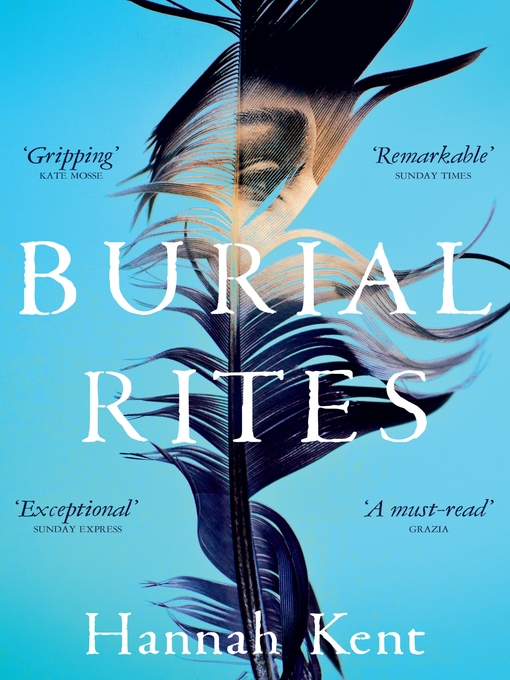
Burial RitesSet in rural Iceland in the late 1820’s, ‘Burial Rites’ is based on a real life double murder case. In the absence of places to detain criminals for any length of time, the convicted murderers are each sent to stay with different families across the area.

One of these prisoners is Agnes. The family she is assigned to rails against her presence, refusing to call her by name, and the youngest daughter in particular is shamed to have her living under their roof. In the months leading up to her execution, Agnes internally rages against her conviction. Gradually, through Agnes’ stories to her priest, and eventually to the family themselves, the truth behind the death of her two alleged victims is uncovered.

As Agnes tells her story, the family also get to know her and start to accept her presence, forcing them to question their prejudices. This asks the larger question of whether the legal system can be trusted to make the right decision Continue reading

A courtroom thriller

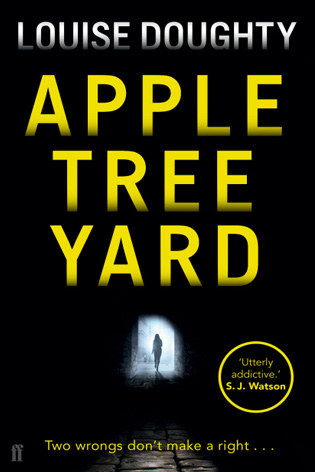
appletreeyard‘Apple Tree Yard’ opens in a courtroom, with our narrator in the dock, although we don’t yet know her crime. To explain how she got there, Yvonne takes us right back to the beginning – to the events that set everything in motion.

Yvonne is 52, married, has two children and is a successful geneticist. She could be any one of us. As she takes pains to point out – her life is ordinary. But the choices she makes over the course of a few short months will take her down a road that Yvonne never thought she would travel.

The direction of the book continually changes as it progresses. Every time we think we can see where the story is leading, something shifts, changing with it our perceptions of characters. The end, when it comes, is a tense and anxious experience, all building up to the one moment that has the potential to change her life forever. Continue reading

A vibrant assault on the senses

Frog Music‘Frog Music’, from Emma Donoghue, takes us back to the brothels and backstreets of San Francisco, and to the sweltering heatwave and smallpox epidemic that characterised the summer of 1876. The novel opens with the murder of Jenny Bonnet. The only other person present at the scene of the crime is her friend Blanche, one of the star performers at the infamous House of Mirrors bordel.

The rest of the novel flits back and forward in time. In one narrative stream, we learn how Blanche and Jenny first met, and how their chance meeting and friendship may have led to the shooting. In the other strand, we follow Blanche’s wild search for the guilty party after Jenny’s death.

Famous for her ability to capture the hearts, minds and bodies of men, Blanche lives with Arthur – her ‘maque’, her man or her pimp depending on how you look at it – in a Chinatown apartment, performing twice a week in a titillating dance show of risqué burlesque. We quickly learn that Blanche’s baby son is being raised out of town, and is seen by his parents only rarely, allowing them to carry on with their own lifestyles without worrying about his upbringing.

But when Blanche happens to run right into the infamous Jenny Bonnet, it’s the catalyst that will change everything. Continue reading

Ebooks versus print

Continuing the debate about ebooks and their place in the market, Hodder Children’s announced last week that it will be launching a new e-only sci fi classics list. The list is launching with five out-of-print books, and aims to release up to 21 titles by September – see their Hodder Silver Twitter account for more info.

But is this a trend that’s set to continue? One of the major criticisms levelled at ebooks and the ebook market is that they limit the possibilities of new discoveries, making it hard to find new recommendations in the way that you would in a traditional bookshop.

It’s telling that the first e-only list is aimed at children and young adults, a generation that is likely to be far more engaged online with blogs and social media sites than ever before. The number of sites aimed at the sci fi and fantasy genre is huge, and each one is teeming with recommendations and opinions on the latest releases. It’s only natural that this audience would gravitate towards ebooks, where a quick click of the mouse is all it takes to deliver a book to the screen in front of you in a matter of minutes.

It’s a tentative start – as these are all novels that have previously appeared in print – and I think that we can see this growing more and more over time as people, but I can’t see paper books disappearing forever.

It’s also interesting to see that Sand, the latest novel from Hugh Howey, has actually been released as an ebook by publisher Cornerstone months before it will appear in print. Readers will still be able to pick up a hard copy, but it’s getting people used to having an ebook format be something that they look forward to.

A review of Hugh Howey’s ‘Sand’

Having read and loved Hugh Howey’s ‘Wool’ trilogy, I was so excited to get an ARC of his new novel – Sand.

SandAs the title suggests, the protagonists live in a world where the only constant is the sand. A relentless wind buries buildings, forcing people to move on and move up on a regular basis. Carrying buckets of water away from the few surviving wells is a full time, 24 hour a day job. In such a hostile landscape, everything of value – from copper coins to clothes to metals and building materials – is sourced from below the sands, from the cities of the world below, buried far beneath the dunes.

In Springston, people carve out lives for themselves as best they can. The lucky ones live on the wall, which holds back the worst of the sands as best it can. The not so lucky ones live in the shadows of the wall, at the mercy of the shifting landscape, forced to do whatever it takes to survive. Since their father left, Palmer, Vic, Conner, Rob and their mother have been living in the only way that they can, driven by anger, hurt and a curiosity for the unknown. Continue reading