‘The Prisoner of Heaven’ by Carlos Ruiz Zafon

The third installment in a planned quartet of novels from Carlos Ruiz Zafon, The Prisoner of Heaven has been on my wishlist for a while now (see here for a full round-up). It’s predecessors, The Shadow of the Wind and The Angels Game were both gripping reads, so my expectations when it came to this book were understandably high. That said, it’s not necessary to have read the books in order, so if you haven’t read the others, it doesn’t take anything away from this one.
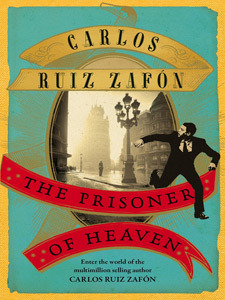
The-Prisoner-of-Heaven_225The Prisoner of Heaven tells the story of Fermin Romero de Torres – mentioned in previous novels but coming to a forefront here. Imprisoned in horrifying conditions by the regime during the Spanish Civil War, Fermin crosses paths with some of the most detestable and terrifying figures of the Spanish authority. Condemned to a prison where so called ‘enemies of the state’ are sent to die, his fellow cell mates and gaolers are varying degrees of crazy and intensely dangerous.

To survive, Fermin must put his trust in a man whose sanity is increasingly called into question, a brilliant but eccentric writer named David Martin. The words that pass between them and the pact they make within the prison walls will continue to reverberate for years to come. When a man from his past arrives on his doorstep, Fermin is forced to confront his worst memories and to relive a previous life. And as his story comes to light, it becomes clear that the past never truly stays in the past.

As with all of Zafon’s previous works, The Prisoner of Heaven is beautifully written and creates a brilliantly dark and realistic vision of post-war Spain. But ultimately what he does so well is to capture the magic and the mystery of the unknown. The skill with which he writes invites the reader to make their own connections, to see the scene as it continues to play out on the pages and to draw their own conclusions.

For me, The Prisoner of Heaven lacked some of the magic of Zafon’s previous novels. While it started off very much in the dark gothic vein that we’ve come to know him for, it soon diverged into a more straightforward, but no less sinister, plot. Still, there’s no denying that Zafon is a master storyteller, weaving together narratives to create a story with just the right amount of tension, pace and humour.

‘The Casual Vacancy’ by J.K. Rowling

This month, the literary world has been buzzing at the revelation that J. K. Rowling has been unveiled as the author of The Cuckoos Calling. While this has generally been praised by critics, her first post-Harry Potter venture, The Casual Vacancy, generated a storm of debate, and this week I finally got around to finishing it.

casualvacancyThe Casual Vacancy opens with the untimely death of Barry Fairbrother, a central figure in the town of Pagford and an active member of the parish council. As the town looks to fill Barry’s empty seat on the council, the divisions, fractions and tensions between the town residents come to a head. As competition heats up, more than one family is set on a course for disaster. And when tragedy strikes, we’re left wondering whether events have been brought about by circumstance or whether they are the inevitable outcome of a flawed society.

First on every agenda is a longstanding issue concerning  local council estate, The Fields. The town and its parish council are essentially divided into two opposing groups. One side is keen to integrate the estate into the community, while the other is desperate to pass responsibility for the estate and its residents back to nearby Yeovil.

Told from multiple perspectives, the reader is treated to an in-depth character assessment of various town residents. Overall, the majority of these characters are deeply unlikeable, narrow minded and self-centred – from the pompous local shop owner Howard to his bored and acerbic daughter-in-law Samantha or the slightly ridiculous and over excitable figure of deputy headmaster Colin.

However, there are also a number of characters that really struck a chord with me. Most notably, this included local troublemaker Krystal Wheedon. The daughter of a habitual drug user, she is trapped in a constant cycle of circumstance. No doubt intended to illustrate the potentially devastating effects of inherent social prejudices, Krystal is shown as a victim of the system and the attitudes and stereotypes of the middle classes, but remains a completely believable and well rounded character in her own right.

Rowling puts herself firmly inside the heads of her characters, and the result is a relentless and damning exploration of the human nature. It actually made me quite uncomfortable to read, as throughout the course of the novel we’re exposed to every horrible, selfish and self-loathing thought that could ever cross a person’s head.

Did I enjoy it? I’m not sure. I thought it was really well written, and the tongue in cheek humour and subtle mockery throughout the book kept the plot flowing. All of the characters, those that I hated and those that I emphasized with, were well constructed and felt incredibly real to me by the end of the novel. Overall, it’s maybe a touch too political for my liking, but the themes explored by Rowling throughout the course of the novel stuck with me long after I turned the last page.

‘The Rose Petal Beach’ by Dorothy Koomson

One seemingly normal evening, Tamia Challey’s life is shattered by a knock on the door. Her husband, Scott, has been accused of something terrible, and his accuser is Tami’s best friend. Placed in an impossible dilemma, Tami has to face the fact that one of the people that she trusts most in the world is lying to her. But which one?

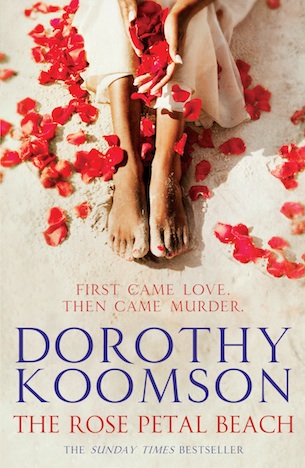
the-rose-petal-beach-1As Tami becomes increasingly suspicious of the people in her life, tragedy strikes and the situation escalates still further. Over the course of the book, Tami’s life gradually falls apart as she’s forced to make some hard choices and face up to some devastating truths.

As well as the main thread following the present day crime and its implications, The Rose Petal Beach also reaches back through time to give us a back story of Tami’s relationships with the main players in the story. This not only helps to build up a picture of the past, but also to allow readers to understand how tensions have reached breaking point.

The Rose Petal Beach is a dark and intense thriller that not only aims to solve a crime, but also to offer a deep insight into the psychological effects of events as they unfold. Seen through the eyes of three very different women, we’re presented with three very different perspectives on the situation. Together, these three narratives merge to create an overall picture that just doesn’t quite fit together.

Ultimately it’s a study of relationships, whether that’s between parents and their children, between friends or between lovers. For me, the aspect of the novel that carried the most weight was that no matter how close we are to people, you can never really know everything about them.

The author writes cleverly and emotionally, really connecting her readers to the characters. It was the perfect holiday read, but I can’t help thinking that Dorothy Koomson has used this formula before. That said, you can’t argue with something that’s tried and tested and she continues to come out with gripping and thought-provoking reads.

‘The Innocents’ by Francesca Segal

Francesca Segal’s The Innocents received a great deal of critical acclaim. Not only did it win the 2012 Costa First Novel award, it also won the Sami Rohr Prize for Jewish Literature in Fiction and made the shortlist for the Women’s Prize for Fiction. But does it live up to the hype?

InnocentsLoosely based on Edith Wharton’s The Age of Innocence, Francesca Segal’s debut novel follows childhood sweethearts Adam and Rachel. Their lives are threaded together in every way – from their intricate family relationships to the fact that Adam is a trusted employee of a business run by Rachel’s father – so their engagement comes as little surprise to anyone in their immediate circle. But while Rachel is busy planning the perfect big day, Adam is having a crisis of confidence.

Full of self-doubt, Adam is torn between Rachel, as well as the inherent expectations that lie on him as a member of a tight-knit Jewish community, and her alluring, vibrant and vulnerable younger cousin Ellie.

Ellie is the antithesis to Rachel, the family black sheep with a devil-may-care attitude to life. For Adam, already questioning his mapped out future as the perfect Jewish husband, her appearance is the catalyst that pushes him over the edge.

Some people have criticised this book for its in-depth descriptions of Jewish culture and community, but this was actually the aspect of the book that I most enjoyed. It’s the most detailed discussion of Jewish society that I’ve ever read, and I found it really interesting.

However, I just didn’t feel that the central figures were in any way likeable. This was probably because we see everyone else from Adam’s perspective, and for me, Adam is nothing but self-centred and weak. As a result we see Rachel alternatively as either a homely and loving safe haven or a clingy and vapid black hole sucking him into a life that he’s not sure he wants.

I’m not even really sure who can really be considered as ‘innocent’. Adam is lacking in any life experience, Rachel is clueless to all of her fiancé’s misgivings and Ellie has her own childhood traumas leaving us questioning whether she’s an instigator of trouble or a victim of her own troubled past. This may have been the very point that the author was trying to convey, that we are in fact all innocent in our own ways. But while the book read really well and I did enjoy it, I just couldn’t relate to any of the characters.

Essentially, it all boils down to one simple question. How do we know if the grass is really greener on the other side, and is what we have ever good enough?

Andrew Fukada’s ‘The Hunt’

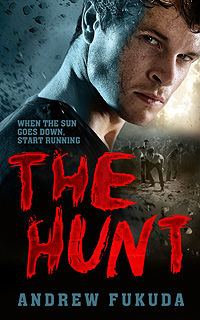
I’ve been struggling to put this book into words. I suppose it could be described as a sort of warped version of The Hunger Games. Except in this case we have a world dominated by vampires embarking on a once-in-a-decade human hunt, with the lucky hunters drawn from the population by lottery.The-Hunt

However, one such hunter is actually a human, or a heper as they call them, living in disguise amongst the vampires. Knowing that he will be exposed as soon as the hunt starts by his inability to keep up with the pack and his unwillingness to tear their prey apart with his fake vampire fangs, he is rapidly running out of time to come up with a way out. With the help of some unexpected allies, his world is changed forever as he uncovers hidden secrets that go against everything that he’s been taught.

I have to start by saying that The Hunt is written really well – it had a great pace, plenty of action and it was quite addictively readable. However, while the concept was interesting, there were some gaping holes in the plotline that managed to completely distract me from the main story on several occasions throughout the book.

There are numerous points that I just cannot get my head around. Whether that’s because the author has failed to think things through or because he simply hasn’t bothered to explain them, I’m not sure.

My first gripe is how our main protagonist has managed to attend vampire school for years without detection. I don’t know how he’s managed to get hold of fake fangs or contraband razors in the first place, but those basic difficulties aside, I don’t see how it is possible to have never coughed, sneezed, sweated, blushed or spilled a single drop of blood in the presence of vampires (who never show a shred of emotion and scratch their wrists instead of laughing).

Secondly, vampires are under the impression that humans are totally extinct outside of government activity. But since there are several secret humans revealed throughout the book, from a relatively low pool of characters, you have to assume that there are lots of fake vampires running around unnoticed. Despite this, there’s no testing of any kind?!

And then there are the things that are just plain weird. The vampires in this book don’t kiss, they rub armpits. And nowhere does it explain how they are able to reproduce, if they do so in the same way as humans, and if not, how fake vampire humans/manage to have babies without shedding any blood at all (as this can apparently be smelt from miles away).

There are plenty more, but I don’t want to reveal any spoilers. If anyone can offer up an explanation for any of the above, I’d love to hear it!

‘The Age of Miracles’ by Karen Thompson Walker

One day, the world wakes up to find that the rotation of the earth has begun to slow. As the days continue to stretch and the minutes pile in, the very notion of time is distorted thrown out of proportion and has to be redefined. This has a catastrophic effect on nature, throwing life as we know it out of kilter.

age of miraclesThroughout the novel, we have only one narrator. Julia is eleven years old when the slowing begins. Her perspective shapes the entire book, from her views on her parents’ marriage to her experiences of loss, death and change. This has a really interesting narrative effect and I thought it worked incredibly well.

We don’t know anything about the rest of the planet other than what we hear from Julia. Throughout the whole novel, Julia is more involved in the immediate problems of school, friends, bras and first crushes than with the impending disaster that continues to turn everything she knows about the world upside down. The news about the progress of the world is reported rather than dwelled upon, and as society fights to retain a sense of normality, Julia’s attention is absorbed by the small details of daily life.

That’s the main difference between ‘The Age of Miracles’ and other dystopian, end-of-the-world fiction. It’s such a stark contrast that I’d probably classify this as more of a coming of age novel. Rather, than focusing on the cause and solutions of the global crisis, this book is much more concerned with human relationships.

It raises some interesting questions. Does the slowing really affect Julia’s childhood, or are her experiences common adolescents all over the world, in every culture, no matter what the situation? It also drives home some truths. Relationships will always be put under strain. People will always disagree. Society will always marginalise certain groups that go against the norm. Humans will always adapt and find a way to survive.

Others have commented that they thought the pace was a bit too slow or that there wasn’t enough of a focus on the science fiction aspect, but I really enjoyed this book. I found the ending in particular really interesting. I don’t want to ruin it for anyone who hasn’t read it, but it draws together all of the themes set out in the book and it continued to play on my mind for hours after I turned the last page. All in all I’d definitely recommend it, just make sure you’re not expecting it to be something it’s not.

‘Honour’ by Elif Shafak

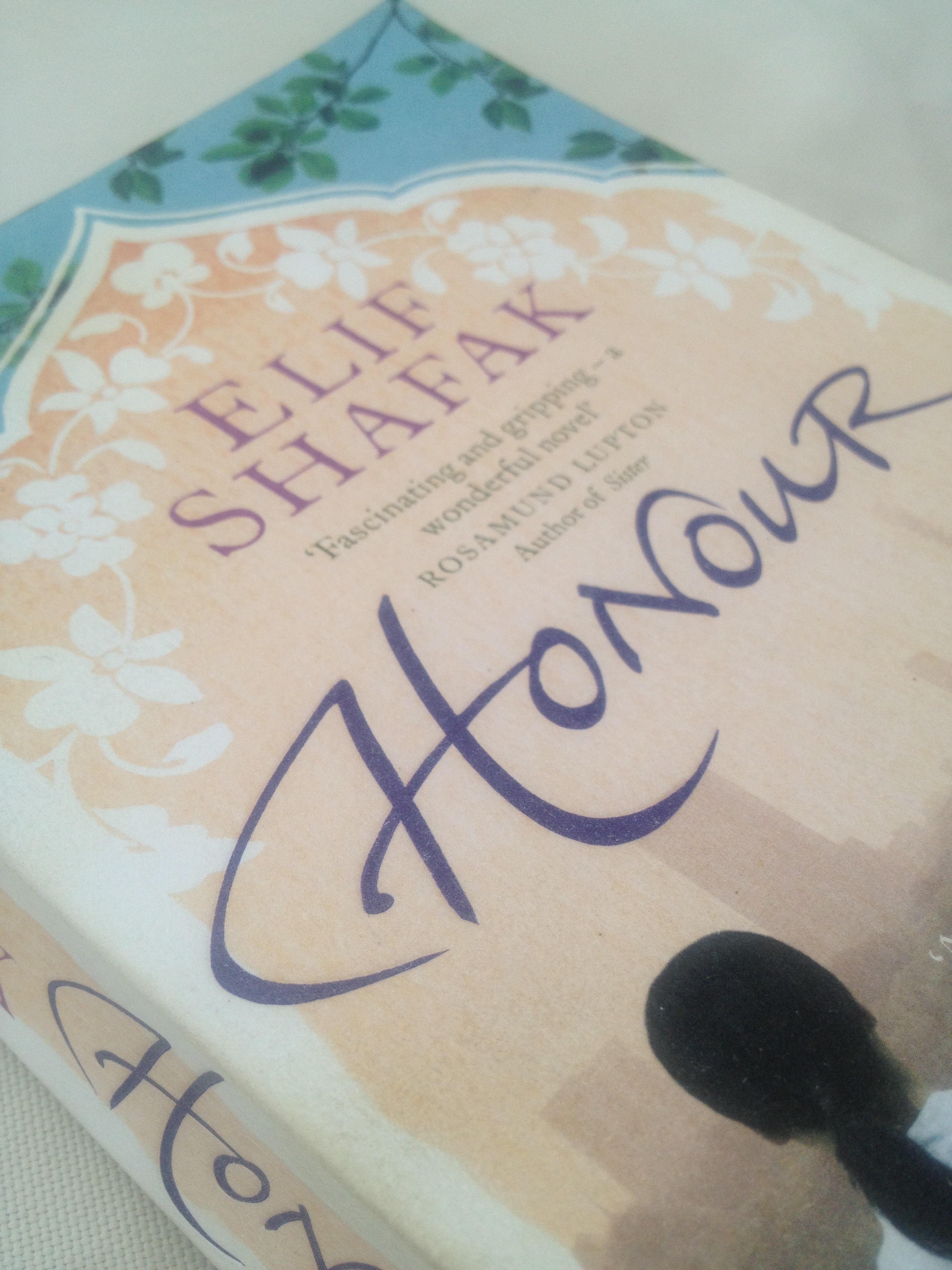
Elif Shafak’s Honour hinges around one horrible crime. The nature of this crime itself is revealed within the first few pages, and the rest of the book is spent examining the lives of the people affected and the events that led up to and contributed to the event.Honour

It’s a story that spans four generations, split between the remote villages of Turkey and the metropolis of 1970’s London. When Pembe and Adem leave their home country to build a new life in Britain, their children must find a way to mesh new traditions with the old, to speak two languages and to adapt the cultural norms of their heritage to new situations.

In Honour, Elif Shafak examines how gender, history and expectations combine to have a powerful impact on our behaviour and our future actions. It’s also fair to say that this book is an exploration of immigrant culture. It looks in detail at the relationships between parents and their children and how a rich cultural history is blended with new experiences.

I actually read this book while I was in Turkey, and the sections set in the villages really came to life for me. However, it felt as though it was lacking in the crucial emotional connection to the central characters. The narrative style, which tends to jump around between different times and different viewpoints, also made the novel quite hard to follow. It also meant that certain events were revealed out of sequence, taking away some of the tension from the main plotline.

Honour does a great job of setting out facts and events and of creating a very real and powerful backdrop, but at no point does the author really use her position to give an opinion on the twin cultures that she’s describing. It’s up to us as readers to make the observations for ourselves. In doing so, I think the author misses out on an opportunity to get across what has the potential to be a very powerful statement.

A review of ‘Snake Ropes’ by Jess Richards

On a remote and isolated island off the edge of the map, Mary is searching desperately for her little brother, missing since the day the Tall Men came to trade. Convinced that someone on the island knows more than they’re revealing, Mary will not rest until she finds him. But Barney is not the only boy to have disappeared lately, and the women of the island are calling on all their power, as well as their knowledge of ancient rites and rituals, to find the perpetrator.

Snake-RopesElsewhere on the island, Morgan, the ‘hidden daughter’, is confined behind a tall fence and a padlocked gate, the key of which never leaves her mothers grasp. Living life through the characters in her books, she dreams of the day when she can escape to the mainland.

Snake Ropes is a book made up of a fascinating combination of myths, legends, fantasy and folk tales. It’s a book of shadow selves, buried truths and keys that can talk. It’s a book where ghosts can cross paths with the living, where poisoned hair spreads across the sea onto the shores, and where seals shed their pelt to walk on the sands.

It’s a book of mysterious and mystical places that cannot be explained, from the Weaving Room, where the women decide on the fates of wrong-doers, to the mysterious and deadly Thrashing House, which can be controlled by no-one and which never relinquishes its hold on its victims.

Snake Ropes is a real exploration into the unknown, and I really enjoyed how the author played with our perceptions of what’s real, what’s not real and what we can make real through the power of our beliefs. It’s a really interesting debut novel, and it’s easy to see why it was nominated for awards.

However, I do have one thing that I have to criticise. While the writing style is certainly interesting, at some points I found that the unusual style, and the numerous diversions into fantasy, took away from the story rather than adding to it. It was quite intense, which also meant that it could be a little confusing. For me, this made it difficult to keep track of the main storyline.

High street vs. online book selling

Last week, I wrote about the perceived threat to the publishing industry from self-publishing (here). This week, I wanted to look at another issue facing the sector – the decline of the high street bookstore in favour of online super-sellers such as Amazon.

One of the main issues facing high street bookshops is that the simply can’t afford to compete with Amazon on prices. There are a number of measures and initiatives being put in place to combat this (see here for more info on something Waterstones is trialling), but the fact is that books are generally cheaper online thanks to low overheads and running costs of e-sellers.

There are notable exceptions to the rule, and impulse buyers, author signings and loyal booklovers with a preference for seeing and feeling a book before buying have and will continue to ensure that bookshops remain a feature on our high streets. However, these shops are increasingly facing even more competition. Major supermarket chains in particular are starting to encroach on their territory and are also able to offer popular books at cut prices.

One fear associated with the decline of bookstores is that readers won’t have the same capacity to discover new books, resulting in falling sales and a shrinking market. While I’m a proud supporter of high street book stores, I’m feel that this is an area where social media can really come into its own. For a while now, Twitter has been a great source of information and a major platform for conversation. Bloggers and professional reviewers are constantly pouring out a stream of opinion about new books and trends, which should help to drum up enthusiasm for a book prior to its publication and beyond.

Author John Green, for example, showed just how effective social media platforms such as Twitter and YouTube can be in driving sales in the run up to the launch of The Fault in Our Stars. Extensive vlogging, tweeting and audience engagement activity led to massive pre-orders, and the novel topped the Amazon best sellers list before Green had even finished writing it.

Hopefully, moving forward the industry will find a happy medium that works for everyone and every business model – and that continues to do so for the foreseeable future.

A review of ‘The Daughter of Smoke and Bone’ by Laini Taylor

(Hodder, September 2011)

Recently, I’ve read a few Y/A fantasy fiction novels, some of which I’ve loved and some of which have been distinctly underwhelming (see here for more). Since its publication, The Daughter of Smoke and Bone has received rave reviews from Y/A bloggers, so when I was casting my eye around for something new to read, it naturally made the list.

Smoke and BoneKarou has grown up between worlds, her childhood was spent in the back of a mysterious shop owned by Brimstone, a dealer in teeth and wishes and Karou’s guardian for as long as she can remember. Now Karou is old enough to fend for herself, and she has gradually begun to forge a life in the human world, but she’s increasingly torn between normality and the exciting, dangerous and macabre duties that she carries out on Brimstone’s behalf. She is also desperately searching for answers regarding her identity and how she came to be in Brimstone’s care. Then one day, she comes into contact with one cold-hearted and extremely powerful angel, Akiva, who might just hold the answers she needs.

As with most Y/A fantasy novels, there is a strong love story at the heart of ‘The Daughter of Smoke and Bones’, the true extent of which becomes clear as the novel progresses. That said, the author has really tried to approach this in a different way and break free of the traditional stereotypes. There’s no escaping the fact that all the clichéd elements are there, but it was interesting and different, with a bit of a twist, and the way the novel was written kept me turning the pages.

My main criticism of this novel is that I felt it was wholly focussed on building up to a sequel. There’s a lot of time dedicated to explaining Karou’s background and history of her world, but the action was just about to kick off when the book ended, which was frustrating to say the least. I’m all for sequels, and I think they can work really well, but The Daughter of Smoke and Bones needed more of a story of its own. Now my big debate is whether this annoyed me too much to read the next in the series – or whether my curiosity as to what happens next will win out?!