Red Rising – Pierce Brown

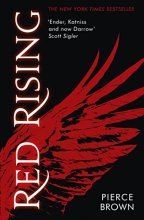
Red RisingThe story:
Set in the distant future, where the human race is divided by a rigid class system of colours, colonies of Red miners toil under the surface of Mars, harvesting natural elements that will terraform its surface and make it an inhabitable environment in the future. Sixteen year old Darrow is one of these Reds, born underground and raised to risk his life on a daily basis. Food is scarce and life expectancy is short. The rules are enforced by a strict hierarchical class system that’s preceded over by the Gold’s – supposedly superior to all other colours both physically and mentally. When Darrow discovers that his life is built on a lie, he’s given a dangerous mission to integrate himself into the very heart of Gold society.

My thoughts:
Darrow is sent to the Institute, where young Gold’s play deadly games to win power. It’s a trial by fire that is designed to push them to the limits and teach them how to wage war and become the leaders of tomorrow. Weakness isn’t tolerated and not everyone will make it through. Parallels could be drawn to the Hunger Games, but it’s a very different type of competition. The aim here is for power and ultimate victory – achieved through intellect and strategy and the ability to command their peers.

Darrow is a great character. He’s definitely not perfect – he’s reckless, angry and overly bold. He’s smart but he also shows that he can be ruthless and brutal. This means that he’s not always a particularly likeable character, but you still end up rooting for him all the same. Throughout the book he goes through some intense challenges, questioning his own identity, who to trust and what actions can be justified for the greater good. Continue reading

‘The First Fifteen Lives of Harry August’ by Claire North

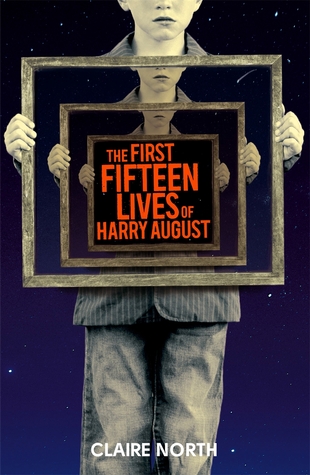
first 15livesofharryaugustIn the First Fifteen Lives of Harry August, author Claire North plays with our concept of time. In her vision, time runs over and over on a constant loop. Some people have the ability to retain their consciousness from one life to the next, and are born again and again – always in the same time, in the same place and to the same parents, but with the knowledge of the lives lived before.

Here, being reborn isn’t reincarnation, it’s more like doing endless laps around a track. People like Harry cross paths with the same acquaintances every life, and develop relationships that span more lifetimes than they can remember. Major events and landmarks pass by again and again, and even with their extensive knowledge, there’s nothing they can do to stop or change them.

For Harry and those like him, life is both a constant experiment and a bit of a bore. Childhood is a chore to get through. Death isn’t final and is sometimes, in extreme cases, welcomed. But then news of a disaster starts to filter through from the future. The end of the world is coming, and it’s getting closer with every generation. Someone is disrupting the balance, inventing technology far before its time with devastating consequences. When people start disappearing, murdered in the womb before they can be born and breaking the cycle for good, it becomes obvious that this threat is very real. Continue reading

Reviewing ‘Angelfall’ by Susan Ee

In Susan Ee’s ‘Angelfall’, the world has come to an end. Violent armies of angels have taken over the earth, destroying anyone who stands in their way. On the ground, street gangs run the cities. Food and other supplies are scare and people are resorting to the most extreme measures to stay alive. Angel parts are valuable currency and secret resistances are building.

As well as wreaking havoc on earth, the angels are also stealing young children away from their families. No-one knows where they go, but they are never seen again. Following a chance encounter with a group of angels, Penryn’s younger sister is taken. Determined to find her, no matter what the cost, all that Penryn has to go on is a fallen angel left behind after the conflict, Raffe.

It was quite refreshing to have a lead character in this dystopian/YA genre that is just a normal person. Penryn isn’t ‘special’, she’s not ‘the Chosen One’ and she doesn’t develop special powers. She’s just a girl that has to adapt to extreme circumstances. There is, of course, a romantic element to the story, but for a lot of the book she relies on her own strengths and wits to stay alive and to get out of trouble. She’s not overly mollycoddled and she’s not afraid to get her hands dirty.

Although the enemy here are angels, there isn’t a strong religious element. God isn’t present, he ‘talks’ through one representative. However, many of the angels seem to be agnostic and doubt whether God exists at all. They are very much a warrior tribe, and they should be seen as one.

I did have a few minor issues with this book. I understand that world that Penryn and her family are living in is supposed to be a war zone. Still, I find it hard to believe that in just a few short weeks people would have resorted to cannibalism to stay alive. Penryn makes her way into the woods, which are still full of animals, relatively quickly from where she is. She also finds a stash of food in an office building at one point, suggesting that there is food to be found still. So the repeated mentions of cannibals felt like they were added in more for dramatic effect than anything else.

Some of the language and descriptions were a bit overdone for my liking. At some points the dialogue didn’t seem to flow as it should, and it felt like the author was trying a little bit too hard to be witty. Plus, as with pretty much all YA books, there is the typical instant and overwhelming physical attraction to the romantic lead. That said though, it’s a pretty good effort, and I’ll probably be reading the rest of the series.

‘Fallen’ by Lauren Kate

FallenAfter a horrific accident that destroyed Luce’s life, she lands at a reform school, which is predictably full of oddballs, misery and strict rules.

But the second Luce sees fellow student Daniel, she can’t shake the feeling that she’s met him before. She’s haunted by a sense of déjà vu, and she can’t seem to stay away from him. He, on the other hand, seems to want nothing to do with her.

Soon though, circumstances conspire to throw them together, and it becomes clear that the two of them have a past that goes back far longer than Luce can remember. As Luce searches for answers, the stakes continue to get higher and more dangerous at every turn.

While the idea was good, there were a few inconsistencies in ‘Fallen’ that I couldn’t really get my head around. Daniel and Luce have known each other before, time and time again, that’s clear from the opening pages. But while Luce is ignorant of their past each time they meet, Daniel has the full knowledge of what’s come before. It’s no surprise then when they meet again at reform school. But Daniel is there first. And if he’s lived so many amazing lives in the past, I couldn’t help but wonder what he was doing in somewhere so miserable.

The same goes for all of the other supernatural beings – and there are many! Why immortal creatures would choose to spend their time going to one of the dreariest sounding schools around, when they clearly have other, more interesting options, is beyond me.

The setting itself is very atmospheric – with a school with an onsite graveyard, a gym in a converted church, a huge gothic library, permanent mist and lingering smell – but it felt a little clichéd. Continue reading

‘Written in the Blood’ by Stephen Lloyd Jones

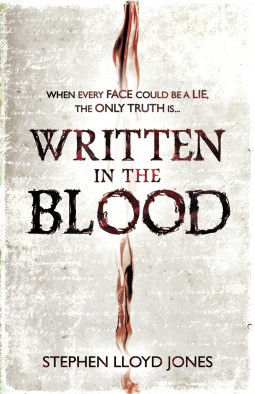
Written in the Blood‘Written in the Blood’ is the sequel to Stephen Lloyd Jones ‘The String Diaries’. If you want to catch up on the plot, you can find my review here.

Set fifteen years after the first novel in the series, the main protagonist in ‘Written in the Blood’ is Hannah Wilde’s daughter, Leah. Last seen as a nine year old girl on the run with her mother from the dangerous Jakab, she is now 24 and on a mission to help save the future of her race – the Hosszu Eletek.

Fertility among the remaining Hosszu Eletek is failing, and Leah is one of the youngest in a declining society. Together with her mother, Leah is helping to run a highly controversial fertility programme to give women the chance to have a child. But the upper echelons of the Hosszu Eletek society aren’t keen on diluting their race with the human blood that runs through Hannah and Leah’s veins. And when they decide that it’s necessary to reach out to the banished Kirekesztett, their fertility programme is soon seen as something that needs to be stopped at any cost. Continue reading

‘Dark Eden’ by Chris Beckett

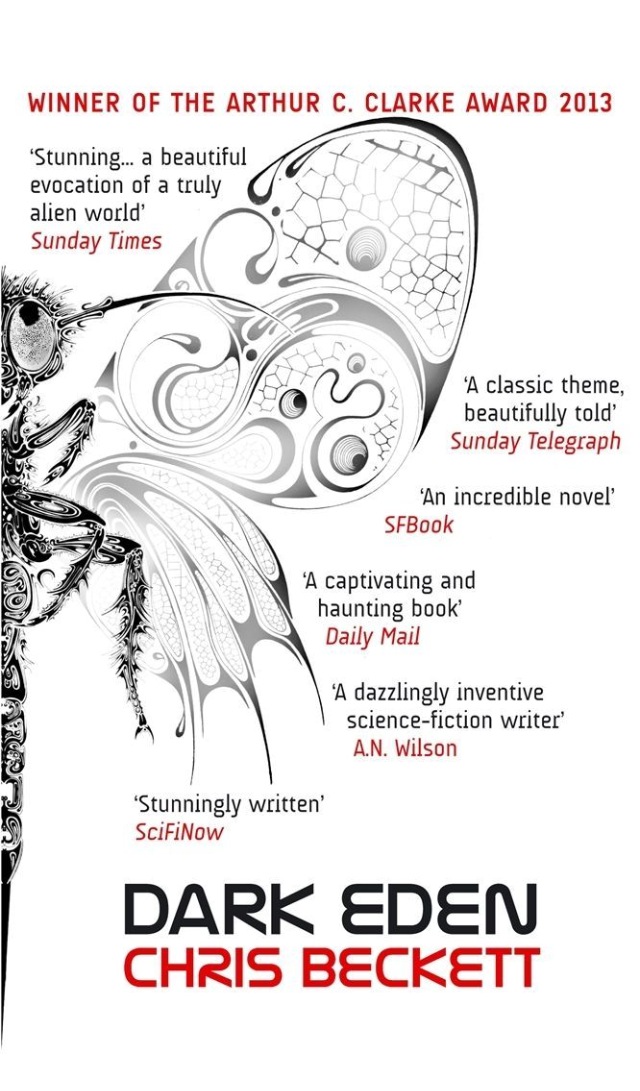
Dark edenIf you read this blog regularly, you’ll know that I’m happy to try most genres. ‘Dark Eden’ got great reviews and it was reduced to 99p on Amazon, so even though it was a bit of a different premise than I usually go for, I thought I’d give it a try. Honestly, though, this went a little bit too far into the realms of science fiction for me. The world building was good but a little too much for me to get my head around.

Essentially, ‘Dark Eden’ is the story of a group of people stranded on a planet far from earth. Set far in the future when space travel is the norm, a rogue ship slips through the cracks and ends up stranded on a planet that’s completely off the grid. This world is completely new – there’s no sun, the light coms from flowers and the heat comes from the trees. Due to the perpetual darkness, there’s no real concept of time, and the people have to come up with their own methods for measuring out their days.

Mimicking biblical origin stories, all of the children born on the planet are descended from one couple, meaning that a lot of the children are born with physical or mental abnormalities. In theory, this was an interesting idea, as it had the potential to raise all sorts of questions about where we get our belief systems, our idea of right and wrong and our social structures. In practice though, I found it weird and I felt a bit uncomfortable reading it. Continue reading

‘Smiler’s Fair’ by Rebecca Levene

Smiler’s Fair is the first book in a new fantasy series by Rebecca Levene.

Many years after a war between the moon god and the sun goddess tore the world apart, people are still living with the after effects. Prophecies are rife, gods are many and the people are restless. Darkness and shadows bring the worm men, servants of the moon, who will destroy everyone in their path. To avoid them, great floating cities grace the countries lakes. Those that live on land have wheels beneath their homes, constantly moving onwards.

Smiler’s Fair is a huge mobile community, setting up shop and selling any number of vices to the people that flock through its gates, before moving along before the worm men can come. It’s rarely in the same place twice, but it attracts a boiling pot of cultures, races and desires. For the characters in this book, it’s a hiding place, a fighting ground, a way of life or a form of employment. Prophecies, fear and anger drive them together, acting as a catalyst for a war of gods and men that have the potential to change the shape of the world forever.

The author has created a huge new fantasy world here, which should have any number of possibilities. There are numerous different clans and kingdoms all brought together in one vast landscape, taking us on a journey from the snow and mountains to deserts and open plains. We’re introduced to a whole range of characters and narrators with constantly changing fortunes. There’s also an overarching supernatural element that gives events a wider context, helping to drive the story forward. All the ingredients are there. But unfortunately, it didn’t quite live up to expectations.

My main issue with this book is that there seem to be lots of random unconnected stories that seem to have any relevance to the overall story. The different strands felt disjointed and never really came together. There were too many narrators and it felt more like several different books. Having fewer viewpoints would have helped. As it stands, it got confusing and hard to keep track of who everyone was. There wasn’t enough of a central story to bring everything together.

I liked Dae Hyo. I bought into his back story and felt like he really fitted the world that he was in. I liked the son of Nethmi’s husband. He showed some real character and turned out to be much more than he seemed at first. I also liked Krish, he seemed to have real potential to evolve as a character and I would have liked to read more about him.

But I thought the sections with Nethmi and Marvan were almost superfluous, and they could easily have been incorporated as minor character in other people’s stories. The ending would have worked equally well without them in it and it felt like all the time I spent reading about them was a bit of a waste of my time.

I didn’t particularly like many of the characters. There was a lot of time spent talking about their vices or how physically attractive they were, but very little on their redeeming qualities. Some, like Eric, may get more interesting later in the series, but it felt like many stories had only just been begun when the book ended.

To me, this felt like half a book. I didn’t race to the end, more like I turned the last page and thought – ‘Oh. Is that it?’. I was constantly waiting for it to really get started. Maybe this is a tactic to get readers to buy the next book in the series when it comes out, but if it is, it hasn’t worked on me.
Emily Croy Barker’s ‘The Thinking Woman’s Guide to Real Magic’

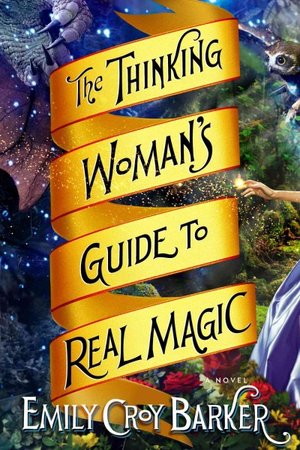
thinking womans guideDespite disliking the main character so much I almost quit halfway through, once you get stuck into this book it isn’t half bad!

The first part of this book is pure fairy tale. Our main character, Nora, stumbles upon a beautiful house and gardens deep into the forest. Soon, she’s drawn into the chanting and intoxicating world of Illisa and her friends. Caught up in a whirlwind of parties and swiftly married off to Illisa’s son Raclin, it’s only much later that she starts to regain her faculties enough to understand that she’s been enchanted from the second she clapped eyes on Ilissa, and that the Faitoren are much more than they seem. Desperate to escape their clutches, she flees and is rescued by the magician Aruendiel.

Away from the Faitoren, Nora finds herself in a world reminiscent of Medieval England. With no way to get back to her old life, she learns to adapt to life in his household. This brings some challenges in terms of how conceptions of power and gender are viewed compared to what she’s used to.  Initially, Nora’s relationship with Aruendiel is fraught and strained, with her essentially being an initially unwelcome, dependant houseguest who has yet to prove her worth. Eventually though, they start to work out their differences after she persuades him to start teaching her basic magic. And when Ilissa and Raclin make a play to kidnap Nora back, they trigger the start of a war that’s been a long time coming. Continue reading

‘The Golem and the Djinni’ by Helene Wrecker

GolemIn early twentieth century New York, a Golem wakes without a master and a Djinni is released from a bottle after years in captivity, bound in human form.

Created out of clay, the Golem has one single purpose, to protect her master and serve his needs. But when he dies crossing the Atlantic, she is left utterly alone and overwhelmed by the flood of human desires and emotions in the bustling city. Taken under the wing of a Jewish Rabbi who recognises her for what she is, the Golem struggles to overcome her instincts and to live a life disguised as a human within the tight Jewish community.

Elsewhere, in a Middle Eastern neighbourhood, a man repairing a metal flask is stunned by the appearance of the Djinni on his shop floor. The Djinni, having been trapped for thousands of years inside the flask and bound by iron cuffs that keep him assuming from his true form, is forced to take refuge as an apprentice at the metal shop in order to blend into his surroundings.

But even as they both adapt to their new lives, the Djinni never stops searching for a way to break his bonds and the Golem searches for answers and a way to be free to show her true self. Meeting by chance, they spend their nights wandering the city streets and parks, forming a friendship that helps them to get through the days they spend pretending to be human. Far away in Europe, a man sets out across the ocean. Dangerous and powerful, he threatens everything they have, but he might hold the key to setting them free. Continue reading

Chrysler Szarlan’s ‘The Hawley Book of the Dead’

photoReve Dyer and her husband Jeremy run a successful magic act in Vegas – until the day that a bullet trick goes horribly wrong, leaving Jeremy dead and Reve suspected of his murder. But as Reve attempts to comfort her grieving family, burned photographs of her and her three daughters going about their daily lives start to appear. Fearing for their safety, Reve flees home to Hawley Five Corners.

A village abandoned by its inhabitants during the 1920’s, Hawley Five Corners offers a safe haven. But Hawley Five Corners is haunted by secrets, rumours and unnatural disappearances, and being back in the place of her ancestors raises more questions that Reve isn’t yet ready to face. For the women in Reve’s family each possess a magical gift – an ability to find lost things, to heal or in Reve’s case, to disappear, temporarily slipping behind the veil between worlds. The more time that Reve and her daughters spend in the village, the more they start to understand their personal history and the mysterious powers of the Hawley Book of the Dead. Continue reading