John Connolly’s ‘The Book of Lost Things’

It’s this middle of World War II, and confined to a country house with his new stepmother and even newer younger brother, David is full of hurt, anger and jealousy. In his attic room, he seeks comfort in a collection of old books. As he becomes consumed with the world between their pages, David starts to feel a strange affinity to the boy who lived in his room before.

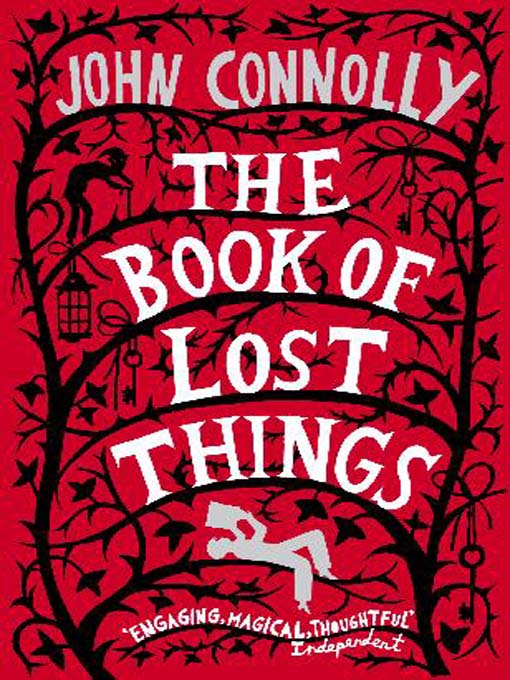
the-book-of-lost-thingsWhen the events of one fateful day conspire, David finds himself in a place where nothing is as it seems, struggling to find a way to get home in a strange, threatening kingdom of twisted fairytales. His path is peppered with obstacles, and he is forced to face his innermost fears, overcome death and battle his nightmares before he can finally come face to face with an aging king who seems destined to lead the kingdom into ruin.

The Book of Lost Things is essentially a fairytale – but it’s certainly not a fairytale you’d want to read to small children at night. Bringing in elements of a whole host of different stories, Connolly twists and manipulates narratives for his own purposes, spinning motives and intentions and traditional plotlines into an intricate web of characters and incidents.

In fact, the author builds a whole new world with such rich detail and flair that I almost started to believe in its existence myself. The Crooked Man really was scary, a truly brilliant villain with wicked intentions. The truth, when it was finally revealed, was as terrifying as any nightmare come to life in the darkness. This is not a book where everyone has a happy ending. All of the characters we come across, from the Woodcutter to Snow White, have been given their own jaded and fractured back-stories that have been woven perfectly into the fabric of the narrative.

Ultimately, it’s the perfect book for anyone looking for a dose of escapism or pure fantasy with a twist. It’s spooky and mesmerising, and it takes a completely different direction to anything else out there.

Andrew Fukada’s ‘The Hunt’

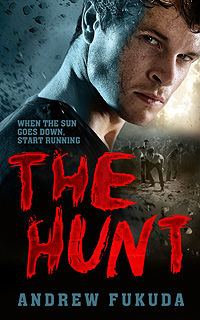
I’ve been struggling to put this book into words. I suppose it could be described as a sort of warped version of The Hunger Games. Except in this case we have a world dominated by vampires embarking on a once-in-a-decade human hunt, with the lucky hunters drawn from the population by lottery.The-Hunt

However, one such hunter is actually a human, or a heper as they call them, living in disguise amongst the vampires. Knowing that he will be exposed as soon as the hunt starts by his inability to keep up with the pack and his unwillingness to tear their prey apart with his fake vampire fangs, he is rapidly running out of time to come up with a way out. With the help of some unexpected allies, his world is changed forever as he uncovers hidden secrets that go against everything that he’s been taught.

I have to start by saying that The Hunt is written really well – it had a great pace, plenty of action and it was quite addictively readable. However, while the concept was interesting, there were some gaping holes in the plotline that managed to completely distract me from the main story on several occasions throughout the book.

There are numerous points that I just cannot get my head around. Whether that’s because the author has failed to think things through or because he simply hasn’t bothered to explain them, I’m not sure.

My first gripe is how our main protagonist has managed to attend vampire school for years without detection. I don’t know how he’s managed to get hold of fake fangs or contraband razors in the first place, but those basic difficulties aside, I don’t see how it is possible to have never coughed, sneezed, sweated, blushed or spilled a single drop of blood in the presence of vampires (who never show a shred of emotion and scratch their wrists instead of laughing).

Secondly, vampires are under the impression that humans are totally extinct outside of government activity. But since there are several secret humans revealed throughout the book, from a relatively low pool of characters, you have to assume that there are lots of fake vampires running around unnoticed. Despite this, there’s no testing of any kind?!

And then there are the things that are just plain weird. The vampires in this book don’t kiss, they rub armpits. And nowhere does it explain how they are able to reproduce, if they do so in the same way as humans, and if not, how fake vampire humans/manage to have babies without shedding any blood at all (as this can apparently be smelt from miles away).

There are plenty more, but I don’t want to reveal any spoilers. If anyone can offer up an explanation for any of the above, I’d love to hear it!

‘The Age of Miracles’ by Karen Thompson Walker

One day, the world wakes up to find that the rotation of the earth has begun to slow. As the days continue to stretch and the minutes pile in, the very notion of time is distorted thrown out of proportion and has to be redefined. This has a catastrophic effect on nature, throwing life as we know it out of kilter.

age of miraclesThroughout the novel, we have only one narrator. Julia is eleven years old when the slowing begins. Her perspective shapes the entire book, from her views on her parents’ marriage to her experiences of loss, death and change. This has a really interesting narrative effect and I thought it worked incredibly well.

We don’t know anything about the rest of the planet other than what we hear from Julia. Throughout the whole novel, Julia is more involved in the immediate problems of school, friends, bras and first crushes than with the impending disaster that continues to turn everything she knows about the world upside down. The news about the progress of the world is reported rather than dwelled upon, and as society fights to retain a sense of normality, Julia’s attention is absorbed by the small details of daily life.

That’s the main difference between ‘The Age of Miracles’ and other dystopian, end-of-the-world fiction. It’s such a stark contrast that I’d probably classify this as more of a coming of age novel. Rather, than focusing on the cause and solutions of the global crisis, this book is much more concerned with human relationships.

It raises some interesting questions. Does the slowing really affect Julia’s childhood, or are her experiences common adolescents all over the world, in every culture, no matter what the situation? It also drives home some truths. Relationships will always be put under strain. People will always disagree. Society will always marginalise certain groups that go against the norm. Humans will always adapt and find a way to survive.

Others have commented that they thought the pace was a bit too slow or that there wasn’t enough of a focus on the science fiction aspect, but I really enjoyed this book. I found the ending in particular really interesting. I don’t want to ruin it for anyone who hasn’t read it, but it draws together all of the themes set out in the book and it continued to play on my mind for hours after I turned the last page. All in all I’d definitely recommend it, just make sure you’re not expecting it to be something it’s not.

A review of ‘Snake Ropes’ by Jess Richards

On a remote and isolated island off the edge of the map, Mary is searching desperately for her little brother, missing since the day the Tall Men came to trade. Convinced that someone on the island knows more than they’re revealing, Mary will not rest until she finds him. But Barney is not the only boy to have disappeared lately, and the women of the island are calling on all their power, as well as their knowledge of ancient rites and rituals, to find the perpetrator.

Snake-RopesElsewhere on the island, Morgan, the ‘hidden daughter’, is confined behind a tall fence and a padlocked gate, the key of which never leaves her mothers grasp. Living life through the characters in her books, she dreams of the day when she can escape to the mainland.

Snake Ropes is a book made up of a fascinating combination of myths, legends, fantasy and folk tales. It’s a book of shadow selves, buried truths and keys that can talk. It’s a book where ghosts can cross paths with the living, where poisoned hair spreads across the sea onto the shores, and where seals shed their pelt to walk on the sands.

It’s a book of mysterious and mystical places that cannot be explained, from the Weaving Room, where the women decide on the fates of wrong-doers, to the mysterious and deadly Thrashing House, which can be controlled by no-one and which never relinquishes its hold on its victims.

Snake Ropes is a real exploration into the unknown, and I really enjoyed how the author played with our perceptions of what’s real, what’s not real and what we can make real through the power of our beliefs. It’s a really interesting debut novel, and it’s easy to see why it was nominated for awards.

However, I do have one thing that I have to criticise. While the writing style is certainly interesting, at some points I found that the unusual style, and the numerous diversions into fantasy, took away from the story rather than adding to it. It was quite intense, which also meant that it could be a little confusing. For me, this made it difficult to keep track of the main storyline.

A review of ‘The Daughter of Smoke and Bone’ by Laini Taylor

(Hodder, September 2011)

Recently, I’ve read a few Y/A fantasy fiction novels, some of which I’ve loved and some of which have been distinctly underwhelming (see here for more). Since its publication, The Daughter of Smoke and Bone has received rave reviews from Y/A bloggers, so when I was casting my eye around for something new to read, it naturally made the list.

Smoke and BoneKarou has grown up between worlds, her childhood was spent in the back of a mysterious shop owned by Brimstone, a dealer in teeth and wishes and Karou’s guardian for as long as she can remember. Now Karou is old enough to fend for herself, and she has gradually begun to forge a life in the human world, but she’s increasingly torn between normality and the exciting, dangerous and macabre duties that she carries out on Brimstone’s behalf. She is also desperately searching for answers regarding her identity and how she came to be in Brimstone’s care. Then one day, she comes into contact with one cold-hearted and extremely powerful angel, Akiva, who might just hold the answers she needs.

As with most Y/A fantasy novels, there is a strong love story at the heart of ‘The Daughter of Smoke and Bones’, the true extent of which becomes clear as the novel progresses. That said, the author has really tried to approach this in a different way and break free of the traditional stereotypes. There’s no escaping the fact that all the clichéd elements are there, but it was interesting and different, with a bit of a twist, and the way the novel was written kept me turning the pages.

My main criticism of this novel is that I felt it was wholly focussed on building up to a sequel. There’s a lot of time dedicated to explaining Karou’s background and history of her world, but the action was just about to kick off when the book ended, which was frustrating to say the least. I’m all for sequels, and I think they can work really well, but The Daughter of Smoke and Bones needed more of a story of its own. Now my big debate is whether this annoyed me too much to read the next in the series – or whether my curiosity as to what happens next will win out?!

The good and the bad of Y/A fantasy fiction

As some of you might know, a few weeks ago I wrote a post on Y/A fiction and how I was struggling to find a really good fantasy series to get my teeth into (see more here). Since then, having followed some suggestions and done a little research of my own, I’ve read the first few books of a couple of major young adult series. One of these I really enjoyed – despite the fact that on paper it may not have seemed like my kind of book – and the other I think could definitely have been done better. With this in mind, I thought I’d do a quick comparison of the two.
MI trilogyFirst off, I took on the first three books of the Mortal Instruments series by Cassandra Clare – City of Bones, City of Ashes and City of Glass. These books were originally intended as a trilogy, with a complete story that reaches a resolution at the end of the third novel, so this was a natural place to stop. Next, I moved on to the first two books of a planned trilogy by Rae Carson, The Girl of Fire and Thorns and The Crown of Embers.

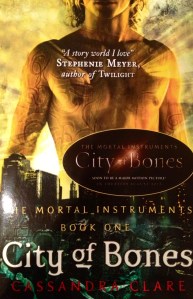
In terms of storylines, the Mortal Instruments story was the one that appealed the most on paper. It follows sixteen-year-old Clary Fray, a normal girl living in New York. One night, her mother disappears and she’s plunged into a world of demons, Shadowhunters, vampires and warlocks. I won’t go into too much detail on the specifics to avoid spoilers, but there’s a brooding male lead, forbidden love, an arch nemesis and some complicated family dynamics.

While the author’s storylines are fairly imaginative, I felt that the characters were really underdeveloped. Jace, Clary’s complicated love interest, was incredibly stereotypical. He’s arrogant and good looking with some serious issues to be resolved but so inexplicably drawn to the main character that she’s the only one that can really ‘reach’ him. The other male in the love triangle, Simon, is a typical boy-who-is-just-a-friend that turns into more, and I didn’t think he was particularly likeable. Clary herself is supposed to be likeable but I just couldn’t connect with her as a character.City of Bones
One of my main criticisms of Y/A fiction is that I feel the writing can let them down. The Mortal Instruments is a case in point. I may not have been quite so overly critical of the character development if the writing had not also been stilted and slightly wooden. The dialogue didn’t flow, the descriptions were clichéd and the relationships unbelievable. Written with a bit more care, I think this series could have had some real potential, but as it is, I won’t be buying the next three books in the series.

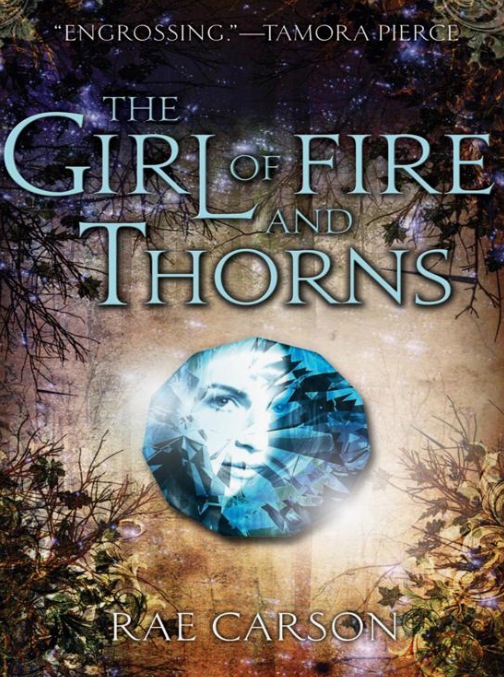
The Girl of Fire and Thorns, on the other hand was an example of a book I felt was written really well, so much so that even though I didn’t particularly enjoy the central premise of the novels, I went on to read the second book in the series. I read these on a recommendation, without researching them too heavily beforehand. However, fairly soon after starting the first book I realised that despite the fact it’s a fantasy novel set in a fantasy world, it’s heavily religious in its theme.
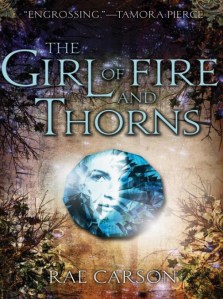
Fire and thornsIt’s not something I’d usually buy but I persevered – and I’m glad I did. On her sixteenth birthday, Elisa is married to a prince of a neighbouring kingdom. She is also named in an ancient prophecy that marks out one person a century for life of greatness. But this prophecy also makes her a target, and with the realm facing increasing tension and civil war, Elisa is unwillingly drawn into the heart of the action.

Like any good protagonist, Elisa undergoes a personal, and in this case a physical, transformation over the course of the book. However, this transformation was woven into the fabric of the book and it didn’t feel forced. There was also a great cast of supporting characters, and although I didn’t relate to some of them, this was purely because of the nature of their personalities rather than a lack of one.

Both books have a strong fantasy and magical element as well as an intricate central love story. The difference, however, was in how they engaged me as a reader. While I’ll definitely be reading the last in Rae Carson’s trilogy, I won’t be taking on the next books in the Mortal Instruments series any time soon.
Searching for Y/A gold

Over the past few years, Y/A fantasy fiction has exploded. The massive and unprecedented success of authors such as J. K. Rowling, Stephanie Meyer and Suzanne Collins has meant that the genre has become increasingly mainstream, appealing to both adults and teenagers alike.

Walk into any bookshop and you’ll find shelf upon shelf of books filled with vampires, werewolves, witches and the like, usually with a plucky human heroine thrown in there for good measure. But this begs the question, how far can you capitalise on the success of a genre before it becomes saturated?

For me, this is an issue that’s becoming more and more frustrating. Recently, I’ve been looking for a new series to read, but on several occasions I’ve picked up novels only to find them poorly written and full of stilted dialogue, underdeveloped, implausible characters and unconvincing love stories. I’ve been thinking about why this might be the case, and maybe it’s being caused precisely because of the success of books like the Twilight series. Massively popular even before they were adapted for our cinema screens, the films catapulted its actors into stardom and inspired a whole generation of devoted fans (myself included I might add!).

But now, people continue to search relentlessly for the new Twilight, or the new Harry Potter. And where there’s a demand, there will always be a supply. And although there are some really great books out there, there are equally a whole plethora of books that just don’t make the grade. In my opinion, the Y/A fantasy genre as a whole needs a refresh. I don’t know what the next big thing will be, but I do think that we need to see some new ideas that haven’t been done before. And most importantly, the readers need to want this too.

In the meantime, if anyone can recommend a really great series, please let me know!

Whether you like true crime, romance or fantasy, this year’s Quick Read’s collection has something for everyone…

quickreads_banner

Today might be Valentines Day, but the 14th February also marks another very special occasion – the launch of the Quick Reads 2013 collection.

Formed in 2006, Quick Reads is a fantastic charity that aims to encourage adults across the UK to pick up a book and discover the joys of reading. Every year, it enlists some of the biggest and brightest names in literature to write a series of short books designed to deliver an entertaining and engaging story in no more than 128 pages.

Quick_Reads_Logo_BlackWith some pretty compelling research that suggests that some 12 million adults in the UK find reading difficult and may never as picked up a book, the project is a great way of building confidence in those who may not have been readers in the past – whether that’s because they find books intimidating, because they think reading is boring or simply because they just don’t think that they want to.

It’s a brilliant and unique project, and this year, Quick Reads is pulling out all the stops to build awareness and encourage people to take part. Available from most major retailers and libraries, the books are not just intended for the general public, they have proved to be a vital educational tool for environments such as further education colleges, prisons, family centres, care homes and workplace learning centres. Plus, there’s also the knock-on effect on the next generation, as adults who discover reading through the Quick Reads charity are much more likely to encourage their children to read.

When it comes to the books themselves, there’s something for everyone. I’m particularly looking forward to ‘A Dreadful Murder’ by Minette Walters. Based on a true story, the book reconstructs the events of a mysterious murder on the grounds of a large country estate in a bid to uncover the culprit. It sounds to me like it might have echoes of Kate Summerscale’s The Suspicions of Mr Whicher and I can’t wait to get my hands on it.

But if crime’s not your thing, there’s plenty more on offer in the form of a new Doctor Who story from Mike Tucker as well as a feel good romantic adventure in ‘Love is Blind’ by Kathy Lette.

Former SAS operative and soldier Andy McNab has also contributed to the collection with a brand new book reflecting on his time in the forces. Recruited following a stint in a juvenile detention facility at the age of sixteen, but with a reading age of just eleven, ‘Today Everything Changes’ tells of how his own experience of the Army education system changed his life forever.

I’ll post again with details of the individual books as soon as I’ve had a chance to read and review, but for now, this is just a short shout out to encourage everyone to spread the word!

More information on Quick Reads as well as all of this year’s books and authors can be found at http://www.quickreads.org.uk/ 

A review of ‘The Night Circus’ by Erin Morgenstern

Erin Morgenstern’s The Night Circus

Sometimes when you pick up a book you just know that you’re not going to be able to put it down. Erin Morgenstern’s The Night Circus was one such book for me.


Essentially, the novel tells the story of two competing magicians and their protégé’s Celia and Marco. Against the backdrop of Le Cirque des Reves (The Circus of Dreams) these two trainees are pitted against each other in an elaborate challenge that spans years and binds the two young protagonists together in more ways than one. Competing to out-do each other with displays of increasingly brilliant magic, neither Celia nor Marco know how or when the contest will end. All they know is that there can only be one winner.

The circus, with its wonderfully individual and meticulously described signature clock and its individual tents with fantastical names like the Pool of Tears, appeals to all the senses. Every detail is recorded with such brilliant imagination and detail that the reader is transported there through the pages. Add to that the fact that the circus only appears at night, and the whole book feels as if you’ve entered a magical (quite literally!) dream world. In the end, the circus itself is central to the survival of Celia and Marcus, who battle to save their love against all odds and against the will of magic itself.

I’m actually jealous of all those who have yet to read this as I’d love to do it all over again. I’ve been searching for another book like this but as yet I’ve been running up against a brick wall. Any suggestions from other Erin Morgenstern lovers would be more than welcomed!