Searching for a bargain book buy

Wherever possible, I’m a big believer in helping to support high street and local bookstores. But as we all know, feeding a reading habit can prove expensive. As we come towards Christmas, when salaries are stretched even further than usual and more and more of us will start to feel the pinch, it’s great to know that there are still ways that we can get our hands on books for less. Last month, I managed to pick up five books for less than £6 by keeping an eye out for online deals and scouting for second hand steals:

We Are All Completely Beside Ourselves by Karen Joy Fowler – £2 from local British Heart Foundation charity shop
This has been getting a huge amount of hype recently. It’s been shortlisted for the Man Booker Prize, it made the Waterstones Book Club list and it’s been getting tons of publicity and reviews. I know very little about the actual plot, but I’m really looking forward to finding out.

Pure by Andrew Miller – £2 from local charity shop
The winner of the 2011 Costa Book or the Year Award, this is a historical novel set shortly before the French Revolution, when a young Frenchman named Jean-Baptiste is tasked with cleansing an overfilled Parisian cemetery. This year’s Costa shortlist has recently been announced and can be viewed here.

Anna Karenina by Leo Tolstoy – 99p from local Age UK charity shop
Tolstoy’s classic is a hefty tome at over 800 pages, and if I’m honest, this is probably one that’s going to sit unopened on my bookshelf for a while. But at just 99p, this was a bargain I just couldn’t pass up. One day, when I fancy a challenge, I’m sure I’ll get round to it!

Assassin’s Apprentice (The Farseer Trilogy, Book 1) by Robin Hobb – Free ebook
I’ve been aware of Robin Hobb, who has been described by George R. R. Martin as producing books that are ‘like diamonds in a sea of zircons’ for a while, thanks to ongoing enthusiasm on the blogger-sphere and extensive advertising for a different book by the same author on the London Underground over the summer. The first in a fantasy series, ‘Assassin’s Apprentice’ was first published back in 2011 but was on offer as a free ebook, across all online platforms, for a limited time at the start of November. I’ve no doubt they expect to make their money back from people purchasing the later books in the story after they’re hooked, but it was still a great deal!

Mr Penumbra’s 24-hour Bookstore by Robin Sloan – 85p ebook on Amazon
This was another short-lived reduction of one of the books on my wish list. The Amazon Kindle store offers daily and monthly deals on books from a whole range of genres and it’s well worth checking them regularly to see if anything comes up that you’re interested in. ‘Mr Penumbra’s 24-hour Bookstore’ has had great reviews and sees a bookstore employee turn to the powers of technology and the possibilities of Google to solve the ancient mystery behind the strange behaviour of the store’s customers.

IMG_1768.JPG

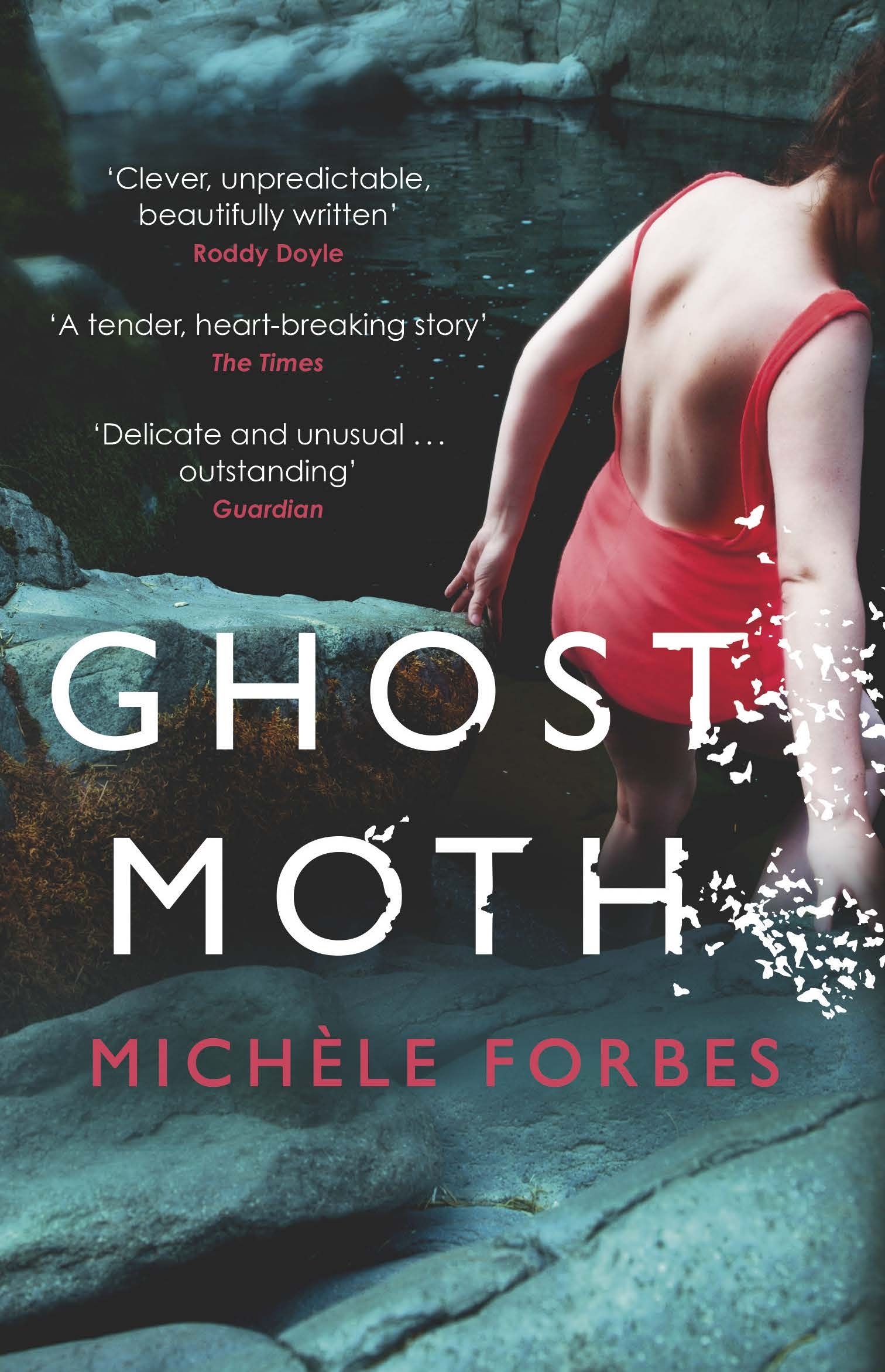
‘Ghost Moth’ by Michele Forbes

ghost mothSet in Belfast, Ghost Moth follows the lives of Katherine and George against a backdrop of considerable social unrest and religious tension.

In 1949, Katherine is young, vivacious and discovering all of the new opportunities that life has to offer. She’s also torn between two men – George, her fiancé, who is steady, loyal and dependable, and Tom, who offers fire, passion and unpredictability. As months go by, Katherine has to make a choice that will have far-reaching consequences, indelibly marking all involved.

In 1969, Katherine and George are married with four young children. Her life is dominated by looking after others and she’s still scarred by events that happened twenty years earlier. Her relationship with her husband is strained, and hides long suppressed feelings on anger, guilt and desire that threaten to destroy their marriage and the carefully constructed life they’ve built together. Continue reading

London’s top literary locations

London is jam-packed with inspiration for literature lovers. If you’re in need of inspiration, here’s my top five literary locations worth a visit in the city…

IMG_14981. If you want to combine some literary attractions with socialising with your not-so-book-geeky friends, Fitzrovia’s pubs are overflowing with literary history. The historically bohemian area has been home to many literary greats – from Virginia Woolf to George Bernard Shaw. The Fitzroy Tavern and the nearby The Wheatsheaf were both frequented by some of the UK’s literary stalwarts in their day. The Fitzroy Tavern in particular is full of photographs and steeped in history and tradition – George Orwell and Dylan Thomas were regular drinkers here.

2. The British Library often hosts literary events and talks. They currently have an exhibition on called ‘Terror and Wonder: The Gothic Imagination’, which looks the impact of the gothic theme has had on our culture, featuring iconic works like Mary Shelley’s Frankenstein and Bram Stoker’s Dracula and going all the way through to Twilight! I haven’t been yet, but it’s on my to do list! If you explore the events page on the library’s website, there’s usually something on to suit all ages and interests.

IMG_1491

3. For second hand book-lovers, the book market under Waterloo Bridge is a must see. It’s open every day and usually offers a huge selection of pre-owned or antique books for great prices. It’s just outside the Southbank Centre and the river bank itself often plays host to events and food festivals, meaning there’s always plenty more to do and see in the surrounding area.

4. Southwark’s Shakespeare’s Globe theatre is another one that has to feature on this list. Today’s theatre is a reconstruction of the famous Elizabethan playhouse. Performances of Shakespeare’s works are as authentic as possible – there are no spotlights or microphones and all music is performed life – and all of the materials used in the building mirror the original, right down to the fact that the theatre has the only thatched roof allowed in the city since the Great Fire of London in 1666. Although plays are only performed during the summer months, thanks to the open-air nature of the building, educational tours are available all year round.

5. Finally, Bunfields Burial Ground is the resting place of some of the UK’s literary greats, including William Blake and Joseph Defoe, and is always worth a visit. It may seem macabre, but it’s just a short walk from Old Street tube and the park attached to the cemetery is a beautiful spot to enjoy on a sunny day.

IMG_1476


‘The King’s Curse’ by Philippa Gregory

The latest installment in Philippa Gregory’s Tudor epic follows the life of Margaret Plantagenet, Countess of Salisbury. The daughter of Isabelle Neville and George, Duke of Clarence, granddaughter of the Earl of Warwick, also known as the Kingmaker, and the niece of two kings, Edward IV and Richard III, Margaret is no stranger to the perils that come with being close to the throne. Her brother Edward was locked in the tower from boyhood and executed, her cousin Elizabeth married to the Tudor usurper, Henry VII and her father drowned in a barrel of wine.

With her title stripped from her, she is married off to a Tudor loyalist and renamed plain Lady Pole. But she can’t escape her lineage, and is soon drawn back into the centre of the scheming and unpredictable Tudor court. Keeping the household of her cousins oldest son and heir to the throne, Arthur, Prince of Wales, Margaret becomes a close friend and confident of his young bride, Catherine of Aragon. Over the years, Margaret witnesses Catherine marry Arthur’s younger brother, the soon to be Henry VIII of England. She stands by her side as she loses child after child, and takes on the role of governess and protector to the treasured Princess Mary.

But when his wife fails to give Henry a male heir, Margaret has no choice but to watch as Catherine slips from his favour. Through the troubled times ahead, as more and more people are sent to the tower and the executioners block, Margaret has to make a choice – whether to defy the king and stand up for what she believes in, or to pull back and protect her family in any way she can.

Over the course of the novel, we watch as Margaret transforms from a scared young woman desperate to fly under the radar to a powerful matriarch in her own right, advancing herself and her family by asserting her rights as a member of one of England’s most influential families.

Comparing this latest novel to the previous books in Gregory’s ‘Cousins War’ series, Margaret stands out as a woman who is able to influence events and wield real, demonstrable power. She is one of few women to be made a peer in her own right without a husband, she runs her households and business with precision and, in Philippa Gregory’s imagining, she guides each and every member of her family in their careers and choices. She is the one who makes decisions about if and how they will make a stand against the King, and as a true Plantagenet, her name gives her the authority to influence the common people.

She’s an interesting character to get an insight into, and Gregory, as the undisputed queen of this genre, has a gift for creating characters with strong, believable voices that bring the past to life.

‘The Daylight Gate’ by Jeanette Winterson

the daylight gatePublished in 2012 to coincide with the 400th anniversary of the Pendle Witch Trials, one of the most well documented examples of witch hunts in English history, this novella combines established facts and records with a rich imagined backstory to help brings events to life.

The book focuses on Alice Nutter, one of the eleven people accused of witchcraft and tried in the August Assizes in 1612. Alice was unique in the fact that she was a gentlewoman and relatively wealthy compared to the rest of the accused.

Jeanette Winterson creates an atmosphere that evokes the culture of 17th century England – one of fear and fanaticism, complete with a paranoid King intent on destroying both witches and Catholics. It’s gritty and grim and bleak and it doesn’t romanticise poverty. There’s no scrimping on the details when it comes to hygiene, health or squalid living conditions. Grave robbing, torture and corpse mutilation all feature in their turn and at times it’s quite hard to read.

She uses the known facts and the details of the trial to give her characters motivations, backstories and personalities. The Idea of witchcraft is portrayed in numerous very different ways. For the most part, ‘witchery’ is something that people were accused of out of fear or anger. It’s also something of a religion to some of the poorer people, who out of desperation may believe in anything to help them survive. To the village healers, it’s a profession. To Alice Nutter and her companions, in this story at least, it’s something more real, dangerous but full of potential. Continue reading

‘Tigers in Red Weather’ by Liza Klaussmann

TigersCousins Nick and Helena have grown up together, spending long, hot summers on Tiger Island. Having themselves become wives and mothers, these summer trips remain a yearly tradition.

Captivating and enticing, Nick is also volatile, selfish and unpredictable, her marriage is troubled by secrets and things left unsaid. By contrast, Helen has always been the quieter of the two, the one more willing to bend to Nick’s will. But in the heat of the summers, long buried resentments, jealousies and frustrations are quick to come to the surface. Through the decades, a storm is brewing that threatens to destroy everything and to test the ties of family, love and duty to their absolute limit.

I really liked the way this book was written. The author manages to evoke an impression of life in post war America beautifully, and the heat and oppression of the long summer days are conjured up so vividly they are like a separate character all on their own.

However, for me it felt like this book was more style over substance. Continue reading

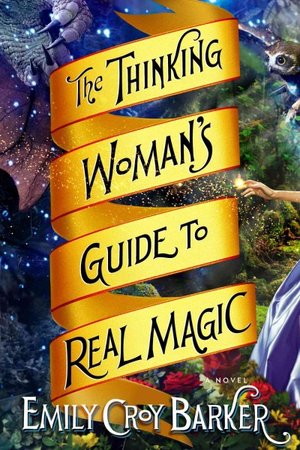
Emily Croy Barker’s ‘The Thinking Woman’s Guide to Real Magic’

thinking womans guideDespite disliking the main character so much I almost quit halfway through, once you get stuck into this book it isn’t half bad!

The first part of this book is pure fairy tale. Our main character, Nora, stumbles upon a beautiful house and gardens deep into the forest. Soon, she’s drawn into the chanting and intoxicating world of Illisa and her friends. Caught up in a whirlwind of parties and swiftly married off to Illisa’s son Raclin, it’s only much later that she starts to regain her faculties enough to understand that she’s been enchanted from the second she clapped eyes on Ilissa, and that the Faitoren are much more than they seem. Desperate to escape their clutches, she flees and is rescued by the magician Aruendiel.

Away from the Faitoren, Nora finds herself in a world reminiscent of Medieval England. With no way to get back to her old life, she learns to adapt to life in his household. This brings some challenges in terms of how conceptions of power and gender are viewed compared to what she’s used to.  Initially, Nora’s relationship with Aruendiel is fraught and strained, with her essentially being an initially unwelcome, dependant houseguest who has yet to prove her worth. Eventually though, they start to work out their differences after she persuades him to start teaching her basic magic. And when Ilissa and Raclin make a play to kidnap Nora back, they trigger the start of a war that’s been a long time coming. Continue reading

‘The Golem and the Djinni’ by Helene Wrecker

GolemIn early twentieth century New York, a Golem wakes without a master and a Djinni is released from a bottle after years in captivity, bound in human form.

Created out of clay, the Golem has one single purpose, to protect her master and serve his needs. But when he dies crossing the Atlantic, she is left utterly alone and overwhelmed by the flood of human desires and emotions in the bustling city. Taken under the wing of a Jewish Rabbi who recognises her for what she is, the Golem struggles to overcome her instincts and to live a life disguised as a human within the tight Jewish community.

Elsewhere, in a Middle Eastern neighbourhood, a man repairing a metal flask is stunned by the appearance of the Djinni on his shop floor. The Djinni, having been trapped for thousands of years inside the flask and bound by iron cuffs that keep him assuming from his true form, is forced to take refuge as an apprentice at the metal shop in order to blend into his surroundings.

But even as they both adapt to their new lives, the Djinni never stops searching for a way to break his bonds and the Golem searches for answers and a way to be free to show her true self. Meeting by chance, they spend their nights wandering the city streets and parks, forming a friendship that helps them to get through the days they spend pretending to be human. Far away in Europe, a man sets out across the ocean. Dangerous and powerful, he threatens everything they have, but he might hold the key to setting them free. Continue reading

‘The Vanishing Witch’ by Karen Maitland

thevanishingwitchSet in Lincoln in the 1380’s, Karen Maitland’s ‘The Vanishing Witch’ follows Robert Bassingham, a wealthy cloth merchant, and his family as he is pursued by the beguiling widow Catlin.

Blinded by her charms, Robert soon allows Catlin, along with her daughter Leonie and her son Edward, to worm her way into his life. Catlin has no qualms about pushing his existing family aside along the way, allowing nothing and nobody to get in her way. But the two families are haunted by a sinister figure that lurks in the shadows at their every turn. And after one too many unnatural deaths, suspicions and fears are rife and tensions threaten to come to an ugly head.

The book is set against the backdrop of the Peasants Revolt. Through Gunter, a punter on the River Witham, and his family, we get a glimpse into the hardships of life as a peasant, the hardships visited on the poor when they couldn’t pay their ever increasing taxes. Intimidation from royal enforcers was extensive and the demands unattainable. This story of revolution is woven throughout the book to create an atmosphere of general unrest and used as an interesting device to drive the main plot forward. It offers a fantastic insight into a period of history that I personally know very little about. Continue reading

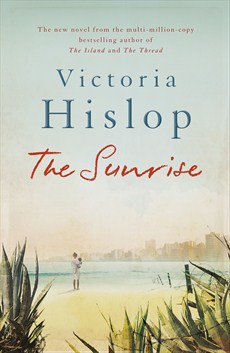
Victoria Hislop’s ‘The Sunrise’

The SunriseWhen I was lucky enough to get my hands on a copy of Victoria Hislop’s latest novel ‘The Sunrise’, I knew it was going to be good. I’ve loved all of her three previous novels, and this was no exception.

‘The Sunrise’ is set in Cyprus, and more specifically in the ill-fated coastal resort of Famagusta, on the eve of civil war between Greek and Turkish Cypriots. To give the novel some context, the year of 1974 saw Famagusta transform from a thriving tourist destination to a ghost town, as some 40,000 people abandoned their homes and fled in the wake of an advancing Turkish army. An area of the city, known as Varosha, remains barricaded off to this day. The war created hundreds of thousands of refugees – many of whom were left with nothing but the clothes on their backs.

In Hislop’s novel, Savvas Papacosta and his wife Aphroditi have built the Sunrise hotel to be bigger and better than any other hotel in Famagusta. The epitome of luxury, no expense has been spared to create the ultimate holiday destination. Despite growing tensions outside of the tourist resort, Savvas is determined to continue expanding and harbours ambitions of building a grand hotel empire along the beach. Continue reading