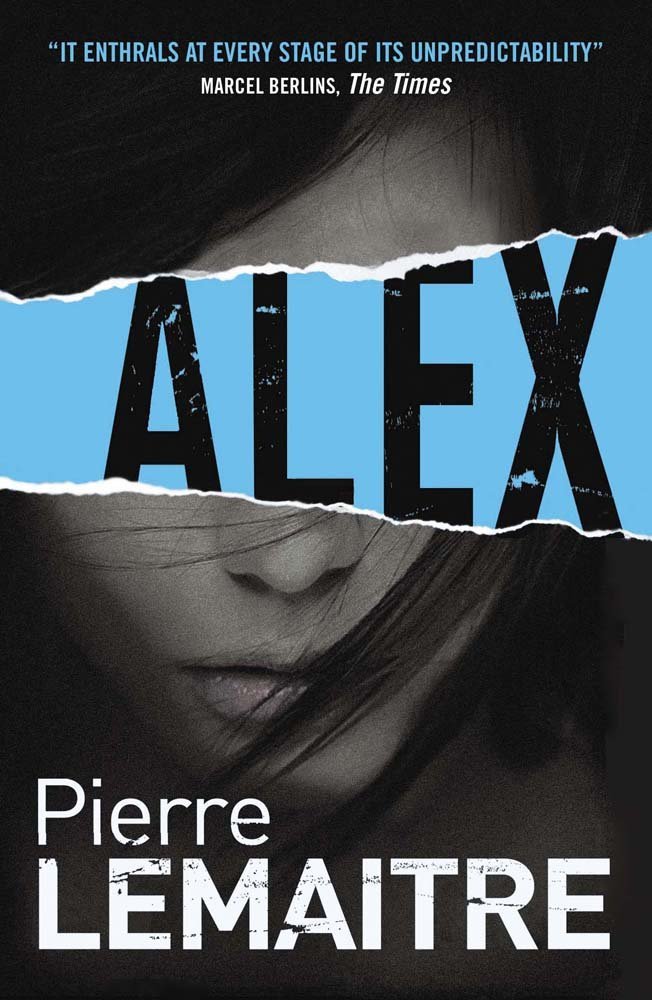
Pierre Lemaitre’s ‘Alex’

Alex PLIt’s very difficult to explain the plot of ‘Pierre Lemaitre’s Alex’ without giving away too much. We open with the kidnapping and torture of a girl. The attempts of the police to track down this girl, with no evidence to show that a kidnapping has even taken place, help to start unravelling a web of lies, violence and deceit.

The book is split into three separate sections, each of which turns the story on its head and takes t in a completely new direction. It’s like solving a mystery within a mystery – each section throws up a new conundrum and completely changes our views on what has come before.

All of the characters are hiding secrets and our perceptions of different people shifted depending on the titbits of information that the author slowly released over the course of the novel. The pace moves along at a breakneck pace, shifting how we see characters with just a few short sentences and well-timed revelations. Continue reading

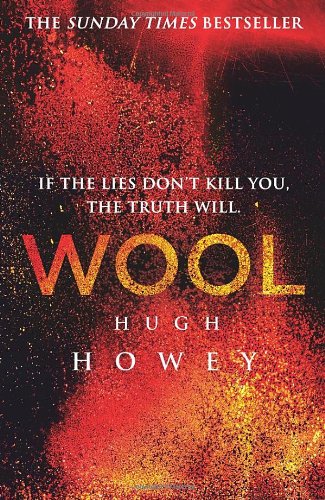
‘Wool’ by Hugh Howey

woolIn Hugh Howey’s breakout self-published fiction novel, generations of people live and die inside a giant underground silo. Their only glimpse of the outside world comes through a dirty camera lens. The worst punishment is to be put outside, where the air is so toxic that people are overcome by it in minutes.

The hills are littered with bones. But still, a seed of rebellion refuses to be put out. There are those that do not believe the outside world is as fatal as they’ve been told. Spurred on by drudgery, endless rules and conspiracy theories, these people will fight to the bitter end to uncover the truth.

This is easily one of the best books in its genre that I’ve read for a while. Continue reading

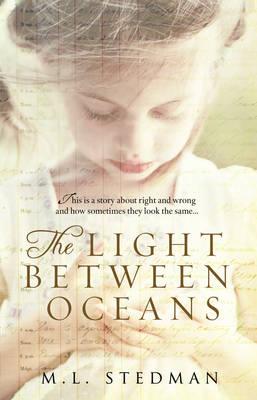
M. L. Stedman’s ‘The Light Between Oceans’

the-light-between-oceansIn the early half of the twentieth century, lighthouse keeper Tom and his young wife Isabel are living on an isolated life on an island far off the coast of the Australian mainland. The conditions are tough, contact with the outside world is few and far between and the job is demanding, but they make it their home.

It’s a life that seems perfect, but for one thing. Isabel is unable to carry a baby to term. After numerous heartbreaks, all seems lost. Then a boat washes ashore, carrying the body of a dead man and a very much alive baby girl. The decision they make that day, to not report the wreck and to keep the baby and raise it as their own, will set into motion a chain of events that will last for years to come.

The book questions our morality, and asks whether doing something you know is wrong can ever be right. It also questions what makes a parent – is it the person that’s raises a child or the person that gives birth to it? Continue reading

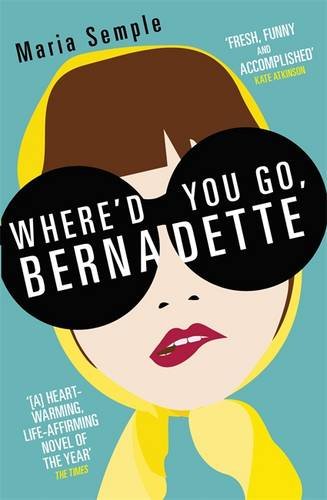
‘Where’d you go, Bernadette’ by Maria Semple

Bernadette Fox has disappeared. Everyone assumes she is dead, or gone for good. But her fifteen-year-old daughter, Bee, is determined to do everything she can to find her.

41qQVsFZtmLOver an eclectic collection of notes, letters, private emails, articles, blog posts and reports, we gradually gain a unique insight into all of the characters, their motivations and their emotions. These are interspersed with commentary from Bee, as she attempts to piece everything together. These all come together to form a bigger picture of the string of events that took place in the run-up to Bernadette’s disappearance, and to help us – and Bee – solve the mystery as to where she is now.

The format of the book is really interesting. It’s quite hard to describe the plot for this exact reason. It didn’t feel as if I was reading a story, instead, it felt like I was piecing together a case and a narrative from the raw material. Only in this case, the raw material is incredibly witty and expertly crafted to give away just the right information at any given point in time. Each character has their own voice, and this voice is real, rounded and completely convincing. I think one of the real skills on display here is the author’s ability is to flit from character to character, switching between different perspectives from page to page.

The overall narrator, Bee, is strong willed, independent and funny, and her mother is wonderfully eccentric and entertaining. I wanted to know them. The story does veer into the ridiculous at some points, but this only adds to the overall charm of the book and it somehow manages to also stay believable. It’s been a while since I enjoyed a book as much as I enjoyed this, and I wouldn’t hesitate to recommend it.

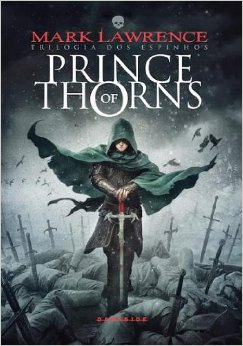
‘Prince of Thorns’ by Mark Lawrence

In an empire divided by constant wars, poverty and harsh rulers, a band of outlaws is burning a path through the countryside, destroying everything and everyone in its wake. Their leader is the ruthless and immoral Jorg Ancrath, a royal prince by birth. Far from home, he has amassed his own followers and gained a thirst for power, driven only by anger and a desire for revenge against those that have done him wrong.

Prince of thornsDriven home to his father’s castle, his talents for destruction and violence soon become evident. His father offers nothing but rejection and steely contempt, his pregnant stepmother is threatened by his very presence at court, and the queen’s alluring sister, Katherine, cannot see past his brutal, underhand behaviour. The result is an inevitable family clash that leaves Jorg with two choices, to yield to his father’s iron will or to strike out on his own to conquer a new kingdom.

In Jorg, Lawrence has created a twisted anti-hero. He has no qualms about resorting to murder, rape and torture at the slightest provocation, although it must be said that a lot of his most brutal actions are reported to us second hand.

In spite of this, Jorg has a kind of arrogant charm and wit that gives him the likability factor that he so desperately needs to offset the darkness that often overpowers his character. Throughout the course of the novel, we find out more about his background, and come to understand how the murder of his mother and brother have shaped him into who we meet today. It doesn’t excuse his behaviour, but it does help to round out his character and give him a slightly more human element.

Game of Thrones fans will love this book. It has all the gore and action that you need to keep you gripped. There’s also a supernatural element, as the lines between the living and the dead become more and more blurred.

If there’s one thing I would say, I’d have liked to know a bit more about the world that the book is set in. We’re given no context, although the map at the beginning bears some resemblance to our modern Europe and there are references throughout the text to ancient philosophers. It’s frustrating that we don’t know more about this and it would have helped to really embrace the subtleties of the author’s creation.

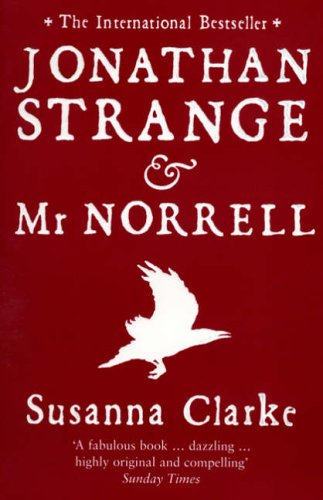
‘Jonathan Strange and Mr Norrell’ by Susanna Clarke

Touted as the Harry Potter for adults, Susanna Clarke’s ‘Jonathan Strange and Mr Norrell’ is set in an alternate version of 19th Century England rife where magic is very much present. From the theoretical magicians that gather across the country to the hundred of people across the northern counties still waiting for their Raven King to come back and claim his throne, magic has an undeniable impact on everyone in the kingdom, rich or poor.

StrangeBut while magical societies discuss the great feats of the past, in Yorkshire one man is determined to bring back practical magic. Surrounded by his precious books, the reclusive Mr Norrell heads to London to lend his help to the war effort and defeat Napoleon. Meanwhile, Jonathan Strange stumbles across magic as a profession almost by accident. Inventive, passionate and eccentric, his style and approach to the study and practice of magic is entirely different from Norrell’s – leading to an inevitable clash of opinions.

England is split into ‘Strangites’ and ‘Norrellites’. A war of words is played out through the magical journals. Increasingly great and ambitious magic is played out on the battlefields of Europe, the savage English coastline and the drawing rooms of the English aristocracy. People are raised from the dead, rain takes on solid forms, darkness falls for days on end and cities, roads and forests are moved to a magician’s whim. But beyond all of this lurks shadowy figure of the Raven King and the malevolent world of faerie looking to reek havoc on those that dare to lay a claim on English magic – bringing dark and unforeseen consequences.

It is undoubtedly an amazing feat of world building. There’s a whole bibliography of fictional titles mentioned throughout the book, each with a fictional author and subject matter, as well as a complete magical history stretching back for almost 1000 years. This history is recounted along with numerous stories, legends and folklore relevant in long explanatory footnotes that make the book seem almost like an academic work rather than a novel.

This does help to give a great sense of context, but at some points it did get a little frustrating, especially when I was nearing the end of the novel and more interested in the actual characters than an exhaustive story that seems in no way connected to the story. At these points, it was probably a good job that I was listening to this as an audiobook – as I would have been sorely tempted to skip thorough these whole sections.

One up-side of the impressive length, however, is that each and every single character is completely and utterly brought to life. Everyone is given his or her own backstory and individual characteristics, again helping to totally immerse the reader in Clarke’s world. The book is packed with black humour and subtle social commentary that continues to drive the story along even through the more intense sections dedicated to historical magical debates and incidents.

Another thing I loved was the ending, which worked really well and made me smile. I actually enjoyed it so much that I haven’t been able to get really interested in another book since – always the sign of a good read!

Also, for anyone interested and those that have already read the book, it’s recently been announced that the BBC are producing a TV adaptation starring Eddie Marsan and Bertie Carvel in the title roles.

Kate Atkinson’s ‘Life After Life’

On a snowy night in 1910, a baby is born. The doctor is unable to reach her due to the weather, and she dies. Or the doctor makes it in time, and she is saved. Or a mother’s instinct pulls her back from the edge, and she lives. This is how Ursula Todd’s life begins, again and again.

life-after-life-coverOver the course of her life, Ursula continues to die and be reborn, over and over again. Each life brings with it a different set of choices, different experiences and a different fate. Her family and certain key characters throughout the book feature in many different incarnations, their lives at some times entirely separate and at some times intrinsically linked with Ursula’s. Her decisions see her take a variety of paths – sometimes to the London war office and sometimes to Germany, sometimes as a mistress and sometimes as a wife, sometimes happy and sometimes utterly alone.

The main point of the novel seems to be to demonstrate how the smallest thing can impact on your entire life. Ursula is continually faced with deadly situations, but some lingering feelings and an uncanny sense of déjà vu from a past life continues to propel her forward. Some incidents are harder to avoid than others – a deadly outbreak of Spanish Influenza proves particularly hazardous. In other cases, a few offhand words spoken here or there can change the course of an entire life.

War is a major theme throughout the book, and in many strands it is a pervading influence on the central characters. Ursula’s role in events changes from life to life, but the reality of fighting and the hardship of living through World War II is constant. Ultimately, Atkinson uses Ursula’s individual story to ask if one person’s actions can influence events on a global scale, and change the course of history forever. It’s a really interesting concept, although I personally found the ending a little abrupt and there wasn’t a great deal of build up to her final actions in the same way as with some of her earlier turning points.

The structure of the novel, which flits around in time and place indiscriminately, is quite hard to get used to. Central characters appear and disappear, and live or die, depending on which particular narrative strand Ursula’s life has taken. Some of her lives are truly awful, seeing her a victim of extreme violence, loneliness, or emotional turmoil. I found myself hoping for the death that was sure to come just so she could escape whatever horrible reality she was in at the time. On the other hand, in some strands she is happy, successful and simply in the wrong place at the wrong time. In these cases, I was desperately hoping she could fight fate.

Kate Atkinson writes with immense skill. Despite the continually shifting time periods, all of the characters are really well rounded and developed. Ursula is portrayed especially well. Her circumstances, frame of mind and outlook can change completely from chapter to chapter but her core remains the same and I was really rooting for her to choose the right path and end up happily ever after.

There’s a certain inevitability about this book. Death comes no matter what choices Ursula makes, and all she can do is to try and overcome obstacles until she gets it right. In the end, there was an overwhelming sense that we can’t have everything. Every one of Ursula’s lives had a sense of compromise and its own share of tragedy. But at the end of the day, that’s just life.
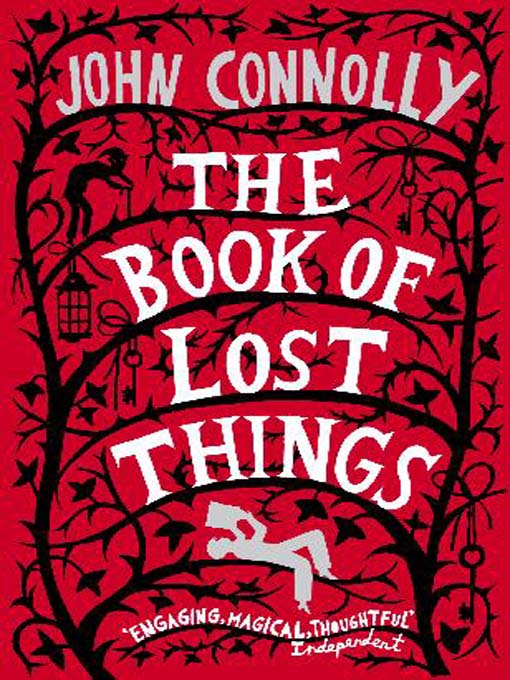
John Connolly’s ‘The Book of Lost Things’

It’s this middle of World War II, and confined to a country house with his new stepmother and even newer younger brother, David is full of hurt, anger and jealousy. In his attic room, he seeks comfort in a collection of old books. As he becomes consumed with the world between their pages, David starts to feel a strange affinity to the boy who lived in his room before.

the-book-of-lost-thingsWhen the events of one fateful day conspire, David finds himself in a place where nothing is as it seems, struggling to find a way to get home in a strange, threatening kingdom of twisted fairytales. His path is peppered with obstacles, and he is forced to face his innermost fears, overcome death and battle his nightmares before he can finally come face to face with an aging king who seems destined to lead the kingdom into ruin.

The Book of Lost Things is essentially a fairytale – but it’s certainly not a fairytale you’d want to read to small children at night. Bringing in elements of a whole host of different stories, Connolly twists and manipulates narratives for his own purposes, spinning motives and intentions and traditional plotlines into an intricate web of characters and incidents.

In fact, the author builds a whole new world with such rich detail and flair that I almost started to believe in its existence myself. The Crooked Man really was scary, a truly brilliant villain with wicked intentions. The truth, when it was finally revealed, was as terrifying as any nightmare come to life in the darkness. This is not a book where everyone has a happy ending. All of the characters we come across, from the Woodcutter to Snow White, have been given their own jaded and fractured back-stories that have been woven perfectly into the fabric of the narrative.

Ultimately, it’s the perfect book for anyone looking for a dose of escapism or pure fantasy with a twist. It’s spooky and mesmerising, and it takes a completely different direction to anything else out there.

‘The Innocents’ by Francesca Segal

Francesca Segal’s The Innocents received a great deal of critical acclaim. Not only did it win the 2012 Costa First Novel award, it also won the Sami Rohr Prize for Jewish Literature in Fiction and made the shortlist for the Women’s Prize for Fiction. But does it live up to the hype?

InnocentsLoosely based on Edith Wharton’s The Age of Innocence, Francesca Segal’s debut novel follows childhood sweethearts Adam and Rachel. Their lives are threaded together in every way – from their intricate family relationships to the fact that Adam is a trusted employee of a business run by Rachel’s father – so their engagement comes as little surprise to anyone in their immediate circle. But while Rachel is busy planning the perfect big day, Adam is having a crisis of confidence.

Full of self-doubt, Adam is torn between Rachel, as well as the inherent expectations that lie on him as a member of a tight-knit Jewish community, and her alluring, vibrant and vulnerable younger cousin Ellie.

Ellie is the antithesis to Rachel, the family black sheep with a devil-may-care attitude to life. For Adam, already questioning his mapped out future as the perfect Jewish husband, her appearance is the catalyst that pushes him over the edge.

Some people have criticised this book for its in-depth descriptions of Jewish culture and community, but this was actually the aspect of the book that I most enjoyed. It’s the most detailed discussion of Jewish society that I’ve ever read, and I found it really interesting.

However, I just didn’t feel that the central figures were in any way likeable. This was probably because we see everyone else from Adam’s perspective, and for me, Adam is nothing but self-centred and weak. As a result we see Rachel alternatively as either a homely and loving safe haven or a clingy and vapid black hole sucking him into a life that he’s not sure he wants.

I’m not even really sure who can really be considered as ‘innocent’. Adam is lacking in any life experience, Rachel is clueless to all of her fiancé’s misgivings and Ellie has her own childhood traumas leaving us questioning whether she’s an instigator of trouble or a victim of her own troubled past. This may have been the very point that the author was trying to convey, that we are in fact all innocent in our own ways. But while the book read really well and I did enjoy it, I just couldn’t relate to any of the characters.

Essentially, it all boils down to one simple question. How do we know if the grass is really greener on the other side, and is what we have ever good enough?

Andrew Fukada’s ‘The Hunt’

I’ve been struggling to put this book into words. I suppose it could be described as a sort of warped version of The Hunger Games. Except in this case we have a world dominated by vampires embarking on a once-in-a-decade human hunt, with the lucky hunters drawn from the population by lottery.The-Hunt

However, one such hunter is actually a human, or a heper as they call them, living in disguise amongst the vampires. Knowing that he will be exposed as soon as the hunt starts by his inability to keep up with the pack and his unwillingness to tear their prey apart with his fake vampire fangs, he is rapidly running out of time to come up with a way out. With the help of some unexpected allies, his world is changed forever as he uncovers hidden secrets that go against everything that he’s been taught.

I have to start by saying that The Hunt is written really well – it had a great pace, plenty of action and it was quite addictively readable. However, while the concept was interesting, there were some gaping holes in the plotline that managed to completely distract me from the main story on several occasions throughout the book.

There are numerous points that I just cannot get my head around. Whether that’s because the author has failed to think things through or because he simply hasn’t bothered to explain them, I’m not sure.

My first gripe is how our main protagonist has managed to attend vampire school for years without detection. I don’t know how he’s managed to get hold of fake fangs or contraband razors in the first place, but those basic difficulties aside, I don’t see how it is possible to have never coughed, sneezed, sweated, blushed or spilled a single drop of blood in the presence of vampires (who never show a shred of emotion and scratch their wrists instead of laughing).

Secondly, vampires are under the impression that humans are totally extinct outside of government activity. But since there are several secret humans revealed throughout the book, from a relatively low pool of characters, you have to assume that there are lots of fake vampires running around unnoticed. Despite this, there’s no testing of any kind?!

And then there are the things that are just plain weird. The vampires in this book don’t kiss, they rub armpits. And nowhere does it explain how they are able to reproduce, if they do so in the same way as humans, and if not, how fake vampire humans/manage to have babies without shedding any blood at all (as this can apparently be smelt from miles away).

There are plenty more, but I don’t want to reveal any spoilers. If anyone can offer up an explanation for any of the above, I’d love to hear it!