 The story:
Agamemnon, believing he is acting out the wishes of the gods, sacrifices his eldest daughter for success on the battlefield on the eve of her wedding day. His wife, Clytemnestra, cannot forgive such a betrayal, and silently seething, plots his downfall. Her actions force her down a dark path and her choices have far-reaching consequences for her, her remaining children and their kingdom.
My thoughts…
This is a retelling of a classic Greek tragedy, full of scheming, revenge and murder. I must admit that I haven’t read the original text. While I’d heard of a couple of the key players, I didn’t know the story, so have nothing to directly compare this to.
As events unfold, all of the characters find themselves stuck in a cycle that seems impossible to break. With each crime committed or action taken, there’s another character waiting in the wings to demand payback or retribution.
Although this is set in ancient Greece, there are themes running through this book that are entirely relatable to the present day – such as Clytemnestra’s loss of faith, her grief and her feelings of abandonment by a higher power after a tragic loss. Revenge and the idea of ‘an eye for an eye’ also still resonates. Although the actions of Clytemnestra and those around her are extreme and melodramatic, the motivations behind them are understandable in the context, if not forgivable.
Despite the high emotions that the characters must feel, the writing style feels quite distant and detached. Clytemnestra is the only one that I felt any real attachment too. Her emotions shine through and I wish we’d had more from her point of view. Her actions reverberate through the palace, affecting everyone around her. This includes her daughter Electra, who brims with silent fury. Electra eventually becomes what she despises – another example of how without change, everything comes round in a circle and no progress is made.
Orestes was an interesting character. He’s continually being pushed in various directions by other characters, such as Leander and Electra, but never fully included. His sense of isolation is echoed in the rest of the novel – everyone has their own secrets and motivations and they’re not willing to share them. The result is a general feeling of mistrust and suspicion, summing up the pervading overall feel of this book.
In conclusion?
While I didn’t dislike this book, I can’t say that it really provoked any strong emotions in me either way. It was quite an interesting read though, and I did enjoy learning more about the Greek myths.
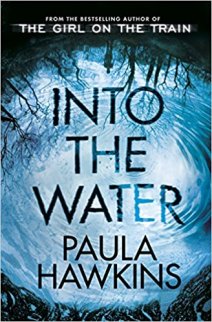 The story: The drowning pool in Beckford has claimed many lives over the centuries. Originally the chosen place to drown witches, it’s now a notorious suicide spot. Most recently, Nel Abbott either jumped, fell or was pushed to her death, depending on who you believe. Nel’s daughter Lena’s best friend, Katie, walked into the pool with pockets full of rocks months earlier. And 30 years before that, Lauren Townsend threw herself from the cliff. It soon becomes clear that all of these deaths are connected in more ways than one, and that the people in Beckford are hiding many secrets that they don’t want brought to light.
 The story: In the near future, the polar ice caps are melting, the transpolar shipping route is being heavily utilised and individuals and countries are jostling for power and control. When a cruise ship searching for an increasingly rare glimpse of the elusive polar bears travels into the restricted waters of the Midgard Lodge, they get more than they bargained for when a calving glacier reveals the preserved body of a man.



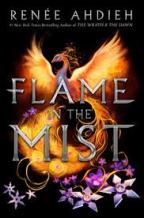 The story: Mariko is on her way to be married to a member of the royal family when her carriage is attacked and her companions murdered. Disguised as a boy, she sets out to find and infiltrate the notorious Black Clan, defend her family’s honour and discover who wants her dead and why. At the same time, her twin brother will stop at nothing to find her again, while others are scheming away in the background to manipulate events to suit their own agendas.
 The Stacked Shelf