‘Americanah’ by Chimamanda Ngozi Adichie

AmericanahAs teenagers in Nigeria, Ifem and Obinze plan a new life far away in America, aiming to leave the coups and the strikes behind. The reality, when it comes, is very different. Separated, isolated and strangers in foreign countries, Ifem and Obinze and driven apart. Years later, they are given the opportunity to reconnect. But has time changed too much to bring them back together?

Their story is the glue that holds this novel together, but it does take somewhat of a back seat to the themes that the author works so hard to develop and address. In Ifem, Adichie creates a strong, individual voice which shines through the writing. Her character is not without its flaws, but that’s what makes her real. I particularly loved the sections where Ifem speaks through her blog. These sections is particular are used to provide an in-depth commentary and critique on the issues surrounding race and class in America, and later also in Nigeria. She cuts right to the heart of some fairly controversial issues and lays everything on the table for us to consider and make our own opinions on in our own time.

I also found the parts of the novel set back in Nigeria really interesting. Ifem leaves America longing for home, but when she gets there, she finds herself changed. When the fantasy becomes a reality, it is distinctly underwhelming, and Ifem is still left looking for something more. This feeling of displacement, and not truly fitting in anywhere other than with other expats, is a constant theme throughout the book – no matter where she is living. Continue reading

‘The Final Testimony of Raphael Ignatius Phoenix’ by Paul Sussman

RIPAs Raphael Ignatius Phoenix approaches his 100th birthday, he plots his own demise. But before that day comes, he’s makes the decision to write a testimony of his life as a legacy to leave behind. Armed with felt tip pens and the white walls of his cliff top castle as a canvas, he tells his own autobiography in reverse. The defining details of his life? He’s a multiple murderer. In an attempt to tell his story, Phoenix decides to commit the full stories of each of his ten murders to paper.

Phoenix himself is an engaging and entertaining. He has a sharp tongue, an impressionable personality and a willingness to go where the wind takes him, discarding his past for a new life without so much as a second thought. Each period in his life is entirely unique, yet characterised by the same distinctive flair and personality.

But Phoenix is also deeply flawed as a character. He has a dark side that frequently comes to the forefront and a complete lack of regard for the feelings and wellbeing of anyone around him – with the exception of his childhood friend, Emily, who regularly turns up at opportune moments to save the day. His murderous tendencies are often provoked by the smallest of details, and he shows little or no remorse for his actions.

As we go further through the book, however, it becomes quite clear that Phoenix is entirely unreliable narrator. By the end, the lines between fact and fiction and reality and illusion have become distinctly blurred. Continue reading

Khaled Hosseini’s ‘And the Mountains Echoed’

And the Mountains EchoedIn a village in Afghanistan, a man sets out on a journey with his two young children. Ten-year-old Abdullah has no way of knowing that this journey will tear him away from his beloved younger sister and change the course of both of their lives forever. From here, we’re taken on a journey through the history of Afghanistan and its people, covering major themes such as war, class, race and immigration.

As with all of Khaled Hosseini’s books, ‘And the Mountains Echoed’ is beautifully written. Each of the characters, even though they may appear only briefly, feel so completely real they could almost walk off the page. I also feel like I’ve definitely learnt a lot more about the changing culture of Afghanistan.

But when I was asked if I enjoyed reading this book, I didn’t know quite how to answer. I don’t really have any strong feelings either way. I didn’t dislike it, but at the same time I definitely don’t think that it lived up to its potential. Given how much I enjoyed his first two novels, this one fell a little flat.

The blurb describes this book as an epic, heart breaking tale of a brother and sister who refuse to be separated. I disagree. This is more of a collection of stories about a group of people all loosely connected to each other, which collectively come together. At its heart, this book is not really about the characters themselves, it’s more of an overarching statement about human nature, love and loss and about Afghanistan’s relationship with its citizens – both at home and abroad. Continue reading

A brutal and compelling family epic

TheSonPhilipp Meyer’s sweeping American epic, ‘The Son’, covers over one hundred years of family history – taking us on a journey from the wild frontiers of Texas to the turn of the twenty-first century.

As a young boy living on the frontier, Eli McCollough sees his family murdered in front of him and is taken captive by the local Comanche tribe. Against the odds, he thrives, becoming like an adopted son to the chief. He learns to live off the land, working hard and learning the value of everything. When his tribe is decimated, he has no choice but to return to the more civilised life of the white men, but struggles to fit in and rails against society. Having nothing at all to his name, Eli joins the Texas Rangers – a brutal and dangerous life. In the aftermath of the civil war, Eli takes the opportunity to carve out his fortune. He forges an empire that will last for years to come by milking everything that the land can offer, and by acting brutally and swiftly against anyone that might hinder his progress.

His son, Peter, is intrinsically aware that he and his father are cut from different cloths. Peter sees first-hand how the McCollough’s profit from the misfortune of others. He struggles to come to terms with the imbalance of power and wealth in his hometown. In an atmosphere that’s highly charged with racial tensions, others around him need only the slightest excuse to react with violence and claim with force what does not belong to them. Continue reading

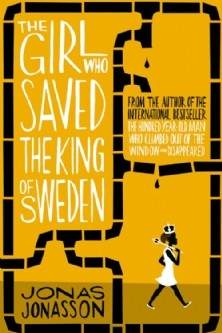
Jonas Jonasson’s ‘The Girl Who Saved the King of Sweden’

TheGirlWhoJonas Jonasson’s first novel, in my opinion, was a true delight to read. It was original and funny and I spent my tube journey’s actually laughing out loud. I raved about it to friends and recommended it left, right and centre. So when I packed for holiday last month, his latest book, ‘The Girl Who Saved the King of Sweden’, was the first thing that went into my suitcase.

In this book, our protagonist is Nombeko Mayeki. Born in Soweto, South Africa, the course of Nombeko’s life takes a long and varied trajectory. After a succession of accidents, happy coincidences and bizarre twists, she ends up in living in a pillow warehouse in Sweden with a man that technically doesn’t exist and a whole cast of other captivating characters. She’s also fluent in Chinese and has an all too intimate knowledge of nuclear weaponry. Soon enough, she’s on course to save the life of the King of Sweden. Continue reading

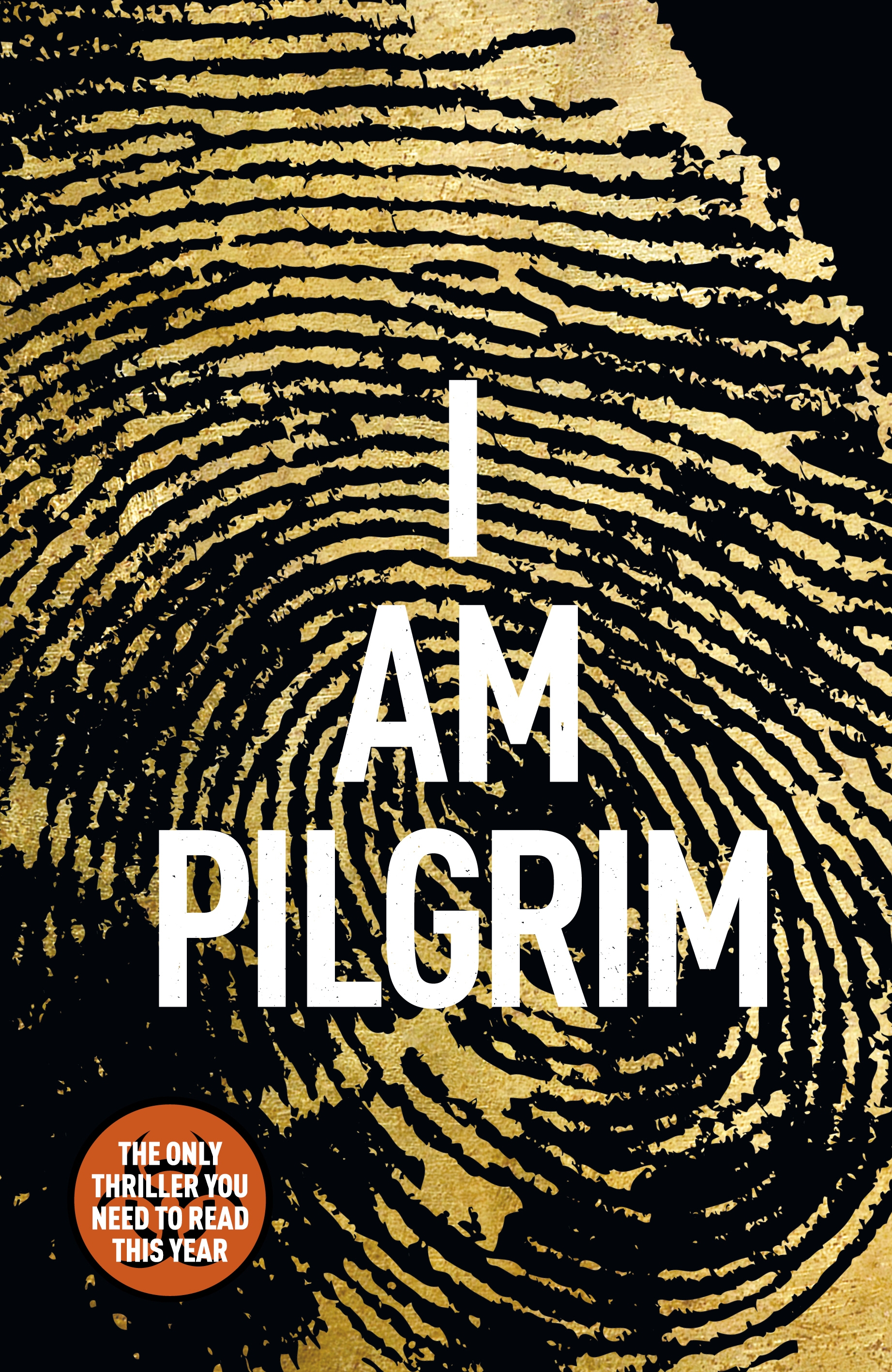
A review of ‘I Am Pilgrim’ by Terry Hayes

I Am Pilgrim‘I Am Pilgrim’, the debut novel from Terry Hayes, takes us inside the most secret of secret intelligence agencies, following an attempt to locate the source of an imminent terrorist attack.

Having left the secret service, all the narrator wants to do is to be left alone to live out his life free from retaliation or revenge. But having been drawn back into the world by a particularly persistent pursuer, he finds himself at a seemingly typical crime scene in a New York motel. He soon realises that he’s up against a killer that has memorised all the tricks in the book (literally!) to evade the authorities. His presence at the crime scene sets into motion a series of events that reaches into the highest echelons of US security services. Soon he is tasked with a mission that carries deadly consequences – to derail a new kind of terrorist threat that has the potential to destroy the United States from inside its own borders. Continue reading

Living up to the hype

The TestingEver since Katniss Everdeen and her bow and arrow set stormed onto the scene a few years ago, practically every new book published in this genre has managed to include a critics quote on its jacket that claims it is, without a shadow of a doubt, ‘the next Hunger Games’. Most of these books, I’ve found, fall woefully short of this claim. But there are a few that manage to bring something new to the table. So if you’re one of the millions of people who couldn’t get enough of the Mockingjay, ‘The Testing’ by Joelle Charbonnaeu might just help to fill the void!

Seven stages of global war have devastated the planet, corrupting the land and making it hard for plants to grow and for people to thrive. To combat this, the United Commonwealth Government selects the brightest students to go forward for The Testing. If they pass, they will gain entry to the University, where they will be trained to be the next leaders of the country – tasked with rebuilding the Commonwealth by stretching the limits of medicine, biomechanical engineering and government, as well as finding new ways to grow crops and improve communications.

Cia is from Five Lakes colony, one of the most remote and least populated in the Commonwealth. So when four of her graduating class, including Cia, are selected to go forward for the testing, it’s an honour that hasn’t been seen in more than 10 years. Continue reading

A review of ‘White Horse’ by Alex Adams

White HorseI bought ‘White Horse’ as I’d loved books like Justin Cronin’s ‘The Passage’, Cormac McCarthy’s ‘The Road’ and Margaret Atwood’s MaddAddam series. From the description, this book seemed to combine aspects of all of the above, so it seemed like a safe bet.

White Horse flits back and forth between times, revealing Zoe’s story before and after the outbreak of a deadly disease that kills off a large amount of the population and causes random and extreme genetic mutations in others. Together, these two narratives weave together to build up a greater picture of events and Zoe’s role in them.

In the past, we follow Zoe’s everyday life in the run-up to the outbreak. In her therapy sessions, she obsesses over a sealed jar, unable to decide whether or not to open it. This jar comes to represent a sort of Pandora’s Box – and the pervading question left hanging for most of the novel of whether this jar truly represents something evil, or whether this is all simply in Zoe’s mind? Continue reading

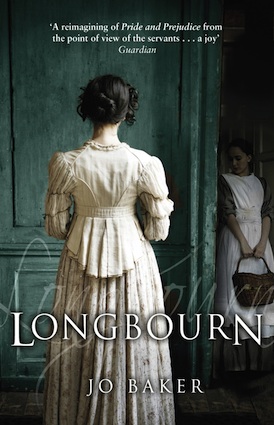
Jo Baker’s ‘Longbourn’

LongbournThere’s been a recent trend towards modern authors drawing on elements of classic novels. In Longbourn, we’re taken into the world of ‘Pride and Prejudice’.

In Jane Austen’s classic, Longbourn is the Bennett family residence. In Jo Baker’s re-imagining, we see behind the facades of the rich and get a glimpse of the world inhabited by the servants. While the Bennett sisters search for husbands, their housemaid Sarah toils away in the kitchens, washing their underclothes and scrubbing the sheets until her hands bleed. While the ladies of the house are swept off in carriages, she walks for hours in the rain to fetch bows to decorate their shoes. While they get new dresses and go to balls, she relies on hand-me downs and darning and looks forward to a village knees up on her rare night off.

But while we all know the fate of the Bennett sisters, Sarah’s fate is much less certain. While Mr Bailey’s arrival sends the family into a tailspin, it’s his handsome footman that turns Sarah’s head. His knowledge of the world and his ambition to leave his position and set up for himself makes Sarah question everything about her life. At the same time, the new footman at Longbourn, James, seems too good to be true, and Sarah is determined to uncover his secrets. Continue reading

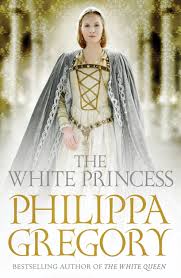
Historical melodrama with Philippa Gregory

If you’ve read any of the other books in Philippa Gregory’s Cousins War series, then you’ll soon see that the White Princess is very much in the same vein. Each book in the series is told from the point of view of a woman at the heart of the royal court. Here, we experience events through the eyes of Elizabeth, Princess of York. Daughter of Edward IV and Elizabeth Woodville, the young princess is no stranger to war, loss and hardship – having experienced the extreme highs and lows of being in a position of power throughout her father’s reign.

The White PrincessAfter her father’s death, his youngest brother, Richard III is King. Her two younger brothers are believed to have been murdered in the Tower of London. Her mother continues to plot and conspire with enemies both at home and abroad – determined that, one way or another, her children will find their way back to the throne.

As Elizabeth’s relationship with Richard grows, and his wife continues to fail to provide an heir, she reigns over the royal court like a queen. But when Henry Tudor invades to take Richard’s crown, Elizabeth must learn to adapt to a very different way of life. With her lover dead on the battlefield, she must play the role of a dutiful wife in a court where her heritage means that she will never be trusted, even by those closest to her.

This novel does a great job of exploring a marriage arranged for political reasons. In this case, their match has been made out of a need to protect their families and to win over the hearts of the Yorkist public. At first their relationship is portrayed as being driven by hate, fear and suspicion. As plots by York loyalists continue to abound, Elizabeth is viewed as a threat and tightly controlled by her husband and mother-in-law. But as her relationship with Henry grows, and her beloved children are raised in the ways of the reigning royal court, Elizabeth is forced to come to terms with what it means to be a Tudor.

Royal women at the time were used as nothing more than pawns in a strategy to get to the crown. Elizabeth is married to a king, but the people closest to her continue to conspire to get a York boy on the throne. If they are successful, Elizabeth would be cast down and her sons disinherited in the name of her father’s family. She is trusted by no-one, putting her in the most dangerous and precarious position of all. For her, there are no outcomes that can truly be a win, as someone she loves will have suffered.

Unlike some of the women featured elsewhere in the series, Elizabeth has very little power to control events. She is kept in the dark and must make her way through as best she can, doing anything she can to emerge unscathed. The helplessness of her situation is quite frustrating. However, Gregory’s writing remains compelling and riveting and her characters are entirely convincing. This book also goes over a lot of the material that we’ve already seen earlier in the series. For these reasons alone, I didn’t enjoy this novel as much as some of the others.

Other reviewers have made a lot of the fact the Gregory take liberties with the historical evidence that we have, twisting it to meet her fictional narrative. I’ve never had a problem with this aspect of Gregory’s writing – the facts that we have are all open to interpretation in some way and it’s interesting to read someone ‘s take on things, even though one look on Wikipedia will mean that we all know what will ultimately happen to all of the characters.