Back to Blogging

I’ve been absent from the blogosphere for a while now, an unconscious decision that mainly came down to work commitments, a long commute and general life meaning that I’ve had very little time to dedicate to writing reviews. But 2017 is a new year, and I’m trying to start the way that I mean to go on…

My 2017 blogging resolutions:

Start writing – This one is pretty self-explanatory. The longer it’s been since my last post, the more I feel guilty for neglecting The Stacked Shelf. I’m starting off by aiming for at least two posts a month – something that’s hopefully manageable without being too daunting!

Making reviewing more interesting for me as a writer – Sometimes I’ve found that reading a book critically and analysing the main talking points takes away from the experience as a reader. I’m also guilty of sometimes seeing reviewing as a chore that has to be done rather than a way of sharing the things that I’m really interested in with readers. This year, I’m going to try not to overthink it, and to keep review posts shorter and centred on what I really enjoyed/didn’t enjoy about a book.

Read more classics – This one’s been on my resolution list for many years, and despite building up quite a collection of classic reads on my shelves, I’ve yet to really get stuck in. I’m aiming to start with something with something shorter and more manageable – The Scarlett Letter – and work my way up to some of the more weighty tomes (Anna Karenina I’m looking at you!)

Break out of my comfort zone – When I first started blogging I tended to read a wider selection of genres. Recently I’ve been guilty of just sticking to what I know. I’ll be trying to branch out and get recommendations from other reviewers for books that I wouldn’t usually read.

Persevere even if something doesn’t immediately catch my interest – These days, much of my reading gets done on the way home from work, when all I want is something easy and interesting to read. If something doesn’t catch my interest immediately, it joins the pile of unread books that’s been steadily building. 2017 may not be the year that I tackle the whole pile, but I’ll be trying not to add to it!

Emily St John Mandel’s Station Eleven

Station ElevenIn Station Eleven, 99% of the population has been wiped out by the Georgian Flu. Towns and cities have been deserted, as people set out to escape the flu, which spread quickly and without mercy throughout densely populated areas. Instead, settlements have sprung up wherever people ended up when they ran out of fuel – around petrol stations or fast food restaurants – or at hotels or defunct airport lounges.
It starts with the death of Arthur Leander, who collapses on stage whilst performing King Lear at a Toronto theatre, just days before the collapse. Arthur dies in the old world, but the lives of people who knew him wind throughout the past and the present. From his ex-wives to the young child actress playing a walk-on part in Lear, he is the glue that holds the novel together.

Twenty years in the future, the national grid is down. The survivors have no electricity. Even if they can discover ways to generate their own power, the internet is down. Modern communication methods no longer exist. Kirsten, the child who once performed in King Lear, is now part of the Travelling Symphony, travelling the country performing plays by Shakespeare. They offer people much needed and wanted entertainment as they rebuild their lives again from scratch. But when travelling through one settlement, it becomes clear that something is wrong. The symphony is threatened, and has to pull together and rely on all their wits to avoid falling into the clutches of the dangerous self-proclaimed ‘Prophet’.

In the past, Arthur’s first wife, Miranda, struggles to cope with the pressures of life of Hollywood, while Elizabeth, his second, takes her young son to live halfway around the world. Arthur’s college friend, Clark, remembers the person that he used to be. Arthur’s death is a catalyst that throws them all back together.

But the backbone of this story isn’t about the plague itself, and it’s not really about the symphony’s altercation with the Prophet, which provides just a loose framework and structure for the novel. There are no huge battles for supplies or survival. Instead, this book is about how people adapt and change as a result of events that have changed the world beyond recognition. It’s about the relationships that people form and the search for answers behind a natural disaster. Continue reading

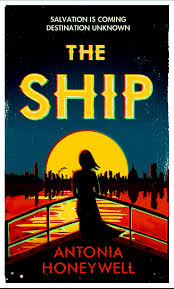
Discussing Antonia Honeywell’s ‘The Ship’

The ShipI was lucky enough to be selected as a member of the Curtis Brown Book Group, and Antonia Honeywell’s debut novel ‘The Ship’ was the first book up for discussion. It was a great pick, and there are so many points for discussion that it’s hard to know where to start!

Sixteen year-old Lalla has been raised in a world that is slowly disintegrating before her eyes. Floods, banking crashes, food shortages and disease have destroyed parts of the world and driven the survivors into small, isolated pockets. Every citizen is required to keep themselves registered. Without their cards, they are no longer considered to be the responsibility of the government and are liable to be shot on sight. The homeless and the unregistered are forced to seek shelter wherever they can – from a tent city in Regents Park to the British Museum or St Paul’s Cathedral.

For as long as she can remember, Lalla’s parents have been talking about the Ship – the vessel that will lead them to a better place along with five hundred carefully selected ‘worthy’ souls. But when Lalla finally makes it onto the promised Ship, she can’t shake the feeling that there’s something deeply wrong. She’s plagued with questions that no one is willing to answer – where are they going, who are they leaving behind, and ultimately, what are they living for? Continue reading

Roopa Farooki’s ‘The Good Children’

the good childrenRoopa Farooki’s ‘The Good Children’ focuses on the lives of the Suddeq family in Lahore, the Punjab.

From birth, the Suddeq children – Sully, Jakie, Mae and Lana – are pushed into set roles determined by their gender and by social expectations. The boys will study, go abroad for education and return as successful doctors. The girls will be dutiful daughters, marry well and help to keep the family in the highest social standing.

But their mother’s determination to force them into these ideals of ‘good children’ forces a wedge between her and her children. All four grow up to rebel and push the boundaries in their own way – Sully marries outside of his religion and Jakie falls in love with a white Irishman, while the girls leave their husbands and raise their children with Western values.

Despite scattering to all corners of the globe to escape their mother’s grasp over their lives, their childhood in the Punjab profoundly affects all four of the children. As they build their lives in new surroundings and carve their own path away from family and cultural expectations, they all struggle to some extent with feelings of enduring guilt or resentment. Many years later, they are drawn back to their childhood home and forced to come to terms with their upbringing and the choices they’ve made since. Continue reading

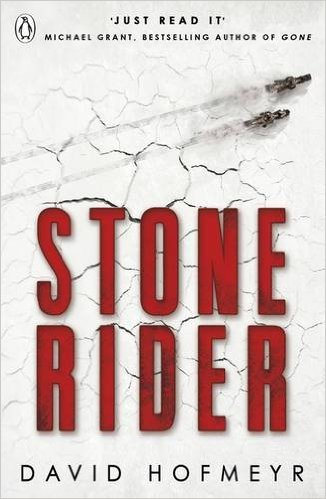
David Hofmeyr’s ‘Stone Rider’

Stone RiderLife on Earth is tough and fraught with violence. Pollution has destroyed the quality of the air people breathe and there’s an ever-present threat of radiation. For those on the ground, the only options are to live their life working in the mines or to become a rider, risking their lives as they take to their bykes and compete, racing to win a one way ticket to the mysterious Sky Base.

When fifteen year old Adam enters the Blackwater Trail, he knows that the majority of the riders won’t return. The landscape is unforgiving, the obstacle courses are booby-trapped and people will do absolutely anything to win, including taking out their fellow competitors. Soon enough, he’s teamed up with the dark, enigmatic outsider Kane and Sadie Blood, daughter of one of the most powerful families in town. Together, the three of them take on the course and battle every impediment hurled in their way, hoping to escape their lives for something better. Continue reading

‘A Lovely Way to Burn’ by Louise Welsh

A Lovely Way to BurnAny regular readers of my blog will know that I have a thing for dystopian fiction. I also love a good crime novel. Louise Welsh’s new novel, ‘A Lovely Way to Burn’, is a mash up of these two genres and so was always going to be hit in my book.

Stevie Flint is horrified when she discovers the dead body of her boyfriend, Simon. But having reported it to the police, she’s immediately struck down by a debilitating flu-like illness. When she recovers, she emerges to find that people across the country are being struck down by a mysterious, and in most cases fatal, sickness known as the ‘sweats’. It soon becomes clear that people are dying in droves – and there’s nothing that the doctors can do.

Despite everything that’s going on, Stevie is determined to find out what happened to Simon – and when she finds a package addressed to her hidden in Simon’s flat, she is convinced there’s more to the story. Continue reading

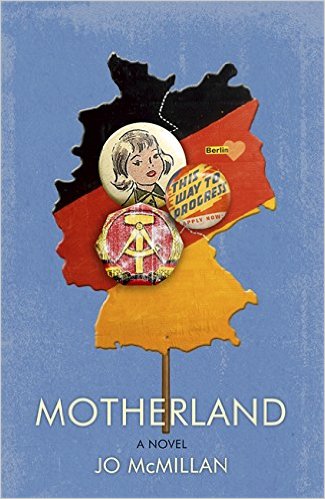
‘Motherland’ by Jo McMillan

MotherlandGrowing up as the only child of the only communist in the Midlands town of Tamworth, Jess has felt like she’s ‘different’ all her life. When her mother, Eleanor, gets the opportunity to spend time in East Germany over the summers, her and Jess jump at the chance. Living in the German Democratic Republic (GDR), they begin to feel like they’ve found a place where they finally fit in.

While in Tamworth, Eleanor was the butt of every joke, in East Germany she is valued and appreciated. When they meet Peter, a widower, and his daughter Martina through the party, it seems like the final pieces might be starting to fall into place. But it soon clear that the Party comes first, and personal relationships that don’t meet with approval from the top are forced to come second.

Jess is the main character – we see through her eyes and are heavily influenced by her views. Despite this, the character that I emphasised the most with was Eleanor. She clearly has incredibly strong beliefs and a tireless commitment to a cause that she believes in completely – even when she’s spit on, ground down and disappointed. Her steadfast commitment to her values doesn’t even waver when her chance at true love is whisked away by the party. I admire her for sticking to her convictions through thick and thin, but can’t help but think that she’s choosing a life that doesn’t necessarily lead to her being very happy. Continue reading

‘Mr Penumbra’s 24-hour Bookstore’ by Robin Sloan

Mr PenumbraWhen unemployed graphic designer Clay takes a job working nights at Mr Penumbra’s 24-hour bookstore, all he wants is a job. But it soon becomes clear that the bookstore, and its enigmatic owner, are more than they seem.

As well as the traditional books you’d expect to find in a bookshop, there’s also a second set of books – written in code and hidden away from the eyes of prying customers. Throughout the quiet night shift, an assortment of people occasionally hurry in to borrow one of these books, whilst returning another. Clay’s role is to note down what book is borrowed with a description of the borrower, but not to ask questions.

Inevitably, Clay starts to wonder about what this strange collection of people are up to. Finding the codes unintelligible, he and his friends instead draw on their technological skills to help track the pattern of borrowing in a way that they can understand. Unwittingly, he soon uncovers a clandestine literary society working to decode the mysteries around a centuries’ old secret. Continue reading

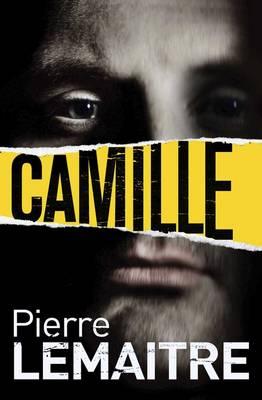
‘Camille’ by Pierre Lemaitre

CamilleThis is the third novel in a series from Pierre Lemaitre focussing on Camille Verhoeven, a detective with the French police, of which I’ve only read one – ‘Alex’.

When Camille’s lover, Anne, is caught up in what seems to be a jewellery store robbery gone wrong and left with horrific injuries, he immediately breaks all the rules to take on the case. But what seems to have seen a simple robbery soon takes a more serious turn, as the perpetrator sets out to remove all witnesses who could tie him to the crime – including Ann.

As he attempts to keep Anne safe, Camille’s attempts to hide his involvement with her from his colleagues grow more and more frantic. He comes under increasing scrutiny from his team and his senior officers, threatening to derail his career and destroy his friendships. Despite this, he preserves on regardless, throwing caution to the wind as he grows more and more desperate. Continue reading

Jane Casey’s ‘After the Fire’

After the fireA fire rips through the top two floors of a tower block, leaving three people dead. One of the dead happens to be the controversial right-wing MP Geoff Armstrong – one who has no business being in those flat that night, so far from home. Of those who made it out before the blaze took hold, a young boy is separated from his mother, an illegal prostitute flees the scene with nothing but the clothes on her back and a child from one of the block’s more dubious families suffers horrific burns.

To make things worse, it soon becomes clear that the fire is arson and Geoff Armstrong may not have jumped to his death to avoid the flames – he may have been murdered. With such a high profile death, the force are under increasing scrutiny and pressure to get to the bottom of the situation as fast as possible. But with any number of motives, potential suspects and possible intended victims, narrowing down the search is an enormous ask. Continue reading